Red clay in Georgia, gumbo in Texas, sticky gray clay in Ohio, expansive clay along Colorado's Front Range: millions of American yards sit on heavy soil. It turns to glue when wet and brick when dry, yet clay holds more water and nutrients than any other soil. The problem is structure, and structure is something you can change.
General guidance for home gardeners across the US. On clay, timing matters more than technique: never dig, till or rototill it when it is wet or frozen, and stay off saturated ground.
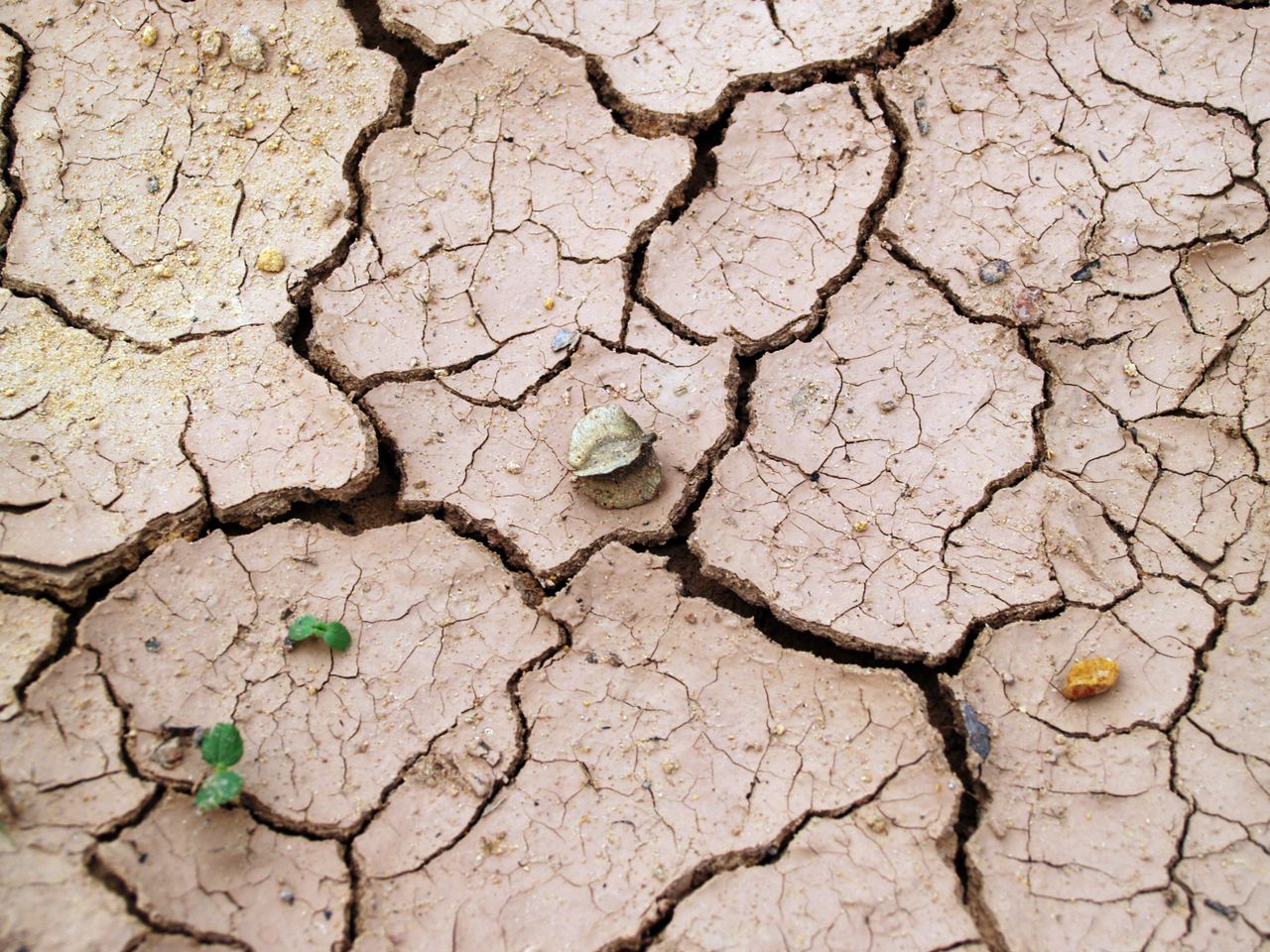
Deep summer cracks are half of the clay story · photograph via Pexels
Start here
Clay is good soil with bad habits
Heavy clay is one of the most common complaints American gardeners have, and it comes in several regional flavors. The red clay of the Southeast (the Piedmont from Virginia to Alabama) is acidic, low in organic matter and stained red by iron. The Blackland Prairie clays of Texas and many Plains and Front Range soils are alkaline and "expansive": they swell hugely when wet and crack wide open in drought. Across the Midwest and the Great Lakes you find dense gray and brown clays left by glaciers. And almost everywhere, new subdivisions leave homeowners with compacted subsoil where the topsoil used to be.
Clay particles are tiny, which is why the soil is dense and drains slowly. But the same tiny particles give clay a huge surface area that holds onto water and nutrients. Clay is naturally the most fertile and water-retentive soil texture there is. Once its structure is good, plants grow better in it than in almost anything else, and it needs far less watering and fertilizing than sandy soil.
So the problem is not the clay itself but its structure: whether the particles are clumped into crumbs with air and water channels between them, or squashed into a solid mass. You can improve structure, and the two things that do it are organic matter and keeping your feet (and equipment) off the soil when it is wet. Everything below builds on that.
Identify
How to tell you have clay
The ribbon test
Two minutes, no tools
The fastest reliable check, and worth doing before you buy any soil amendment.
Take a golf-ball-sized lump of moist soil and work it between your fingers.
Clay feels smooth and sticky, shines when rubbed, and squeezes out into a long ribbon (2 inches or more) that holds together.
Loam makes a short ribbon that breaks quickly.
Sand feels gritty and will not hold together at all.
When it is wet
Sticky, heavy and slow to drain
Clay is easy to spot during a wet spring or after a storm.
Puddles that sit on beds and lawn for hours or days after rain.
Soil that cakes onto boots and shovels in heavy clumps.
Slow to warm in spring, so planting runs later than in sandy yards nearby.
Gray or bluish soil with rusty mottles deeper down, a sign of long periods of waterlogging.
When it is dry
Rock-hard and cracked
The particles that hold water also shrink sharply as they dry out.
A surface you cannot push a shovel into by midsummer.
Cracks wide enough to lose a trowel in, across beds and lawns, in a drought.
A hard crust after heavy rain dries out.
Plants wilting even though the soil a few inches down is still damp, because roots cannot push through.
What your plants tell you
Shallow roots and slow starts
How plants grow is as good a clue as the soil itself.
New plants that sit and sulk for a season or two before growing.
Roots spreading sideways in the top 4 inches instead of going down.
Moss, sedges or nutsedge in the wet spots of the lawn.
Established trees and shrubs, once rooted in, growing very well.
Clay is not all the same. Heavy clay subsoil under a foot of decent topsoil is a very different yard from clay right to the surface, and both differ from compacted fill left behind by a builder. Dig a hole before you decide what you are dealing with. Your county's soil survey (free online through the USDA's Web Soil Survey) also shows the mapped soil type for your address.
Causes
Why clay behaves the way it does
Part physics, part history. Scroll sideways on a phone.
Factor
What is happening
What it means for you
Particle size
Clay particles are microscopic and pack tightly, leaving few large pores
Water moves slowly and roots need help getting down
Shrink and swell
Clay swells when wet and shrinks hard when dry; expansive clays in Texas, the Plains and Colorado do this dramatically
Summer cracks are normal; on expansive soils keep moisture even near foundations and avoid big swings
Compaction
Foot traffic, wheelbarrows, mowers and construction equipment on wet clay squeeze out the pores
The biggest avoidable cause of a bad clay yard
Smearing
Digging or tilling wet clay polishes the cut surfaces into a seal
Creates a hardpan water cannot cross, often just below tilling depth
Crusting
Rain breaks down a bare surface, which dries into a hard crust
Seedlings cannot break through; water runs off instead of soaking in
Low organic matter
Without organic matter, little binds particles into crumbs; Southeast red clays are naturally very low
Structure collapses; the fix is adding organic matter every year
Poor drainage
Water reaches a dense layer and has nowhere to go
Waterlogging after storms and in wet seasons, and roots that suffocate. See our Waterlogged Gardens guide
New-construction fill
Builders often strip topsoil, compact the lot and lay sod over subsoil and debris
Not ordinary clay; it usually needs breaking up before anything else works
✓What clay gives you
The highest natural fertility of any soil texture: it holds nutrients instead of letting them wash away.
Excellent water holding, so far less summer watering once plants are established.
Firm anchoring, so trees and shrubs stand up well to wind and storms.
Superb long-term growth from many trees, shrubs, roses, fruit and tough native perennials.
Improvements that last, rather than soil that needs constant feeding.
✗What clay costs you
A short working window: too wet in spring, too hard in late summer.
Slow drainage and a real risk of waterlogging in low spots.
Late warming in spring, which delays planting.
Heavy work, and lasting damage if you get the timing wrong.
Small transplants that stall while their roots struggle to break out.
What else it could be
Not everything heavy is clay
These problems are often blamed on "clay".
Symptom
Might actually be
How to tell
Hard, soggy ground in a new subdivision
Compacted fill and construction debris
Dig down: chunks of concrete, wire, plastic and a sharp color change at 4-8 inches
Water pooling on otherwise decent soil
A compacted layer (hardpan) just below the surface
Push in a long screwdriver or rebar: it stops suddenly at the same depth
Puddles only along paths or where cars park
Local compaction from traffic
The wet pattern follows the traffic, not the slope
Ground that stays wet even in summer
A high water table or a seep
A test hole refills from below after you empty it
Wet ground at the foot of a slope
Runoff from uphill, a neighbor's yard or your downspouts
The soil uphill is the same texture but drier
A rock-hard white or tan layer in the arid West
Caliche (a calcium carbonate layer)
Fizzes with a drop of vinegar; a pick barely dents it
Soil that crusts on top but is loose underneath
Surface crusting on low-organic soil
The crust breaks easily; the soil below crumbles
One soggy corner in otherwise sound soil
A downspout outlet, broken pipe or blocked drain line
Very localized wetness, often near the house
Test it
Tests worth doing before you spend a dime
1. The ribbon test
Moisten a golf ball of soil and squeeze it out between thumb and finger. A long, smooth, sticky ribbon means clay. Try it in three or four spots around the yard; texture often changes more than you would expect within one lot.
2. The jar test
Fill a straight-sided quart jar about one-third with soil, top it up with water, add a squirt of dish soap, shake hard and let it settle. Sand drops in a minute, silt over a few hours, clay over a day or more. The layer depths give you a rough texture reading.
3. Dig an inspection hole
Dig a hole about 1 foot square and 2 feet deep. Note where the color changes, where the roots stop, whether there is a hard smeared layer, and whether the subsoil is red or brown (reasonably drained) or gray with rusty mottles (wet for long periods).
4. Do a percolation test
Fill the hole with water, let it drain, refill it and measure how fast the level drops. Less than about 1 inch per hour is slow; water still standing the next day points to a real drainage problem, not just heavy soil. Our Waterlogged Gardens and Garden Drainage guides pick up from there.
5. Send a sample to your Extension office
A lab soil test from your state's cooperative extension service is inexpensive and tells you pH, nutrients and often organic matter. It matters on clay: Southeast red clays are usually acidic and may need lime, while clays in Texas, the Plains and the Mountain West are often alkaline, where adding lime would make things worse.
6. Write it all down
Topsoil depth, depth to any hardpan, how fast water drains, pH and where the wet spots are. One page of notes will guide every planting decision for years.
Cracking is normal on clay as the particles shrink while drying · photograph via PexelsOrganic matter is the glue that turns clay into crumbs with air between them · photograph via Pexels
First steps
What to do in the first season
1. Stop compacting it
Before you add anything, stop making it worse. Stay off the beds, work from paths, and if you have to cross wet ground, lay down a plank or a sheet of plywood and stand on that. It spreads your weight and prevents most of the damage.
Lay out permanent paths or stepping stones so planting areas are never walked on. On clay, that one decision beats any product you can buy.
2. Put organic matter on top
Compost, aged manure, leaf mold, shredded leaves or composted pine bark fines: spread 2-3 inches over the surface and let earthworms and soil life pull it down. You can lightly fork the first dose into a new bed if the soil is in the right condition, but after that, surface mulching does the job without the damage. Many cities sell or give away compost made from yard waste, which is the cheapest way to buy it by the cubic yard.
3. Break up compaction where you find it
Where your test hole showed a hardpan, break it with a digging fork or broadfork: push in, rock it back gently and lift without flipping the soil. On lawns, core aerate when the grass is growing strongly (fall for cool-season grasses like fescue and bluegrass, late spring to early summer for warm-season grasses like Bermuda and zoysia), then topdress with compost.
4. Do not dig a bathtub
Never dig a neat hole in clay, fill it with rich potting mix and drop the plant in. In slow-draining soil that hole fills with water like a tub and drowns the roots.
Dig wide and shallow instead, at least twice as wide as the root ball but no deeper, rough up the sides so roots can escape, and backfill with the soil you took out. In very heavy clay, set the top of the root ball an inch or two above grade.
5. Plant at the right time, and choose sturdy plants
In most of the country, early fall planting lets roots grow while the soil is still warm and the rain returns. In the coldest zones (3-4), spring and early summer are safer. Choose well-rooted plants in 1- or 3-gallon pots over tiny plugs; they establish far better in heavy ground.
6. Mulch and leave it alone
Once planted, keep the surface covered. Bare clay crusts, cracks and erodes; mulched clay stays workable, holds moisture and keeps improving as soil life works underneath.
As an Amazon Associate, PlantMapper may earn from qualifying purchases. Prices and availability are set by Amazon. For anything bigger than a small bed, buy compost in bulk by the cubic yard from a local landscape supplier or your city's compost program rather than by the bag. Improving clay takes more than most people expect, and it is a yearly job.
Long-term plan
A practical three-to-five-year plan
Year one
Stop the damage, start mulching
Year one is about protecting the soil and getting the first big dose of organic matter on.
Lay out permanent paths so beds are never walked on.
Dig an inspection hole, send off a soil test and record the results.
Spread 2-3 inches of organic matter over every bed.
Break any hardpan you found, and core aerate the lawn at the right season.
Plant tough, clay-tolerant plants and resist planting everything at once.
Years two and three
Repeat, and let the worms work
Improving clay is slow and unspectacular. It is also permanent.
Mulch again each fall or spring, the same 2-3 inches.
Switch vegetable beds to no-till: compost on top, no turning.
Sow a cover crop such as cereal rye or crimson clover on empty beds in fall to protect the surface and add roots.
Keep the soil covered all the time, with plants or mulch.
Expect the top 4-6 inches to be visibly darker and more crumbly by the end of year two.
Years four and five
A different soil
By now the change is structural, not cosmetic.
Rain soaking in rather than sitting on top.
Beds workable for much more of the year.
Much less summer cracking and much less spring puddling.
New plants settling in within a season instead of sulking for two.
Keep mulching every year: structure is maintained, never finished.
Where clay wins anyway
Design around it
Some parts of a clay yard are better planned around than fought.
Raised beds for vegetables give you depth, warmth and drainage right away.
Clay-tolerant natives: purple coneflower, black-eyed Susan, New England aster, bee balm, switchgrass, Joe-Pye weed, wild indigo (baptisia), river birch, red maple, serviceberry, ninebark, red-osier dogwood, winterberry and Virginia sweetspire. Daylilies, hostas, hydrangeas and many roses cope well too.
Lawns: core aerate in the grass's active season and topdress with compost; tall fescue (cool-season) and Bermuda or zoysia (warm-season) handle heavy soil better than most.
Permanently wet spots: plant them as a rain garden or wet meadow instead of fighting them; see our Waterlogged Gardens guide.
When to work it
The timing rules that matter most
On clay, the soil decides when you work, not the calendar. Planting windows vary by region: find your growing zone.
Condition
Work it?
Why
Soil clings to your boots in clumps
No
You will compact and smear it, and the damage lasts years
Soil shines when rubbed and rolls easily
No
Too wet; wait
Frozen or frosty
No
Structure is brittle and easily wrecked; stay off the lawn too
Moist and crumbly, breaks apart in your hand
Yes
This is the working window, usually in fall and in mid-to-late spring
Baked hard and cracked
No
You cannot get into it, and you will bend tools trying
After a long drought, then a soaking rain
Wait a few days
Let it come back to a crumbly state first
Any condition, if you stand on a board
Light jobs only
A plank spreads your weight and prevents most compaction
Planting a container-grown shrub
Early fall or spring
Avoids midwinter saturation and the worst summer heat and drought
The squeeze test. Grab a handful and squeeze. If it oozes or forms a shiny ball, stay off. If it holds together but crumbles when you poke it, get to work, and expect that window to be short. Clay gardeners plan around the soil, not the calendar.
Mistakes
Six common clay soil mistakes
1. Mixing in a few bags of sand
One of the most persistent myths in gardening. A little sand mixed into clay fills the gaps between particles and makes something closer to concrete than loam. The amount needed to genuinely change the texture is huge and impractical for a home yard.
The fixAdd organic matter every year instead. Gypsum is often sold as a clay fix, but Extension research shows it mainly helps sodic (high-sodium) soils, mostly in parts of the arid West; on ordinary clay it does little.
2. Digging or rototilling when it is wet
Working wet clay smears the surfaces into a seal and destroys the structure you are trying to build. A rototiller is worse than a shovel: it pulverizes the crumbs and often creates a hardpan right at blade depth.
The fixWait until the soil is moist and crumbly, stay off it in between, and shift from digging to surface mulching.
3. Planting in a bathtub
A neat hole in clay filled with rich potting mix collects water like a tub. Roots stay in the soft pocket instead of spreading out, and the plant drowns or blows over.
The fixDig wide and shallow with rough sides, loosen the bottom, and backfill mostly with the native soil.
4. Walking on the beds
Every step on wet clay undoes a season of improvement, and it is why so many long-tended clay yards are still heavy.
The fixPut in permanent paths or stepping stones and use a plank when you have to cross.
5. Expecting results in one season
One layer of mulch will not transform heavy soil, and people often give up just as it starts working.
The fixCommit to three to five years of yearly mulching. The change is gradual, then obvious, then permanent.
6. Leaving the soil bare
Bare clay crusts in the rain, cracks in the sun and washes away on any slope, and the soil life that builds structure has nothing to eat.
The fixKeep it covered all year with mulch, groundcovers or a winter cover crop.
Print or tick as you go
The clay soil checklist
14 jobs across the improvement plan. Your checkmarks are saved in this browser only.
Find out
Protect
Improve
Common questions
Clay soil: your questions answered
How do I know if I have clay soil?
Try the ribbon test. Moisten a golf-ball-sized lump and squeeze it out between your thumb and finger: clay feels smooth and sticky, shines when rubbed and forms a long ribbon that holds together. Loam makes a short ribbon that breaks, and sand will not hold together at all. Other signs are puddles that last for hours after rain, soil that cakes onto boots, a slow start in spring and wide cracks in summer. The USDA Web Soil Survey also shows the mapped soil type for your address.
Should I add sand to clay soil?
No, not in the amounts a homeowner could practically add. A little sand fills the spaces between clay particles and makes something closer to concrete than loam. The volume needed to truly change the texture is impractical for a yard. Add organic matter instead, 2 to 3 inches a year, and let earthworms work it in.
Does gypsum fix clay soil?
Usually not. Gypsum is often marketed as a clay breaker, but Extension research shows its real benefit is on sodic soils, which are high in sodium and occur mainly in parts of the arid and semi-arid West. On ordinary clay in the East, Midwest or South it does little for structure. A soil test from your cooperative extension office will tell you whether sodium is an issue; if not, put your money into compost.
Why is the soil in the South red clay?
The red clay of the Southeast Piedmont formed over a very long time in a warm, wet climate that weathered the rock deeply and left iron oxides behind, which give it the red color. These soils are typically acidic and low in organic matter, and much of the original topsoil was lost to erosion during generations of cotton and tobacco farming. They respond well to yearly compost, and a soil test will tell you whether lime is needed.
When can I dig clay soil?
Only when it is moist and crumbly, which usually means a window in fall and another in mid-to-late spring. Squeeze a handful: if it oozes or forms a shiny ball, it is too wet, and working it will smear the structure into a seal that lasts for years. Never work it frozen, and never rototill wet clay, which pulverizes the crumbs and often creates a hardpan at blade depth.
How long does it take to improve clay soil?
Plan on three to five years of yearly mulching for a real structural change, with the top 4 to 6 inches visibly darker and more crumbly by the end of year two. It is gradual, then obvious, then permanent. The two biggest factors are adding organic matter every year and never walking on the beds; the second costs nothing and undoes a season of work every time it is ignored.
What plants grow well in clay soil?
Plenty, including many North American natives that evolved on heavy prairie and bottomland soils: purple coneflower, black-eyed Susan, New England aster, bee balm, switchgrass, Joe-Pye weed, wild indigo, river birch, red maple, serviceberry, ninebark, red-osier dogwood, winterberry and Virginia sweetspire. Daylilies, hostas, hydrangeas and many roses also do well. For spots that stay wet, plant them as a rain garden rather than fighting them.
Are raised beds a good idea on clay?
For vegetables, yes. They give you depth, warmth and drainage right away instead of waiting years for the ground to improve, and they keep you off the soil. Fill them with a mix of topsoil and compost rather than straight bagged potting mix, and do not seal the bottom: leave the clay underneath open so water can eventually drain and roots can go down. For ornamental beds it is usually better to improve the ground itself and choose plants that suit it.