

Why pruning matters
A fruit tree left to itself grows tall, dense and shady. Fruit forms out of reach at the top, the inside stays damp and diseased, and branches snap under heavy crops. Pruning fixes all of that. It lets sunlight and air into the tree, keeps it a size you can pick from the ground or a stepladder, and keeps new fruiting wood coming year after year.
Sun for sweeter fruit
Fruit buds form and fruit colors up where sunlight reaches. Opening the canopy means sweeter, better-colored fruit all through the tree, not just on the outside.
Less disease
Leaves dry quickly in an open tree, which cuts down scab, brown rot and leaf spots, especially in humid regions. Sprays, if you use them, also reach where they need to.
Stronger branches
Removing weak, narrow-angled and crossing branches gives the tree a sturdy framework that holds a heavy crop and stands up to ice storms and summer thunderstorms.
A tree you can reach
Keeping a tree to around 10-15 feet makes picking, netting against birds and checking for pests easy, with no tall ladders needed.
Pruning across the Fruit Trees & Bushes collection
Fruit Tree Pruning
The main pruning guide for every fruit tree, with timing by zone.
You are hereApple Trees
Varieties, rootstocks and chill hours for apples in every zone.
Pear Trees
Long-lived, low-spray trees, pruned much like apples.
Patio Fruit Trees
Dwarf fruit trees in containers for decks, patios and balconies.
Cherry Trees
Sweet and tart cherries, pruned lightly and at the right moment.
Dormant pruning vs summer pruning
Across most of the US, the main pruning job happens in late winter, while trees are dormant. A second, lighter round in summer controls size and shapes trained trees. Fall is the one season to leave the pruners alone.
Late-winter pruning - the main job
Prune once the coldest weather is over but before buds break. Cuts heal quickly as growth starts, there is no risk of fresh wood being killed by a hard freeze, and with no leaves you can see every branch.
Summer pruning - to slow growth
Cutting in mid to late summer removes leaves and slows the tree down. Use it to take out water sprouts, keep dwarf and trained trees in bounds, and let light onto ripening fruit.
Order of work
Start with apples and pears, which are the hardiest. Finish with peaches, nectarines, apricots, plums and cherries, ideally close to bloom, because their wood is more easily damaged by cold after pruning.
Skip fall pruning
Pruning in fall can trigger soft new growth and leaves open wounds through the winter, inviting cold injury and canker. Remove only broken or diseased branches then.
Late winter for the big cuts, summer for the trims. In most regions, do structural pruning while the tree is dormant and before bud break, then tidy water sprouts and trained forms in summer. The exception is wet-winter climates, where cherries and apricots are safer pruned in a dry summer spell.
When to prune in your zone
“Late winter” arrives at very different times in Minnesota and Georgia. Use these approximate windows, adjusted for your own weather, and find your growing zone if you are not sure of it.
Zones 3-5: March to April
Northern Plains, upper Midwest, northern New England and the high Rockies. Wait until the worst subzero nights are behind you, often late March or April, and prune stone fruit last, right before bloom.
Zones 6-7: February to March
Much of the Mid-Atlantic, Ohio Valley, lower Midwest and Upper South. Prune apples and pears from mid-February; peaches and plums in March as buds swell.
Zones 8-9: January to February
The Southeast, Gulf Coast, Texas and the Southwest. Trees wake early, so prune in January and February. Prune low-chill peaches just before or at bloom, which also lets you see which buds survived any late freeze.
Pacific Northwest & coastal California
Rainy winters spread bacterial canker in cherries and Eutypa dieback in apricots. Prune apples and pears in late winter on dry days, but prune cherries and apricots in summer, in dry weather, after harvest.
Humid East & Midwest
Fire blight is the big worry for apples and pears. Do all routine pruning while dormant, avoid cutting in warm, wet weather during the growing season, and cut out blighted shoots in winter.
Mountain West & Plains
Big temperature swings and sunscald are the risks. Prune late, keep enough leafy cover on the south and west sides of the tree, and avoid opening a tree up all at once to fierce sun.
Watch the buds, not the calendar. The best signal is the tree itself: prune when buds are starting to swell but have not yet opened. Your county extension office can also tell you the usual timing for your area.
Training young trees
Training (or formative) pruning covers a tree’s first three or four years after planting. It is the most important pruning the tree will ever get: the branches you choose now carry every crop for decades.
Head the new tree
Many nurseries sell unbranched “whips”. At planting, cut a whip back to about 30-36 inches tall, just above a bud, to make it branch at a height you can work with.
Choose scaffold branches
Over the next few winters, keep three to five strong branches spaced around the trunk and several inches apart vertically. Remove the rest, especially any that compete with the leader.
Aim for wide angles
Branches growing out at about 45-60 degrees are strong and fruit early. Use clothespins or wooden spreaders to push young, upright shoots outward; narrow V-shaped crotches split under heavy crops.
Be decisive early
Cutting a young tree feels harsh, but a few firm cuts now prevent a crowded, weak tree later. Young trees regrow quickly and forgive mistakes.
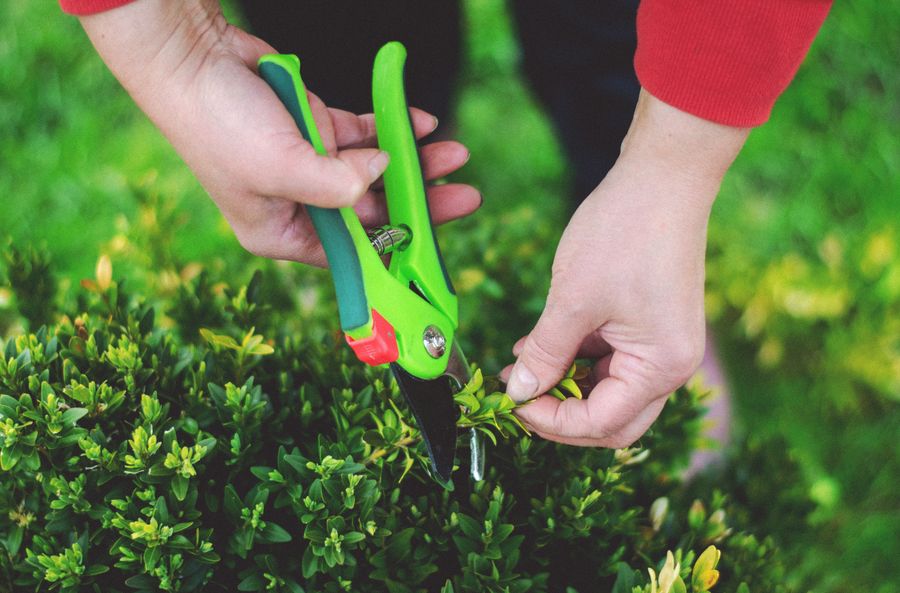
Spend the effort in years one to four. A tree trained well while young needs only quick, light pruning for the rest of its life. Ignore training, and you will spend years trying to correct a tall, crowded tree.
Maintenance pruning
Once a tree is bearing, the yearly job is lighter: keep it open, keep it in bounds, and keep young fruiting wood coming. A good guide is to remove no more than about a quarter of the live canopy in any one year.
The three D’s first
Start every session by removing dead, diseased and damaged wood, then branches that cross or rub. On many mature trees, that is half the job done.
Remove water sprouts & suckers
Take out the straight, vigorous shoots growing up from branches (water sprouts) and any suckers from the rootstock at the base. They shade the tree and rarely fruit.
Renew the fruiting wood
Each year, cut out a little of the oldest, droopiest fruiting wood back to a younger branch. This keeps fresh, productive growth coming without shocking the tree.
Restore old trees slowly
An overgrown old tree should be brought back over about three winters. Cutting it all at once triggers a flush of water sprouts and can expose bark to sunscald.
A little every year beats a lot every five. Light annual pruning keeps a tree balanced between growth and fruit. Heavy, occasional pruning keeps it in a cycle of overgrowth and recovery.
Open center & central leader systems
Free-standing fruit trees in the US are usually trained to one of two shapes, with a popular compromise between them. Decide which shape you are aiming for before you make a cut.
Open center (vase)
A short trunk with three or four main branches spreading out around an open middle, like a vase. The standard shape for peaches and nectarines, and good for plums, apricots and Japanese plums.
Central leader (Christmas tree)
A single main trunk with tiers of branches, longest at the bottom and shortest at the top. The natural shape for apples, pears and sweet cherries, and the best fit for dwarf and semi-dwarf trees.
Modified central leader
Train a central leader for a few years, then cut the leader back to a side branch at about 8-10 feet. Many extension services recommend this for backyard apples, pears and cherries: strong, but not too tall.
Prune to the shape
Every later cut should support the chosen shape: keep the vase center clear, or keep the leader on top with shorter branches above longer ones.

Peaches open, apples upright. As a rule of thumb, train peaches, nectarines and most plums to an open center, and apples, pears and cherries to a central or modified central leader.
Espaliers, cordons & fans
In a narrow side yard or along a fence, fruit trees can be trained flat against wires. These trained forms take up very little room, look striking and are kept in shape mostly by summer pruning.
Espaliers
Horizontal tiers of branches trained along wires either side of a central stem. Best with spur-bearing apples and pears on dwarfing or semi-dwarf rootstocks, against a sunny fence or wall.
Cordons
A single stem, often planted at a 45-degree angle, carrying fruit on short spurs. A row of cordons fits several apple varieties into one stretch of fence, which also helps pollination.
Fans
Branches spread flat like the ribs of a fan. Suited to peaches, plums, cherries and figs, and useful in cooler zones where a south-facing wall adds warmth.
Summer pruning keeps them flat
From mid to late summer, cut new side shoots back to three or four leaves above the base cluster. This keeps the form tidy and turns those stubs into fruiting spurs.
Trained trees are a summer job. Espaliers, cordons and fans are shaped mainly in summer, once the new shoots have turned woody at the base. In late winter, simply tidy any crowded spurs and tie in new wood.
Pruning apple & pear trees
Apples and pears are pruned the same way, while dormant in late winter. The key is knowing where your variety carries its fruit.
Prune while dormant
Prune from late winter until just before bud break. In fire blight areas, never prune during warm, wet weather in the growing season, when the bacteria spread most easily.
Spur-bearers vs tip-bearers
Most apples and pears fruit on short, stubby spurs along older wood. A few apples, such as ‘Granny Smith’ and ‘Cortland’, are partly tip-bearing and fruit at the ends of shoots, so prune them more lightly.
Thin spurs and crowded wood
On old trees, thin out crowded spur clusters so the remaining fruit sizes up, and remove branches growing into the center of the tree.
Deal with fire blight
Cut out blighted shoots in winter, 8-12 inches below the dead tissue, and sterilize pruners between cuts. Avoid heavy pruning and heavy nitrogen, which both cause the soft growth blight attacks.

Check before you cut. Look along the branches. If you see plenty of short, knobbly spurs, it is a spur-bearer and can take normal pruning. If the fat flower buds are at the shoot tips, shorten as little as possible or you remove next year’s fruit.
Pruning peach, plum & cherry trees
Stone fruit trees are pruned last in the season, as close to bloom as you can manage, because their wood is more sensitive to cold injury and canker. Peaches need the most pruning of any common fruit tree; cherries need the least.
Peaches & nectarines: prune hard
They fruit only on last year’s shoots, so they need renewing every year. Keep an open center and remove about 40 percent of the previous year’s growth just before bloom, leaving plenty of pencil-thick red shoots.
Plums: moderate pruning
European and Japanese plums fruit on spurs and young wood. Thin crowded branches, shorten overlong shoots and keep the tree open. Japanese plums grow fast and need more cutting than European types.
Cherries: light touch
Sweet and tart cherries need only light thinning once shaped. In rainy-winter areas, prune them in dry summer weather after harvest to keep bacterial canker out of the cuts.
Watch for canker & black knot
Cytospora canker on peaches and black knot on plums and cherries enter through wounds and dead wood. Cut out black knot swellings 4 inches below the knot in winter and remove dead stubs.

Stone fruit go last. Prune peaches, plums and cherries at the end of the dormant season, on a dry day, when the buds are swelling. In wet-winter climates, move cherry and apricot pruning to dry summer weather instead.
Tools & making a clean cut
How you cut matters as much as what you cut. Sharp tools and cuts in the right place heal quickly, while ragged stubs and flush cuts invite rot.
The right tool for the size
Use bypass hand pruners for shoots up to about ¾ inch, loppers up to about 1½ inches, and a pruning saw for anything thicker. Keep blades sharp so they slice rather than crush.
Cut outside the collar
When removing a whole branch, cut just outside the slightly swollen branch collar where it joins the trunk. Never cut flush with the trunk, and never leave a long stub.
Use three cuts on big limbs
For heavy branches, make an undercut a foot out, then cut through from above just beyond it so the limb drops cleanly, then remove the stub at the collar. This stops bark tearing down the trunk.
No wound paint, clean blades
Pruning sealers are not recommended; clean cuts heal best on their own. Wipe blades with 70% rubbing alcohol between trees, and between every cut when removing fire blight or black knot.
Cut just above an outward-facing bud. When shortening a shoot, cut about ¼ inch above a bud pointing away from the center, sloping slightly away from it. The new shoot then grows outward, into the light.
Common pruning mistakes
Most pruning trouble comes from the same handful of mistakes. Avoid these and you will be ahead of most backyard orchards.
Pruning at the wrong time
Fall pruning, summer pruning of apples and pears in fire blight weather, or winter pruning of cherries in a rainy climate all invite disease. Match the timing to the tree and your region.
Taking too much
Removing more than about a quarter of a tree in one year triggers a thicket of water sprouts and little fruit. Spread big jobs over several years.
Stubs and flush cuts
Stubs die back and rot; flush cuts remove the collar the tree needs to seal the wound. Cut just outside the branch collar or just above a bud.
Topping the tree
Lopping the top off a tall tree or shearing it like a hedge causes masses of upright regrowth. Instead, cut tall leaders back to an outward-growing side branch.
Ignoring the three D’s
Leaving dead, diseased and damaged wood in the tree lets cankers and rots spread. Remove it first, every time, and clear the prunings away from the tree.
Never pruning at all
An unpruned tree becomes tall, dense and prone to alternate-year cropping. A little pruning every year keeps it healthy and productive.
Right time, light hand, sharp tools. Almost every pruning problem comes down to cutting at the wrong time, cutting too much, or not cutting at all. Prune a little each year in the right season and you will rarely go wrong.
Fruit tree pruning - frequently asked questions
The pruning questions American gardeners ask most often, answered plainly.
When should I prune fruit trees?
In most of the US, prune fruit trees in late winter or very early spring while they are still dormant, after the worst cold has passed and before the buds open. That is roughly January to February in zones 8-9, February to March in zones 6-7, and March to April in zones 3-5. Prune apples and pears first and peaches, plums and cherries last.
How do I prune an apple tree?
In late winter, remove dead, diseased and crossing branches, keep one central leader or an open center, take out vigorous upright water sprouts, and thin crowded spurs. Remove no more than about a quarter of the live wood in one year, and prune tip-bearing varieties more lightly.
Should I prune plums and cherries in winter or summer?
In cold and dry regions, prune them in late winter just before bloom, after apples and pears. In wet-winter areas such as western Oregon, Washington and coastal California, prune cherries, apricots and plums in dry summer weather after harvest instead, because rain spreads bacterial canker and other wood diseases into fresh cuts.
What is the difference between training and maintenance pruning?
Training (formative) pruning shapes a young tree’s framework in its first three or four years. Maintenance pruning then keeps an established tree open, healthy and fruiting with lighter cuts every year.
How do I prune an espalier or cordon?
Trained forms are kept mostly by summer pruning. In mid to late summer, shorten the new side shoots to three or four leaves to keep the shape flat and build fruiting spurs, then do a light structural tidy-up in late winter.
Can I prune a fruit tree too hard?
Yes. Removing too much wood at once makes a tree push out a thicket of vigorous water sprouts and little fruit. Take out no more than about a quarter of the canopy in a year, and spread the renovation of an old, overgrown tree over three years.
Should I prune fruit trees in the fall?
No. Fall pruning can stimulate late growth and leaves fresh cuts open to winter injury and canker diseases, especially in cold zones. Wait until late winter. The only fall job is removing branches that are broken or clearly diseased.
Do I need to seal pruning cuts?
No. University research and extension services advise against wound paint or tar on most cuts. A clean cut just outside the branch collar heals on its own; sealants can trap moisture and slow healing.
How do I prune a peach tree?
Peaches and nectarines fruit only on last year’s growth, so they need harder pruning than other fruit trees. Train them to an open center with three or four main branches, and each year just before bloom remove about 40 percent of the previous year’s growth, keeping plenty of pencil-thick red shoots for fruit.
Beginner-friendly pruning tips
New to pruning? Keep these six rules in mind and every cut will be on the right side of the line.
Prune in late winter
Dormant, after the worst cold, before bud break - timed to your zone.
Stone fruit last
Peaches, plums and cherries go last, near bloom; in rainy-winter areas, cherries and apricots in summer.
Start with the three D’s
Dead, diseased and damaged wood comes out first, every time.
Let the light in
Open the center so sun reaches the fruit and leaves dry quickly after rain.
Cut at the collar or a bud
No stubs, no flush cuts, no wound paint - just clean cuts with sharp tools.
No more than a quarter
Prune lightly every year rather than hard every few years.
Helpful garden calculators
Planning new trees as well as pruning old ones? Our free calculators help with spacing, soil and mulch.
Useful for pruning fruit trees
Our picksAs an Amazon Associate, PlantMapper may earn from qualifying purchases. Prices and availability are set by Amazon.
The Fruit Trees & Bushes Starter Kit
This is the main pruning guide in our Fruit Trees & Bushes collection. Everything you need to prune with confidence is free on this page; the optional printable workbook is there if you want a pruning plan and record for each tree, on paper.
Download the Fruit Tree Pruning & Training Guide
An instant digital download in US Letter and A4 - print it as often as you like and prune and train healthy, productive fruit trees. Inside you will find the PlantMapper Pruning System, the Branch Priority Matrix, training-system selectors and formative-pruning timelines, plus field logs and trackers, all in the calm PlantMapper style. Part of the wider PlantMapper Collection.
Download the Guide on Etsy (UK edition)
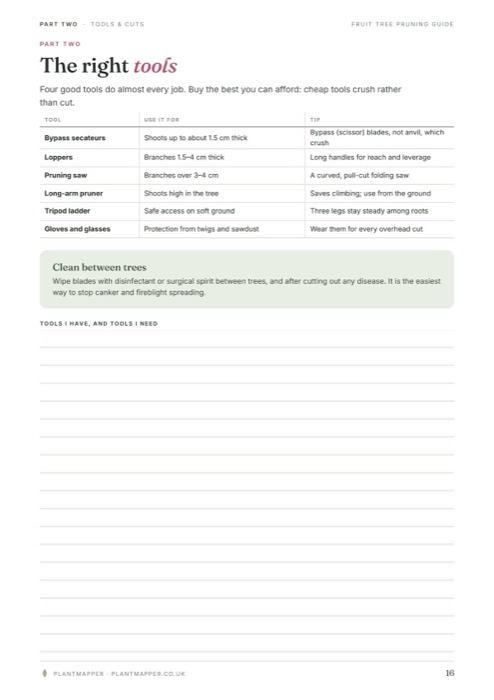
 64-page printable workbook · US Letter & A4
Disclosures & disclaimers
Affiliate disclosure
Some links on this page are affiliate links. If you buy through them, PlantMapper may earn a small commission at no extra cost to you. It never affects which products we suggest.
Gardening disclaimer
All advice is general guidance for home gardens in the United States. Timing varies with your zone, local weather and the diseases common in your area - your county extension office can give advice for your region. Use a ladder safely, and hire a certified arborist for large trees or work near power lines.
Food-safety note
This guide covers pruning only. Wash homegrown fruit before eating, and do not eat the seeds or pits of apples, pears, peaches, plums or cherries.