

Why grow pears?
A pear tree is one of the best long-term investments you can make in a backyard. Plant one this year and it can still be bearing fruit for your grandchildren. Pears handle clay soil better than most fruit trees, bloom beautifully in early spring and, in much of the US, need less spraying than apples or peaches. European pears grow across USDA zones 4 to 8 (some to zone 3), and Asian and low-chill pears take the crop south into zone 9.
Flavor you can’t buy
Pears for the grocery store are harvested rock-hard for shipping. A homegrown pear, picked at maturity and ripened in your kitchen, is sweet, juicy and fragrant in a way supermarket fruit rarely is.
Built to last
Pear trees are famously long-lived. Old farmstead pears across the country are still bearing a century after they were planted, often with no care at all.
Less spraying than apples
Pears are bothered by fewer insects than apples. Choose a fire-blight-resistant variety and many backyard growers manage with little or no spraying.
A handsome shade tree
White spring blossom that the early bees love, glossy green summer leaves and red, orange and purple fall color make a pear a good-looking yard tree in its own right.
Pears in the Fruit Trees & Bushes collection
Pear Trees
Long-lived, low-spray fruit trees from Minnesota to north Florida.
You are hereApple Trees
America’s favorite fruit tree, with varieties for zone 3 through zone 9.
Cherry Trees
Sweet and tart cherries on dwarfing rootstocks for yards of any size.
Plum Trees
European, Japanese and native plums, many of them easy and productive.
Grow Your Own
Vegetables, herbs and salad greens to grow alongside your fruit.
Best pear varieties for American yards
Where you live decides the variety more than anything else. In the North you need cold hardiness; in the humid South and Midwest you need fire blight resistance; in the warmest zones you need a low chill-hour requirement. There are three broad groups: European pears (the classic pear shape), Asian pears (round, crisp and juicy), and hybrid pears bred for heat and disease resistance.
‘Bartlett’ - the classic
The best-known pear in the US, aromatic and juicy, ripening in late summer. It thrives in the dry West but is very prone to fire blight, so in humid regions choose one of the resistant varieties below.
‘Seckel’ - small and tough
Small, intensely sweet “sugar pears” on a compact tree with good fire blight tolerance. A great pick for small yards and for snacking. Note that it will not pollinate ‘Bartlett’.
Blight-resistant Europeans
‘Harrow Delight’, ‘Harrow Sweet’, ‘Moonglow’, ‘Magness’, ‘Blake’s Pride’ and ‘Potomac’ give Bartlett-style fruit with much better fire blight resistance. These are the go-to choices for the East and Midwest.
Cold-hardy pears (zones 3-4)
‘Ure’, ‘Summercrisp’, ‘Golden Spice’, ‘Parker’ and ‘Patten’ were bred or selected for northern winters in Minnesota and the Canadian prairies, and are the safest picks for the upper Midwest and northern Plains.
Low-chill pears (zones 8-9)
‘Kieffer’, ‘Orient’, ‘Baldwin’, ‘Hood’, ‘Pineapple’ and ‘Warren’ need fewer winter chill hours and resist fire blight, so they suit the Gulf Coast, north Florida and Texas. Kieffer is hard and gritty off the tree but excellent for canning and baking.
Asian pears
‘Shinseiki’, ‘Hosui’, ‘20th Century’, ‘Chojuro’ and ‘Korean Giant’ are crisp as an apple and ripen on the tree. Most suit zones 5-9, and some have moderate fire blight resistance; they need heavy fruit thinning to size up.

Check chill hours before you buy. Most European pears want roughly 600 to 1,000 hours of winter cold (about 32-45°F) to bloom well. Low-chill pears such as ‘Hood’ and ‘Pineapple’ need only a few hundred. Your county extension office can tell you how many chill hours your area usually gets.
Pollination requirements
Treat every pear as needing a partner. Most varieties set little or no fruit with their own pollen, and pear blossom is less sweet than apple blossom, so honeybees and native bees visit it less eagerly. The fix is simple: plant two varieties that bloom together, close enough for the bees to carry pollen between them.
Plant two different varieties
Choose two pears with overlapping bloom times and plant them within about 50 feet of each other. A neighbor’s pear tree (not an ornamental Callery pear) can sometimes do the job.
Know the bad pairs
‘Bartlett’ and ‘Seckel’ will not pollinate each other. Ask the nursery for a recommended partner; ‘Bartlett’ with ‘Bosc’ or ‘Moonglow’, for example, is a common combination.
Asian and European together
Asian and European pears can pollinate one another if their bloom overlaps. Asian pears often bloom a little earlier, so an early-blooming European is the best match.
Low-chill partners in the South
In zones 8-9, pair low-chill pears with each other, such as ‘Hood’ with ‘Pineapple’ or ‘Orient’ with ‘Kieffer’, so the bloom times line up after a mild winter.

Late frosts are the hidden risk. Pears bloom before apples, and a hard freeze at full bloom (below about 28°F) can wipe out a year’s fruit. Avoid planting at the bottom of a slope where cold air settles, and cover small trees with frost cloth when a late freeze is forecast.
Rootstocks
Nursery pears are grafted onto a rootstock that sets the tree’s final size, its cold hardiness and how soon it bears. A pear on seedling roots can reach 30 feet or more, which is why most backyard trees today are sold on semi-dwarf or dwarfing stocks.
OHxF 333 - semi-dwarf
The most popular backyard pear rootstock in the US. It makes a tree about 12-18 feet tall, is cold hardy, tolerates heavy soil and has good fire blight resistance. A safe default for most yards.
OHxF 87 & 97 - larger trees
OHxF 87 is a little larger and very productive; OHxF 97 makes a near full-size, very hardy tree for big yards and cold, windy sites.
Quince - dwarfing
Quince rootstocks keep pears to about 8-12 feet and bring them into bearing early, but they are less cold hardy (roughly zone 5 and warmer), prone to fire blight and need permanent staking. Best for espaliers and small, mild-winter yards.
Seedling stocks for the South
In hot, wet Southern soils, nurseries often graft onto Pyrus betulifolia or Pyrus calleryana, which tolerate heat and poor drainage but make big trees. Remove any suckers from below the graft so the rootstock never flowers or spreads.
For most yards, choose OHxF 333. It gives a tree you can still pick from a stepladder, survives cold winters and helps resist fire blight. Choose quince only for espaliers and small trees in mild zones, and a vigorous OHxF stock for tough northern or windy sites.
Planting guide
Bare-root pears are the best value and widest choice. Plant them while dormant: in early spring as soon as the ground can be worked in zones 3-6 (roughly March to early May), and from late fall through February in zones 7-9. Container trees can go in any time the ground is not frozen, but avoid planting into midsummer heat.
Dig wide, not deep
Make the hole two to three times wider than the root spread but no deeper. Rough up the sides in clay so roots can grow out, and soak bare roots in a bucket of water for a few hours first.
Keep the graft above ground
Plant at the same depth the tree grew in the nursery, with the graft union (the knobby bend near the base) 2-3 inches above the soil. Buried grafts let the top root and lose the dwarfing effect.
Stake and guard the trunk
Stake dwarf and windy-site trees with a flexible tie. Wrap young trunks with a spiral guard or hardware cloth to stop rabbits, voles and deer rubbing; in deer country, a fence is the only sure protection.
Water in and mulch
Water deeply to settle the soil, then spread 2-3 inches of wood chip or shredded bark mulch in a wide circle, kept a few inches off the trunk. Keep lawn grass well back from young trees.
Short on space? Use a fence. Pears take beautifully to espalier training against a sunny fence or wall. A flat, tiered pear fits a narrow side yard and makes picking, netting and fire blight checks easy.
Soil & sun requirements
Pears need full sun and good air movement more than they need perfect soil. They tolerate heavier, wetter ground than most fruit trees, which makes them a good choice for clay yards, but they still hate roots sitting in standing water.
Full sun, good airflow
Give pears at least six to eight hours of direct sun. An open, breezy spot dries leaves and blossoms quickly after rain, which helps keep fire blight and leaf spots down.
Deep, moderately fertile soil
A deep loam or clay loam with a pH of about 6.0-7.0 is ideal. Pears cope with clay better than apples or peaches; very sandy soils need extra compost and more watering.
Drainage still matters
On heavy clay or in wet spots, plant on a low, wide mound so the crown stays out of winter wet. Pear-seedling and OHxF rootstocks handle wet soils better than quince.
Not in a frost pocket
Avoid low ground where cold air pools on spring nights. A gentle slope or the middle of the yard is safer for the early blossom than a valley floor.

Growing pears across the US
Pears grow from about USDA zone 3 to zone 9, but the right variety changes a lot between Minnesota, Georgia and Oregon. Find your growing zone first, then use the notes below.
Northeast & Midwest
Cold winters suit pears, but humid summers bring fire blight, pear psylla and leaf spots. Choose resistant varieties such as ‘Harrow Delight’, ‘Seckel’ or ‘Moonglow’ on OHxF 333, and use ‘Ure’ or ‘Summercrisp’ in zones 3-4. Deer browse young trees hard, so fence them.
Southeast & Gulf Coast
Fire blight is the main threat in the heat and humidity, and Bartlett rarely lasts. Plant ‘Kieffer’, ‘Orient’, ‘Baldwin’, ‘Warren’ or, near the coast and in north Florida, ‘Hood’ and ‘Pineapple’. Old Kieffer and “sand pear” trees on Southern farms show how tough they are.
Southwest & California
Dry summers keep fire blight lower, so Bartlett, Bosc and Asian pears do well with drip irrigation in cooler parts of California and at higher elevations. Low deserts need low-chill pears and afternoon shade. Alkaline soils can cause yellow leaves (iron chlorosis).
Pacific Northwest
Some of the country’s best pears grow here: Oregon’s Hood River valley and central Washington produce much of the US crop. West of the Cascades, wet springs mean scab, so pick scab-resistant varieties and rake up fallen leaves.
Mountain West & Plains
Cold, wind, hail and late spring frosts are the challenge. Plant hardy varieties on hardy OHxF or seedling rootstock, give them a windbreak, and paint or wrap young trunks against winter sunscald. Pears tolerate alkaline Plains soils better than many fruits.
Don’t plant Callery pear
Bradford and other Callery pears are invasive across much of the East and South, and several states, including Ohio and Pennsylvania, have banned their sale. For spring blossom, plant native serviceberry, redbud or a fruiting pear instead.
Ask about fire blight first. Anywhere with warm, humid spring weather, a fire-blight-resistant variety on a resistant rootstock will do more for your harvest than any spray program. Your county extension office will have a recommended list for your area.
Watering & feeding
Young pears need regular water to get established; mature trees mostly look after themselves. Go easy with fertilizer: lush, soft growth is exactly what fire blight attacks first, so a pear that grows too fast is a pear at risk.
Water young trees deeply
For the first two or three summers, give about 5-10 gallons once a week in dry spells, soaking the root zone rather than sprinkling. In the arid West, drip irrigation is a must.
Feed lightly, if at all
If shoots grow less than about 6-12 inches a year, scatter a little balanced fruit tree fertilizer in early spring. If growth is already strong, skip it. Never feed late in summer.
Pears in containers
Dwarf pears in large pots dry out quickly in summer heat, so water often and feed lightly through spring. In zones 6 and colder, move pots into an unheated garage for winter so the roots don’t freeze solid.
Thin heavy crops
After the natural June drop, thin clusters to one or two fruits, about 6 inches apart. Asian pears need this most: thin hard to one fruit per cluster or they stay small.
Even moisture, steady growth. Swings between drought and soaking split fruit and stress the tree. Keep a mulch ring topped up and water through dry spells in July and August, especially in hot, dry climates.
Pruning basics
Pears naturally grow tall and upright, so pruning is mostly about opening them out and spreading the branches. Prune in late winter while the tree is dormant: roughly February to early April in zones 4-6, and January to February in zones 7-9, finishing before buds break. See our fruit tree pruning guide for the full method.
Prune dormant, in dry weather
Late winter cuts heal fastest and give the clearest view of the branches. Avoid pruning in warm, wet weather during the growing season, when fire blight bacteria spread most easily.
Start with the three D’s
First remove anything dead, damaged or diseased, then branches that cross or crowd the center. Often that is all a mature pear needs.
Spread the branches
Pears put up narrow, upright branches with weak crotches. Use clothespins or wooden spreaders on young shoots to push them out to about 45-60 degrees; wider branches fruit sooner and break less.
Fruit on long-lived spurs
Pears bear on short spurs that keep producing for years. On older trees, thin crowded spur clusters so the remaining fruit sizes up well.
Light pruning, every year
Heavy pruning triggers a flush of upright water sprouts and soft growth that fire blight loves. Take out a little each year rather than a lot every few years.
Espalier in summer
Trained espaliers and cordons get a light trim in mid to late summer to keep their shape, plus a tidy-up in winter. The upright habit of pears makes them easy to train flat.
Clean tools between cuts. If you see fire blight, sterilize your pruners between cuts with household disinfectant or 70% rubbing alcohol, and bag or burn the prunings where local rules allow. Never leave infected wood lying under the tree.
Common problems
Pears have fewer pests than apples, but fire blight is the one problem every American pear grower needs to understand. Get the variety right and keep an eye out in spring, and most of the rest is manageable.
Fire blight
A bacterial disease that blackens blossoms and shoot tips into a “shepherd’s crook”, as if scorched, after warm, wet spring weather. Cut infected shoots 8-12 inches into healthy wood in dry weather, sterilizing pruners between cuts. Resistant varieties are the real cure.
Pear psylla
Tiny sap-sucking insects that coat leaves in sticky honeydew and black sooty mold. Dormant horticultural oil in late winter, plus encouraging lady beetles and other predators, keeps most backyard infestations down.
Codling moth & plum curculio
Codling moth larvae tunnel to the core; plum curculio leaves crescent-shaped scars. Both are more of an apple problem, but bagging young fruit or well-timed sprays protect pears where they are common.
Pear slug & leaf spots
Slimy pear slug larvae skeletonize leaves in summer; hose them off or let birds have them. Fabraea leaf spot and pear scab cause spotted leaves and fruit in wet areas; rake up fallen leaves in fall.
Deer, rabbits & voles
Deer browse shoots and buds, rabbits and voles gnaw young bark in winter. A fence, trunk guards and a mulch ring pulled back from the trunk are the best defense. Juniper rusts can also spot the leaves orange where cedars grow nearby.
Gritty or mushy fruit
European pears left to ripen on the tree turn mealy and brown at the core, and erratic watering splits fruit. Pick them firm and keep moisture even. Stony, gritty fruit can also be a sign of drought stress.
Watch the tree at bloom time. Most fire blight infections start in the flowers during warm, rainy spring weather. Where it is a constant problem, extension services can advise on bloom-time sprays such as copper or streptomycin; always follow the label, and check your tree weekly in late spring for scorched shoot tips.
Harvesting pears
Harvesting is where pears differ most from other fruit. European pears ripen from the inside out, so they are picked mature but hard and finished indoors. Asian pears are the opposite: they ripen properly on the tree and are eaten crisp.
The lift test
Cup a European pear and lift it level with the branch. If the stem snaps cleanly from the spur, it is mature and ready to pick, even though it still feels hard.
When to expect them
‘Bartlett’ is usually ready from mid-August to early September in much of the country; ‘Bosc’, ‘Anjou’ and ‘Comice’ follow in September and October. Low-chill Southern pears often ripen in July and August.
Ripen on the counter
Leave picked ‘Bartlett’ at room temperature for a few days. ‘Bosc’, ‘Anjou’ and ‘Comice’ ripen evenly only after a few weeks in the refrigerator first. “Check the neck”: when it gives to gentle thumb pressure, eat it.
Asian pears: tree-ripe
Pick Asian pears when they taste sweet and the skin has turned from green to yellow or russet-brown. Handle them gently: they look tough but bruise easily.

Storing pears
Late pears store surprisingly well if they go into the cold straight after picking. Keep them in the refrigerator and bring a few out at a time to ripen, and you can eat good pears from late summer into winter.
Chill them fast
Store firm, freshly picked pears at about 30-32°F with high humidity, in the refrigerator crisper or a second fridge in the garage. ‘Anjou’ and ‘Bosc’ can keep for two to four months this way.
Keep them separate
Store pears away from apples and strong-smelling foods, in perforated plastic bags or single layers. Check them weekly and use any that start to soften or spot.
Ripen in small batches
Move a few pears at a time from the cold to the kitchen counter. A paper bag with a banana speeds things up. That way you eat perfect pears for weeks instead of facing one huge glut.
Asian pears keep crisp
Asian pears do not need ripening and stay crisp for weeks, or even a few months, in the refrigerator. Wrap them individually to prevent bruising.
Too many at once? Pears ripen in a rush. Can them in light syrup, make pear butter or sauce, dry slices in a dehydrator, or freeze them poached. Hard ‘Kieffer’ pears are especially good for canning and baking.
Pear trees - frequently asked questions
What American gardeners ask most often about growing pears, answered plainly.
Do pear trees need a pollination partner?
Almost always, yes. Plant two different pear varieties that bloom at the same time within about 50 feet of each other. Bartlett and Seckel are a well-known pair that will not pollinate each other, so pick a different partner for either one. Asian pears can pollinate European pears when their bloom overlaps.
How long before a pear tree fruits?
Pears are patient trees. On a semi-dwarf rootstock such as OHxF 333 or on quince, expect the first real crop in about four to six years; full-size trees on seedling rootstock can take seven years or more. Once they start, they keep cropping for decades.
What is the best pear tree for a small yard?
Choose a pear on a dwarfing quince or semi-dwarf OHxF 333 rootstock and keep it pruned to around 10 to 15 feet, or train it flat against a fence as an espalier. Seckel is a naturally compact, fire-blight-tolerant variety that suits small spaces well.
Why won't my pear tree fruit?
The usual reasons are no compatible pollination partner nearby, a spring frost that killed the early blossom, too much shade, heavy nitrogen feeding, or simply a young tree that is not old enough yet. In warm zones, a variety that does not get enough chill hours will bloom poorly too.
When and how do I pick pears?
European pears are picked firm and ripened indoors; left on the tree they turn gritty and brown at the core. Pick when the fruit snaps off as you lift it level, then ripen at room temperature (Bosc, Anjou and Comice first need a few weeks in the refrigerator). Asian pears are the exception: let them ripen fully on the tree.
Are pears harder to grow than apples?
In most of the US they are easier. Pears have fewer insect problems than apples. Their big weakness is fire blight in warm, humid areas, so choosing a resistant variety matters more than anything else you do.
What zones do pear trees grow in?
European pears grow well in USDA zones 4 to 8, and some hardy varieties such as Ure, Summercrisp and Golden Spice survive zone 3. Asian pears suit zones 5 to 9. In zones 8 and 9, choose low-chill pears such as Kieffer, Orient, Hood or Pineapple.
Can I grow pears in Florida or Texas?
Yes, with the right varieties. North and central Florida and much of Texas grow low-chill, fire-blight-resistant pears such as Hood, Pineapple, Orient, Kieffer, Baldwin and Warren. Classic European pears like Bartlett usually fail there because of fire blight and too few chill hours. South Florida is generally too warm for pears.
Is a Bradford pear a fruit tree?
No. Bradford and other Callery pears are ornamental trees with tiny, hard fruit. Their seedlings have become a serious invasive weed across much of the East and South, and some states, including Ohio and Pennsylvania, have banned their sale. Plant a fruiting pear or a native tree such as serviceberry instead.
Practical tips
The short version: the habits that turn a pear tree into a reliable, low-fuss cropper in almost any part of the country.
Match the variety to your region
Hardiness in the North, fire blight resistance in humid areas, low chill hours in the Deep South.
Always plant two
Two varieties that bloom together, within about 50 feet - and not Bartlett with Seckel.
Choose OHxF 333 for most yards
A manageable, hardy semi-dwarf tree with built-in fire blight resistance.
Plant bare-root while dormant
Early spring in cold zones, late fall to winter in mild ones - the best value and widest choice.
Pick firm, ripen indoors
European pears off the tree hard, ripened on the counter; Asian pears ripe on the branch.
Go easy on fertilizer
Soft, fast growth invites fire blight. Mulch, water in dry spells and feed only if growth is weak.
Helpful garden calculators
Work out spacing, soil and mulch for a new pear planting before you head to the nursery.
Useful for growing pears
Our picksAs an Amazon Associate, PlantMapper may earn from qualifying purchases. Prices and availability are set by Amazon.
The Fruit Trees & Bushes Starter Kit
This pear guide belongs to our Fruit Trees & Bushes collection. Everything you need to pick, plant, prune and ripen pears is free right here; the optional printable workbook is there if you would like to plan a whole backyard orchard on paper.
Download the Fruit Trees & Bushes Starter Kit
An instant digital download in US Letter and A4 - print it as often as you like and plan, plant and care for fruit trees and bushes. Inside you will find the Orchard Formula, rootstock and pollination planners, orchard layout grids, a fruit directory and seasonal trackers, all in the calm PlantMapper style. Part of the wider PlantMapper Collection.
Download the Starter Kit on Etsy (UK edition)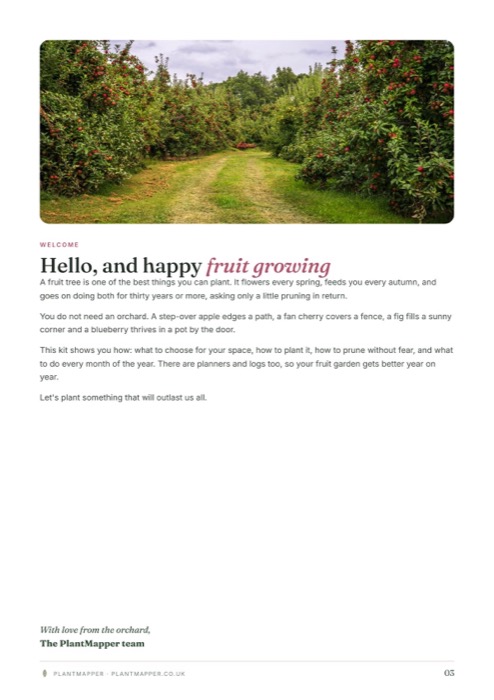
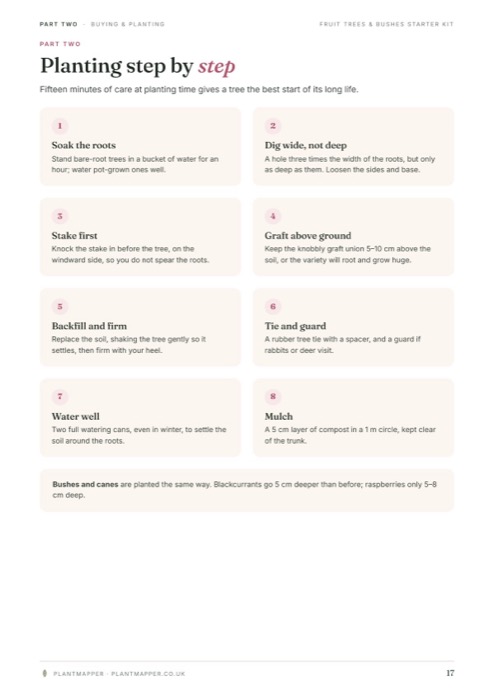
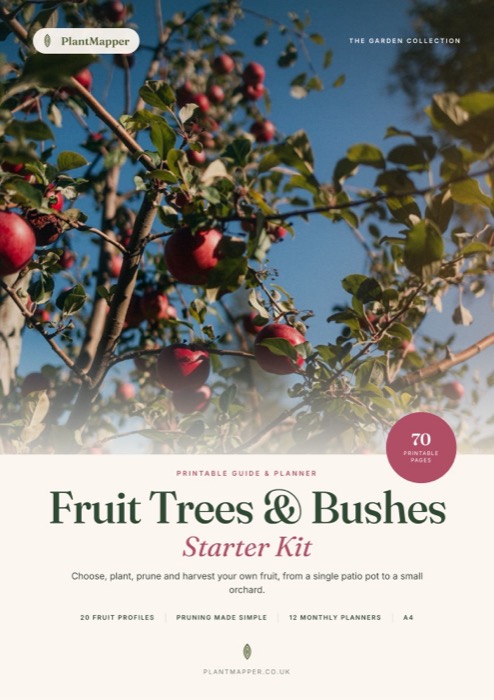 70-page printable workbook · US Letter & A4
Download the Fruit Tree Pruning & Training Guide
An instant digital download in US Letter and A4 - print it as often as you like and prune and train healthy, productive fruit trees. Inside you will find the PlantMapper Pruning System, the Branch Priority Matrix, training-system selectors and formative-pruning timelines, plus field logs and trackers, all in the calm PlantMapper style. Part of the wider PlantMapper Collection.
Download the Guide on Etsy (UK edition)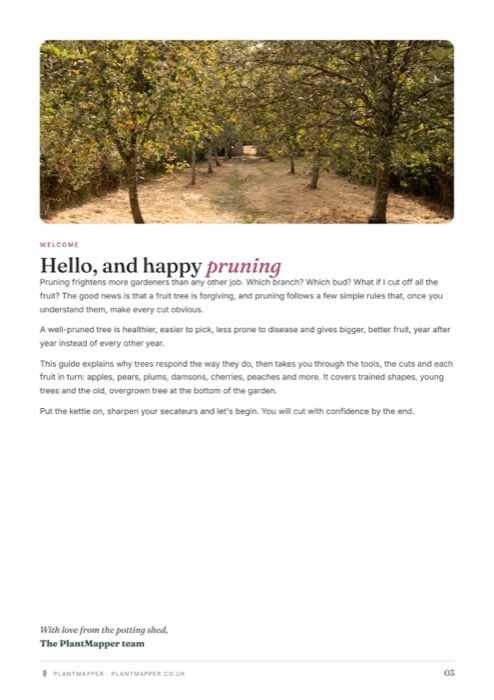
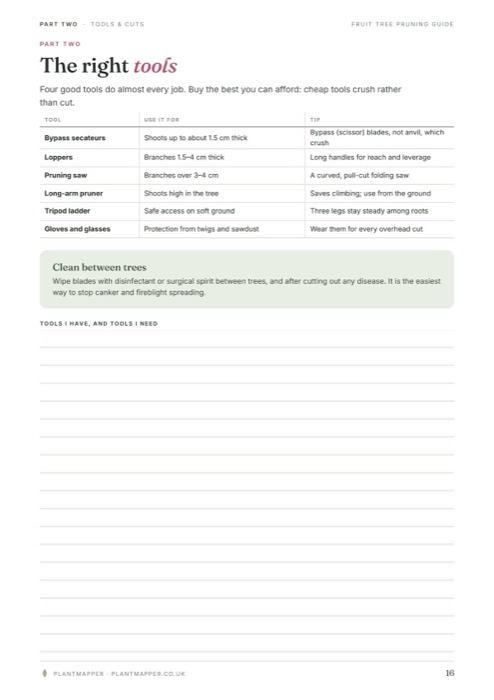
 64-page printable workbook · US Letter & A4
Disclosures & disclaimers
Affiliate disclosure
Some links on this page are affiliate links. If you buy through them, PlantMapper may earn a small commission at no extra cost to you. It never affects which products we suggest.
Gardening disclaimer
All advice is general guidance for home gardens in the United States. Results vary with your zone, chill hours, soil and local disease pressure - check variety, rootstock and pollination needs with a local nursery or your county extension office before you buy.
Food-safety note
Ornamental Callery pears and wild pears are not worth eating; grow named fruiting varieties. Wash homegrown fruit before eating, and follow label directions and pre-harvest intervals for any spray you use.