
Ferns
Polystichum, Dryopteris, Athyrium, Osmundastrum
The backbone of shade, and deer usually leave them alone. Christmas fern (East) and western sword fern are evergreen natives; Japanese shield fern and holly fern handle Southern heat.
Mature shade trees are one of the best things a yard can have, even if the grass underneath has given up. The north side of the house, the strip under the oaks and the narrow side yard can all become cool, green and calm with the right plants, and in hot Southern summers a shady spot is where you'll actually want to sit. Here is how to read your shade, choose plants that cope with your zone and your deer, and build a quiet, leafy retreat.
Shade varies a lot from yard to yard. Check each plant's light, soil, moisture and USDA zone against your own conditions before buying.

A shade garden is any bed where the sun is filtered, blocked or brief for most of the day, by the house, a privacy fence, the neighbor's garage or a canopy of oaks and maples. It is built around foliage, texture and calm rather than a blaze of flowers, and once the plants match the light, it is one of the easiest parts of a yard to keep looking good. It is also the best answer to the patchy lawn under trees that no amount of reseeding will fix. Check your growing zone before you shop.
Leaf shape, size and color carry a shade garden. Ferns, heucheras and hellebores give months of interest.
Shaded beds stay noticeably cooler in summer, a welcome place to sit on a humid July afternoon.
Out of the hot sun, soil holds moisture longer, so most shade beds need far less watering (except dry shade under trees).
Pale flowers, variegated leaves and silver foliage bounce light around and lift even the darkest corner.
Cool, leafy, undisturbed planting shelters songbirds, toads, fireflies and native bees.
Slower, steadier growth means less watering, less fertilizer and no mowing of struggling grass.
Some of the most beautiful plants prefer shade. The trick is choosing the right ones instead of forcing sun lovers to cope.
Layered greens, bold leaves, pale flowers and the play of dappled light make shade gardens some of the most atmospheric of all.
Dry shade under a maple is very different from a damp bed on the north side of the house. Knowing your type of shade is the whole secret.
Cool, calm and foliage-led: lush, low-maintenance planting for low-light yards.
You are hereRelaxed native planting under a tree canopy, the shade garden's wilder cousin.
Bold, leafy and exotic. Many jungle plants are happiest in part shade, especially in the South.
Romantic, flower-filled beds for sunnier yards, a softer, sun-loving contrast.
Sunny gravel, silver foliage and herbs, the shade garden's opposite in every way.
Some inspiration before you plan: hostas, ferns, coleus and dappled light, the cool, leafy textures that make shade feel calm and lush.


“Shade” is not one thing. Spend a summer day watching how light moves across your yard and you'll see several kinds, each suiting different plants. Plant tags usually say “full shade” (under 3 hours of direct sun) or “part shade” (3-6 hours). One US twist: in the South and Southwest, morning sun with afternoon shade counts as the gentle option, while 6 hours of afternoon sun in Texas is brutal.
Little or no direct sun all day. Typical spots: a narrow side yard between houses, the north side of the house, or under dense evergreens. Choose tough foliage like ferns, wild ginger and, in the South, cast iron plant.
Three to six hours of direct sun, then shade. Typical spots: an east-facing bed with morning sun, the easiest condition of all. West-facing beds get hot afternoon sun, so choose tougher plants there.
Sun broken into shifting patches by leaves overhead. Typical spots: under a honey locust, birch or tall, limbed-up oak, the gentle woodland-edge light most shade plants love.
Shade and little moisture, the hardest of all. Typical spots: under maples, beeches and big conifers, or under the eaves. Plant small, water the first year and choose drought-tough shade plants.
Shade with reliably moist soil, a gift for lush planting. Typical spots: the north side of the house, low ground or a rain garden. Ferns, astilbe, turtlehead and (deer permitting) hostas flourish.
Check where the sun falls at 9 a.m., 1 p.m. and 5 p.m. in midsummer, when trees are in full leaf, then dig a small hole a day after rain. Light plus moisture decide what will thrive.
The single most useful thing you can do is to name your shade before you buy. The same fern that loves a damp bed on the north side of the house will struggle in dry shade under a silver maple: same light, very different soil.
Once you stop fighting the shade and start working with it, the advantages stack up. A shade garden is often the most relaxing, forgiving part of the yard.
Shaded soil dries out more slowly, so established shade beds often need watering only in droughts, a real plus under summer watering restrictions.
Cooler, steadier conditions mean slower growth, fewer weeds in deep shade, and less cutting back through the year.
Leaves hold their color longer out of harsh sun: no midsummer scorch, just months of green.
A shaded seat is the best spot in the yard on a hot day, noticeably cooler than open lawn or patio.
Leaf litter, cool cover and quiet corners shelter toads, fireflies, beetles and nesting birds.
Green-on-green planting and soft, even light give shade gardens a quiet, almost meditative atmosphere.
These dependable groups turn shade into something beautiful, mostly for their foliage, with flowers as a bonus. Most suit zones 4-8; the cards note heat, cold and deer, the three things that decide success in American yards. Then filter more plants by soil and light in the Plant Finder.
Polystichum, Dryopteris, Athyrium, Osmundastrum
The backbone of shade, and deer usually leave them alone. Christmas fern (East) and western sword fern are evergreen natives; Japanese shield fern and holly fern handle Southern heat.
Hosta
Big leaves in blue, gold, green and cream, zones 3-9. But deer love them and slugs chew them. In deer country, fence them, spray repellent or grow them in pots on the deck.
Heuchera
A North American native genus. Mounds of ruffled leaves in lime, amber, plum and silver, zones 4-9. Hybrids with native Heuchera villosa handle Southern heat best.
Helleborus
Late-winter flowers over evergreen leaves, zones 4-9, from Ohio to Georgia. Toxic, so deer and rabbits leave them alone.
Anemone hupehensis & hybrids
Tall pink or white flowers from late summer into fall, zones 4-8, and deer resistant. Spreads by runners once happy.
Digitalis purpurea
Woodland spires of bell flowers loved by bumblebees, zones 4-8, and ignored by deer. Biennial; in the Pacific Northwest it seeds into forests, so deadhead there.
Brunnera macrophylla
Airy blue spring flowers over heart-shaped leaves, zones 3-8. Silver-leaved kinds glow in shade, and deer leave it alone. Best in Northern and mountain gardens.
Astilbe
Feathery plumes in pink, red and white, zones 4-8, for damp shade. Fairly deer resistant, but it crisps in dry soil or hot Southern sun.
Sarcococca, Fatsia, Kalmia, Mahonia aquifolium, Aspidistra
Year-round structure: sweetbox (zones 6-9, scented and deer resistant), fatsia and cast iron plant in the South, native mountain laurel in the East and Oregon grape in the West.
Asarum, Tiarella, Pachysandra procumbens, Carex, Epimedium
Periwinkle (vinca), English ivy and Japanese pachysandra are sold everywhere but escape into woods in many states. Use wild ginger, foamflower, Allegheny pachysandra, Pennsylvania sedge or epimedium instead.
Shade plants by region. Northeast & Midwest: ferns, hellebores, brunnera, astilbe and native wild ginger, with deer the main battle. Southeast & Gulf: cast iron plant, Japanese shield fern and holly fern, hellebores, heuchera villosa hybrids and caladiums for summer color. Pacific Northwest: sword fern, Oregon grape, salal and fringecups thrive in moist shade. California & Southwest: dry shade under oaks suits coffeeberry, Douglas iris, hummingbird sage and coral bells, with little summer water. Mountain West & Plains: choose cold-hardy, dry-tolerant plants such as epimedium, sweet woodruff and native columbine.

A few simple ideas turn a collection of shade plants into a calm, planned space. Follow these and even a difficult dark corner will feel intentional.
Build height in tiers: a small tree or tall shrub, mid-height perennials, then groundcover, so the eye travels and the mulch never shows.
With fewer flowers, leaf texture leads. Pair feathery ferns with broad leaves and strappy sedges for contrast.
Set big against fine, glossy against matte, and dark against gold. Contrast is what stops an all-green border looking flat.
Variegated, silver and lime-green leaves act like patches of sunlight, drawing the eye and brightening the gloom.
White and pale blooms, such as foxgloves, anemones, white astilbe and impatiens, seem to glow in low light, especially at dusk.
Repeat a few reliable plants in drifts rather than dotting one of everything. Rhythm makes a small shade garden feel calm and unified.
Take your cue from a forest floor: informal drifts, a mulch of your own shredded leaves, spring bulbs and a meandering path.
A simple rule: choose three or four foliage plants you love, repeat them generously, and add just a few white or pale flowers to lift the whole scheme. Restraint is what makes shade planting feel restful rather than busy.
Almost every disappointing shade bed comes down to one of these slip-ups. A little awareness now saves a wasted season.
Dry shade and damp shade need different plants entirely. Name your type of shade first, then choose to suit it.
Roses, lavender and most annuals sulk and stretch in shade. Pick true shade lovers and they thrive with no fuss.
The ground under trees is the toughest of all. Don't pile soil over tree roots; plant small plugs between them and water through the first summer.
Thin, root-filled soil starves new plants. Work compost into planting holes and mulch yearly with shredded leaves to hold moisture.
A few small plants in a big bed leave bare, weedy soil. Plant generously and use groundcover so foliage knits together quickly.
Hostas, impatiens and azaleas can disappear overnight. In deer country, choose ferns, hellebores and other deer-resistant plants, or fence.
An all-perennial bed is bare in winter. Weave in evergreens like sweetbox, mountain laurel, Christmas fern and hellebores.
An all-dark-green scheme can feel heavy. Add variegated, silver and pale-flowered plants to bounce light into the gloom.
Four ready-made combinations to use as is or adapt. Each uses reliable plants you can find at most garden centers and native plant nurseries.
Lush and layered, peaking from late spring to fall. Mulch well and, deer aside, it almost looks after itself.
Plant small in fall and water through the first summer. Once settled, this planting copes where almost nothing else will, and deer rarely touch it.
Informal drifts and a leaf mulch give a relaxed, woodland-edge feel under a light tree canopy.
Group pots of varied height, plant against the walls and let foliage spill over the edges. In zone 6 and colder, move tender pots into the garage for winter.

Filter plants by your light, soil and space. These shortcuts are a good place to start for a shady yard.
Plan the practical side of a new shade bed with our free calculators: spacing, soil and mulch, worked out before you pick up a shovel.
As an Amazon Associate, PlantMapper may earn from qualifying purchases. Prices and availability are set by Amazon.
Give shade plants a couple of seasons to establish, and bare, difficult ground under the trees fills in with cool, layered greens and ferns.

Everything on this page is free: the plant groups, design principles and schemes. The Shady Garden Starter Kit is an optional printable workbook for planning your shade beds on paper. It was written for the original edition of PlantMapper, so check plants against your zone and deer pressure using this page, our free garden calculators and the Plant Finder.
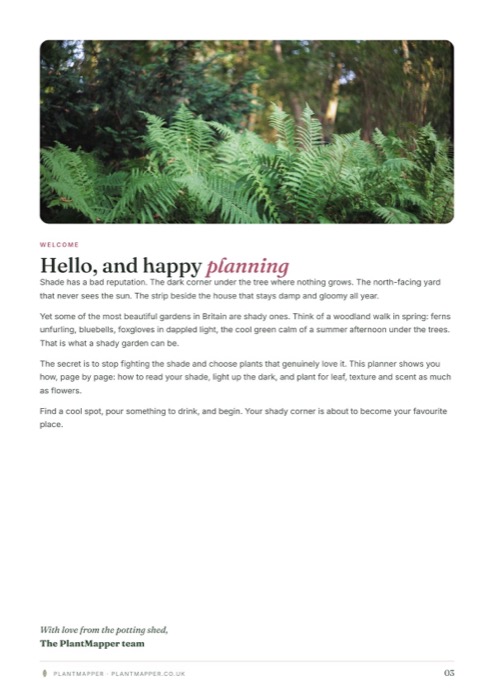
Step-by-step pages to capture your ideas and turn a tricky shady spot into a clear plan.
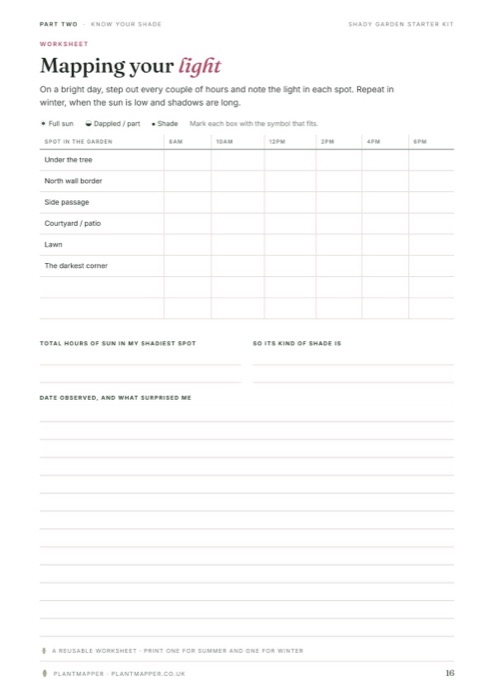
Simple charts to map your light through the day and pin down which type of shade each bed has.
Ready-made and blank planting plans for damp, dry and woodland shade, with reliable plant combinations to copy.
Scaled and dot grids to sketch your beds to size. Print a fresh one for every idea.
Season-by-season checklists for mulching, dividing, pest care and cleanup to keep the garden thriving.
Pages to record what thrives, what struggles and what you will try next year.
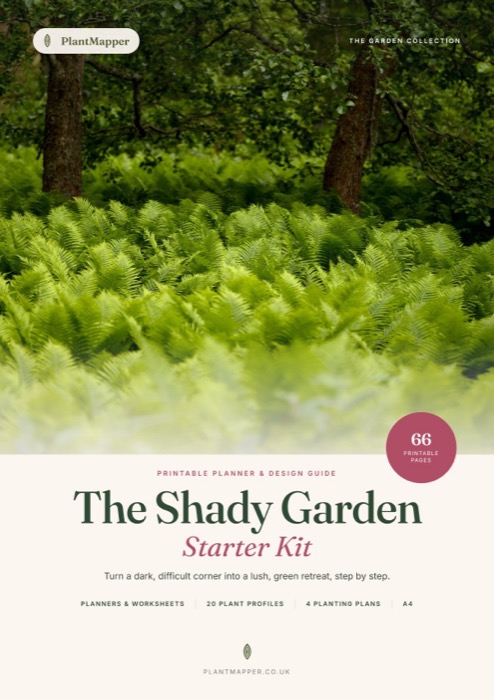
An instant digital download in US Letter and A4. Print it at home as often as you like and turn a shady, difficult corner into a calm, leafy garden. Inside you will find a shade-plant directory, ready-made and blank planting plans, light-and-soil worksheets, design grids, seasonal care checklists and a garden journal, with a set of cool, restful color palettes ready to copy. It sits alongside our Cottage, Mediterranean and Tropical garden kits.
Download the Starter Kit on Etsy (UK edition)A printable workbook for your own yard. Always check a plant's light, soil, moisture and zone needs for your area before buying.
 66-page printable planner · US Letter & A4
Some links on this page are affiliate links. If you buy through them, PlantMapper may earn a small commission at no extra cost to you. It never affects which products we suggest.
All advice is general guidance for yards across the US. Results vary with your zone, rainfall, soil, deer pressure and the exact depth of shade, so confirm each plant's suitability and invasive status where you live.
Some shade plants, foxgloves and hellebores among them, are toxic if eaten and can irritate skin. Check each plant before growing it near children, pets or food crops, and wear gloves when handling.
Yes. Shade suits a huge range of lush, long-lasting foliage plants such as ferns, heucheras, hellebores and hostas. A shade garden is often calmer, cooler and lower-maintenance than a sunny one, and it solves the patchy lawn under trees.
Dry shade is the difficult ground under trees and eaves, where roots and overhangs keep moisture out. Damp shade stays reliably moist, for example on the north side of the house or on low ground. Each suits different plants, so it pays to know which you have.
Ferns, hellebores, epimedium, brunnera, pulmonaria, foxglove, Japanese anemone, sweetbox and wild ginger are rarely eaten by deer. Hostas, impatiens, azaleas and trilliums are deer favorites. No plant is completely deer-proof when deer are hungry, so protect new plantings.
English ivy, periwinkle (vinca) and Japanese pachysandra are sold widely but spread into woodland in many states, and creeping lilyturf can be a problem in the Southeast. Native alternatives include wild ginger, foamflower, Allegheny pachysandra, Pennsylvania sedge and green-and-gold.
Ferns, heucheras, hellebores, brunnera, Japanese anemones, astilbe and evergreen shrubs like sweetbox and mountain laurel all thrive in the even light of a north-facing bed, as do hostas where deer are not a problem. In the South, add cast iron plant and Japanese shield fern.