

Why grow your own tomatoes?
Tomatoes are the gateway crop for American gardeners, and for good reason. One healthy plant can give you 10-30 pounds of fruit over a season, you can grow varieties you will never see at the supermarket, from 'Cherokee Purple' to 'Sun Gold', and the flavor of a vine-ripened tomato is worth the whole effort. They grow in every state, suit a backyard bed or a bucket on a balcony, and teach you the basics of watering, feeding and staking that every other vegetable needs.
Real flavor
Store tomatoes are picked green so they survive shipping. Yours ripen on the vine, which is where the sugar and flavor come from.
Big harvests
A single indeterminate plant can produce well over 10 pounds of fruit in a good season, from one hole in the ground or one big container.
Grows almost anywhere
In-ground rows, raised beds, buckets, grow bags and hanging baskets: if it gets 6-8 hours of sun, it can grow tomatoes.
A great first crop
Tomatoes reward a little daily attention and teach you to water, feed and support plants, the skills behind every vegetable garden.
Tomatoes in the Grow Your Own collection
Tomatoes
The heart of the vegetable garden: productive, rewarding and beginner-friendly.
You are hereRaised Beds
Warm, loose, well-drained soil that tomatoes love.
Beginner Vegetables
More easy crops to grow alongside your tomatoes.
Greenhouse Growing
Start seedlings early and stretch the season under cover.
Companion Planting
Basil, marigolds, borage and other good tomato neighbors.
Choosing tomato varieties
Seed racks and nursery tables are packed with tomatoes, but choosing gets easy once you know the main fruit types, the two growth habits, and the disease-resistance codes on the label.
Cherry and grape
Small, sweet and prolific, and usually the first to ripen. The most forgiving type for beginners and containers. Try 'Sun Gold', 'Sweet Million' or 'Juliet'.
Slicers
Medium to large round tomatoes for sandwiches and salads. Reliable all-rounders such as 'Celebrity', 'Early Girl' and 'Better Boy' do well across most of the country.
Beefsteak
Big, meaty fruits that need a long, warm season. Heirlooms like 'Brandywine' and 'Cherokee Purple' have huge flavor; hybrids such as 'Big Beef' are easier and more disease resistant.
Paste (Roma)
Firm, meaty fruits with less juice, ideal for sauce, salsa and canning. Try 'Roma', 'San Marzano' or the disease-resistant 'Plum Regal'.
Determinate vs indeterminate
Determinate (bush) types grow to a set height, ripen their crop over a few weeks and suit containers and canning. Indeterminate (vining) types keep growing and fruiting until frost and need tall stakes or cages.
Heirloom vs hybrid
Heirlooms offer unusual colors and big flavor but less disease resistance. Hybrids carry letters on the label, such as V, F, N, TSWV or LB, for resistance to Verticillium, Fusarium, nematodes, spotted wilt and late blight. Grow some of each.
First time growing? Start with a cherry tomato such as 'Sun Gold' or 'Sweet 100' and a reliable slicer like 'Celebrity' or 'Early Girl'. For a patio pot, try a compact determinate such as 'Bush Early Girl' or 'Patio Princess'. They crop quickly and forgive beginner mistakes.
Growing tomatoes across the US
Tomatoes grow in every state, but planting time runs from February in the South to June in the northern Plains, and the main problems change with the climate. Find your growing zone to set your dates.
Northeast & Midwest
Plant out in mid to late May in most areas (later in zone 3-4). Start seeds indoors in late March or April, choose early varieties such as 'Early Girl' or 'Stupice' for short seasons, and watch for late blight in cool, wet summers.
Southeast & Gulf Coast
Plant early (February to April) so plants fruit before midsummer heat stops fruit set, and again in late summer for a fall crop. Heat-set varieties and disease resistance (F, N, TSWV) matter here; early blight and root-knot nematodes are common.
Southwest & California
In the low desert, plant in February and again in August to September for fall. Use shade cloth in peak heat, drip irrigation under mulch, and choose heat-tolerant types. Coastal California has a long, mild season but cooler summers.
Pacific Northwest
Cool nights slow ripening, so choose early or cool-tolerant varieties, use black plastic or a south-facing wall to warm the soil, and plant out in mid-May or later. Late blight is a risk in wet falls.
Mountain West & Plains
Short seasons, hail and big day-night swings. Plant out after your last frost (often late May or June), protect young plants with wall-of-water cloches or row cover, and choose quick varieties.
Florida & Hawaii
Summer is too hot and humid for most tomatoes in Florida. Grow from fall through spring instead, using heat-set and disease-resistant varieties.
Growing tomatoes in containers
Tomatoes grow well in containers, which is ideal for decks, balconies, driveways and anywhere the ground is poor. Choose a big enough pot, fill it with good potting mix and keep up with watering, and one plant will keep you in tomatoes all summer.

Go big
Use at least a 5-gallon container (about 12-14 inches across) for a compact plant and 10-20 gallons for a big indeterminate. Fabric grow bags and food-safe buckets with drainage holes work well.
Use potting mix
Fill with a quality potting mix made for containers, not garden soil, which packs down and drains poorly in a pot. Mix in a little compost or slow-release fertilizer at planting.
Water every day
In hot weather, containers may need water every day, sometimes twice. A self-watering container or a drip line on a timer keeps moisture steady.
Feed regularly
Potting mix runs out of nutrients fast. Once fruit starts to form, feed every 1-2 weeks with a tomato fertilizer, following the label.
Support and sun
Put a cage or stake in at planting time, before roots spread. Give pots 6-8 hours of sun; in the hottest regions, afternoon shade helps.
Compact types for small spaces
For a hanging basket or railing planter, choose a small determinate or trailing cherry such as 'Tumbling Tom'. No pruning or staking needed.
Growing tomatoes in raised beds
A raised bed is one of the best places to grow tomatoes: the soil warms up earlier in spring, drains well after storms and gives roots plenty of room.

Full sun
Choose the sunniest bed you have, with at least 6-8 hours of direct sun. Good air movement helps leaves dry quickly and slows disease.
Rich, deep soil
Mix plenty of compost into the bed before planting. Tomatoes like a slightly acidic to neutral soil, around pH 6.2-6.8.
Spacing
Space indeterminate plants about 24-36 inches apart and determinate types about 18-24 inches. Crowded plants stay wet and get more disease.
Plant deep
Tomatoes root along buried stems. Strip the lower leaves and plant so only the top few sets of leaves are above ground, or lay leggy transplants sideways in a trench.
Mulch the surface
Once the soil has warmed, mulch with straw, shredded leaves or compost. Mulch keeps moisture even and stops soil splashing disease spores onto the lower leaves.
Cages or stakes
Set sturdy cages, 6-foot stakes or a Florida weave trellis at planting. The cone-shaped cages sold at many stores are too small for indeterminate tomatoes.
Starting tomatoes indoors and in greenhouses
A greenhouse or hoop house lets you start seedlings early and stretch the season at both ends, which helps a lot in short-season northern gardens. Most gardeners start seeds indoors 6-8 weeks before the last frost and plant out after it.
Start seeds indoors
Sow seeds 6-8 weeks before your last frost date, under grow lights or in a sunny greenhouse, at about 70-80°F for fast germination.
Harden them off
Over 7-10 days before planting out, set seedlings outside for a little longer each day so they get used to sun, wind and cooler nights.
Watch the heat
Greenhouses overheat quickly. Above about 90°F tomato flowers stop setting fruit, so vent well and use shade cloth in summer.
Help them set
Under cover there is little wind or bee traffic. Give flowering plants a gentle shake or tap each day to release pollen.
Grow up high
Train indeterminate tomatoes up strings or tall stakes to use the height. Plants under cover can grow 6-8 feet tall.
Keep it clean
Clear out old plants and fallen fruit at the end of the season, and clean pots and stakes so diseases don't carry over to next year.
Fertilizing tomatoes
Tomatoes are heavy feeders, but too much of the wrong fertilizer gives you a jungle of leaves and few fruit. A simple routine works best.
At planting
Mix compost and a balanced or tomato-specific granular fertilizer into the planting hole. A soil test through your county Extension office shows exactly what your soil needs.
Once fruit sets
When the first small tomatoes form, side-dress with a little granular fertilizer every 3-4 weeks, or use a liquid tomato feed every 1-2 weeks for containers.
Go easy on nitrogen
Too much nitrogen means big, leafy plants and few flowers. Choose a fertilizer with lower nitrogen than phosphorus and potassium once plants are fruiting.
Don't overdo it
More is not better. Follow the label rate; extra fertilizer can burn roots and makes soft growth that pests and disease target.
Watering tomatoes
Watering is the skill that makes or breaks a tomato crop. Even moisture gives sweet, unblemished fruit; boom-and-bust watering causes most of the problems gardeners blame on disease.
Deep and steady
Give about 1-2 inches of water a week, including rain, more in hot, dry or windy weather. Water deeply a few times a week in beds; check containers daily.
Water the roots
Water the soil, not the leaves. Wet foliage spreads early blight and Septoria leaf spot. Water in the morning so any splashes dry fast.
Drip and timers
Drip irrigation or a soaker hose on a timer keeps moisture steady through busy weeks and vacations, and it is usually allowed during watering restrictions. Check your city's rules.
Mulch to hold moisture
A few inches of mulch evens out soil moisture and slows drying, which is the easiest way to prevent cracking and blossom end rot.
Pruning & staking
Indeterminate tomatoes benefit from light pruning and good support. Determinate types need very little pruning at all.
Pinch suckers
On staked indeterminate plants, pinch out the suckers that grow in the joint between the main stem and each leaf while they are small. On caged plants you can leave more of them.
Tie in as it grows
Loosely tie stems to a stake every 8-12 inches with soft ties, or tuck them back inside the cage. A heavily loaded plant is heavier than it looks.
Remove lower leaves
Remove leaves that touch the soil and any spotted lower leaves. Better airflow and less splash slows early blight and Septoria leaf spot.
Top them before frost
About a month before your first fall frost, pinch out the growing tips so the plant puts its energy into ripening the fruit it already has.
Leave determinates be
Determinate (bush) tomatoes set their crop on the side shoots. Pruning them reduces your harvest, so just support them and let them grow.
Keep some shade
Don't strip too many leaves. In hot, sunny regions the foliage shades the fruit and prevents sunscald.
Companion planting
A few well-chosen neighbors can bring in pollinators and pest-eating insects. See our full companion planting guide for more ideas.
Basil
The classic partner in the garden and the kitchen. Its flowers bring in bees, and the two are ready to pick at the same time.
Marigolds
French marigolds are tough, cheerful and attract hoverflies and other beneficial insects. Some types may help reduce root-knot nematodes in the soil over time.
Borage and zinnias
Borage, zinnias and native flowers such as purple coneflower and bee balm draw in native bees, which improves fruit set.
Chives & onions
Onions, garlic and chives tuck in easily around tomatoes, and chive flowers bring in pollinators.
Lettuce below
Quick lettuce and greens use the shaded soil at the base of tall plants in spring and are done before the tomatoes fill out.
Keep apart from potatoes and walnuts
Potatoes share late blight and pests with tomatoes, so keep them apart. Black walnut roots release juglone, which wilts and kills tomatoes, so plant well away from walnut trees.
Common tomato problems in US gardens
Most tomato problems have a clear cause and a simple fix, and many come back to watering, weather or leaf diseases. Here is what American gardeners see most.
!Early blight and Septoria leaf spot
Brown spots with target rings (early blight) or many small spots with pale centers (Septoria), starting on the lowest leaves. Very common in humid summers. Mulch, water the soil not the leaves, remove spotted leaves, space plants for airflow and rotate beds. Choose resistant varieties and clean up plant debris in fall.
!Late blight
Large greasy gray-green blotches on leaves and stems, and firm brown patches on fruit, spreading fast in cool, wet weather. Serious and fast moving. Pull and bag infected plants at once (don't compost them), and let your county Extension office know. Choose varieties marked LB for late blight resistance.
!Blossom end rot
A sunken, leathery dark patch on the bottom of the fruit. Caused by uneven watering that stops the plant moving calcium into the fruit. Water evenly, mulch, and don't let containers dry out. Most soils have enough calcium; a soil test will tell you.
!Tomato hornworms
Big green caterpillars and stripped leaves, with dark droppings on the leaves below. Hand-pick them in the early morning or evening. Leave any covered in small white cocoons: those are parasitic wasps that will take care of the rest. Bt is an option for young caterpillars.
!Flowers drop, no fruit
Plenty of flowers but few tomatoes. Usually heat: fruit set slows when days are above about 90°F or nights stay above about 75°F. It picks up again when the weather cools. Water evenly and choose heat-set varieties in the South.
!Cracking, wilt and stink bugs
Split fruit, plants that wilt and don't recover, or cloudy spots on the fruit. Cracks follow heavy rain after dry spells, so keep moisture steady. Fusarium and Verticillium wilt live in the soil, so rotate and grow varieties marked F and V. Hand-pick stink bugs and cover plants with row cover if needed.
Harvesting tomatoes
Picking is the best part. Harvest at the right moment and store tomatoes well for the best flavor, and turn the extra into sauce and salsa.

Pick at full color
Harvest when fruit is fully colored and gives slightly when squeezed. You can also pick at first blush of color and finish ripening indoors, which avoids cracking and critter damage.
Store at room temperature
Don't refrigerate ripe tomatoes you plan to eat soon; cold dulls the flavor and makes them mealy. Keep them on the counter out of direct sun.
Beat the first frost
Before your first fall frost, pick all the full-size green tomatoes. Ripen them in a paper bag or box indoors, or make fried green tomatoes or green tomato salsa.
Use up the extras
Freeze tomatoes whole, roast them into sauce or can them using a tested recipe (the USDA and the National Center for Home Food Preservation publish safe methods).
Tomatoes - frequently asked questions
The tomato questions American gardeners ask most, answered simply.
When should I plant tomatoes outside?
Plant tomato transplants after your last spring frost, once nights stay above about 50°F and the soil has warmed. That is roughly February to March in zones 9-10, April in zones 7-8, May in zones 5-6 and late May to early June in zones 3-4.
Can you grow tomatoes in containers?
Yes. Use at least a 5-gallon container for a compact plant and 10-20 gallons for a large indeterminate, filled with potting mix rather than garden soil. Add a cage or stake at planting, water daily in hot weather and feed every 1-2 weeks once fruit sets.
Why do my tomatoes get blossom end rot?
Blossom end rot, a sunken dark patch on the bottom of the fruit, is caused by uneven watering that stops the plant moving calcium into the fruit. It is not a disease. Water deeply and evenly, mulch, and don't let containers dry out.
How do I get rid of tomato hornworms?
Hand-pick them in the early morning or evening, when they are easiest to spot, and look for their dark droppings on the leaves. Leave any hornworms covered in small white cocoons, because parasitic wasps are already dealing with them. Bt works on young caterpillars.
What causes brown spots on tomato leaves?
Spots that start on the lower leaves are usually early blight (target-like rings) or Septoria leaf spot (many small spots with pale centers). Remove spotted leaves, mulch, water at soil level, give plants space and rotate where you grow tomatoes each year.
Why are my tomato flowers falling off?
Heat is the usual cause. Fruit set slows when days are above about 90°F or nights stay above about 75°F, and also when nights are below about 55°F. Keep plants evenly watered; fruit set picks up when temperatures ease.
Example tomato setups
Four simple ways to grow tomatoes, whatever size your yard is. Copy one as it is or adapt it to your space.
Deck containers
- Two 5-10 gallon containers in full sun
- A cherry or compact slicer in each, with a cage
- Quality potting mix, watered daily
- Tomato fertilizer every 1-2 weeks once fruiting
- Basil & marigolds tucked alongside
The easiest start: two containers by the back door can keep a household in cherry tomatoes from midsummer until frost.
Hanging basket
- A large basket in a sunny, sheltered spot
- A trailing cherry tomato, no pruning
- Moisture-holding potting mix, watered daily
- Liquid feed through summer
- Nothing to stake or train
Tomatoes with no ground at all: a trailing cherry basket is pretty, productive and about as easy as it gets.
Raised bed row
- A sunny raised bed enriched with compost
- Indeterminates 24-36 in apart, in tall cages
- Straw mulch to keep moisture even
- Drip line on a timer for steady watering
- Disease-resistant varieties for humid summers
A short row of caged tomatoes in a good bed gives a serious harvest: plenty to eat fresh and extra for sauce and canning.
Seed-start and greenhouse
- Seeds started indoors 6-8 weeks before the last frost
- Hardened off over a week or so
- Planted out after frost
- Wall-of-water cloches on cold nights
- Beefsteaks & heirlooms that need a long season
The way to grow the big, special varieties in short-season areas: an early start indoors and protection on cold nights.
Explore more in the Grow Your Own guides
Tomatoes are just the start. These guides help you plan the rest of your vegetable garden.
Handy garden calculators
Work out how much potting mix, soil and space your tomatoes need, so you buy the right amount and give every plant room to grow.
Handy for growing tomatoes
Our picksAs an Amazon Associate, PlantMapper may earn from qualifying purchases. Prices and availability are set by Amazon.
The Grow Your Own Starter Kit
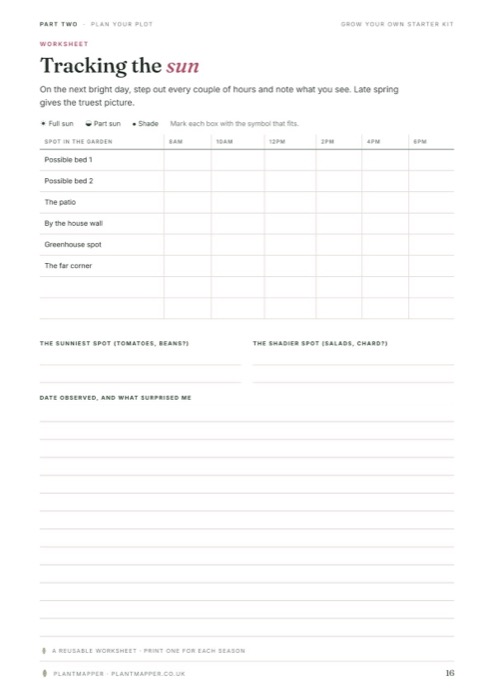
Everything on this page is free: choosing varieties, planting by frost date, containers, feeding, watering, staking and fixing problems. If you like planning on paper, the Grow Your Own Starter Kit is an optional printable workbook for mapping out a whole season of tomatoes and other crops. It pairs with our free garden calculators and Plant Finder.
Variety chooser
Worksheets to pick the right tomatoes for your space and taste: cherry or beefsteak, determinate or indeterminate, container or bed.
Seed-starting & feeding planner
Fill in your own frost dates to plan when to start seeds, harden off, plant out, feed and top your plants.
Care & staking guide
Simple illustrated steps for watering, feeding, pruning suckers and staking.
Problem-solver
A quick troubleshooting guide to blight, leaf spot, blossom end rot, hornworms and cracking.
Setup plans
Plans for containers, baskets, raised beds and seed starting, with the spacing and support each one needs.
Grower's journal
Pages to record what you grew, how it did and what to change next year.
Download the Grow Your Own Starter Kit
An instant digital download in US Letter and A4 - print it at home as often as you like. Inside are planning pages, bed and rotation planners, a sowing and harvest calendar, a crop directory and seasonal trackers, all in the calm PlantMapper style. It is part of the wider PlantMapper Collection.
Get the Starter Kit on Etsy (UK edition)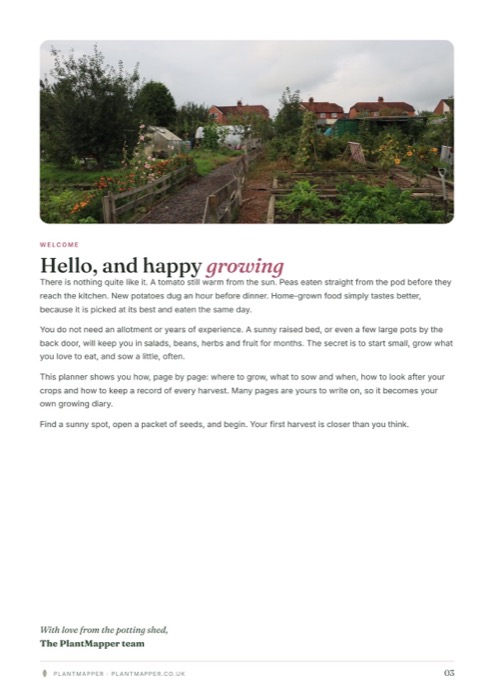
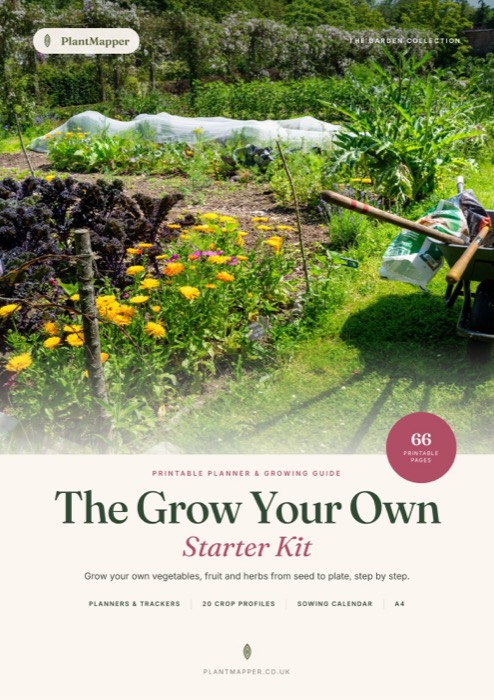 66-page printable workbook · US Letter & A4
Disclosures & disclaimers
Affiliate disclosure
Some links on this page are affiliate links. If you buy through them, PlantMapper may earn a small commission at no extra cost to you. It never affects which products we suggest.
Gardening disclaimer
All advice is general guidance for US gardens. Frost dates, heat and disease pressure vary a lot by region, so check timing with your county Extension office.
Food-safety note
Tomato leaves and stems are not edible. Wash all homegrown produce before eating, and use tested recipes when canning.