

Quick answers
- When should I plant my vegetable garden?
- Hardy crops (peas, spinach, onions, potatoes) go out 2-6 weeks before your average last frost; tender crops (tomatoes, peppers, squash, beans) go out 1-2 weeks after it, once the soil is warm.
- When do I start seeds indoors?
- Count back from your last frost: about 8-10 weeks for peppers and eggplant, 6-8 weeks for tomatoes and broccoli, and 3-4 weeks for cucumbers and melons if you start them inside at all.
- When is my last frost?
- Roughly early June in zone 3, early May in zone 5, early April in zone 7 and late February in zone 9. Find your growing zone by ZIP code, then pick it in the calendar below.
- What can I plant for a fall garden?
- Broccoli, cabbage, kale, collards, carrots, beets, lettuce, spinach and peas, sown in mid to late summer so they mature in the cool weather. In zones 8-9, fall is often the better season for them.
Vegetable planting calendar by USDA zone
Choose your zone to see when to start seeds indoors, when to sow or plant outside, and when to sow again for a fall harvest. Dates are worked out from the approximate average frost dates for that zone, so treat them as a starting point and nudge them for your own yard. Not sure of your zone? Find your growing zone by ZIP code - we’ll remember it here.
Showing zone 6. Pick your own zone above.
An average last-frost date still leaves roughly a coin-flip chance of a later frost, which is why tender crops are scheduled a week or two after it. Keep row cover or old sheets handy for a surprise cold night.
Why plan around frost dates?
Every vegetable falls into one of two camps. Cool-season crops - peas, lettuce, spinach, broccoli, carrots - shrug off light frost and sulk or bolt once summer heat arrives. Warm-season crops - tomatoes, peppers, squash, beans, corn, okra - are killed by frost and stall in cold soil. Your two frost dates mark the boundaries between those worlds, so a calendar built on them works whether you garden in Vermont, Kansas or central Texas. Plan once, and you know exactly what should be in a seed tray, in the ground or on the table each week.
Hit the right window
Cool-season crops need to mature before the heat; warm-season crops need warm soil. Planting by frost date gets both right.
Two seasons, not one
Most of the country gets a spring and a fall planting window. A calendar makes sure you don’t forget the second one.
Time your seed starting
Starting seeds indoors too early gives leggy, root-bound transplants. Counting back from your frost date gives sturdy plants on the day you need them.
Grow more from less space
When one crop comes out, the next goes straight in. Good timing can double what a raised bed produces in a year.
The Vegetable Calendar in the Grow Your Own collection
Vegetable Calendar
The schedule that ties it all together - what to start, plant and harvest in your zone.
You are hereBeginner Vegetables
The easy, forgiving crops to put on your calendar first.
Salad Greens
The crop that pays back succession sowing better than any other.
Greenhouse Growing
Start earlier and finish later with a greenhouse, hoop house or cold frame.
Companion Planting
Plan what grows side by side as well as when it goes in.
Growing seasons across the US
The length of your frost-free season ranges from barely three months in the northern tier to practically all year in South Florida and the low desert. Here is what that means in the vegetable garden. Find your growing zone if you’re not sure which applies.
Northern tier (zones 3-4)
A short, intense summer. Start warm-season crops indoors, choose fast-maturing varieties (look for 60-75 days on tomatoes), warm the soil with black plastic and use row cover at both ends of the season.
Midwest & Northeast (zones 5-6)
The classic schedule: peas and potatoes in early spring, tomatoes around Memorial Day in zone 5, a fall crop of brassicas and greens sown in July and August.
Mid-South & Mid-Atlantic (zones 7-8)
Long seasons with hot, humid summers. Get cool crops in early so they finish before the heat, plant tomatoes in April, and treat fall as a full second season.
Deep South & Gulf Coast (zones 8-9)
Two gardens a year. Spring planting starts in February or March, midsummer is for okra, Southern peas and sweet potatoes, and fall into winter is prime time for greens, broccoli and carrots.
Florida, low desert & South Texas (zones 9-11)
The calendar flips: the main vegetable season runs from fall through spring, and the hottest months are too harsh for most crops. Lettuce and broccoli are winter vegetables here.
West Coast & high elevation
Zone numbers miss part of the story. Coastal California and the Pacific Northwest have mild winters but cool summers that slow tomatoes and peppers; mountain gardens can see frost in any month.
Spring planting calendar
Spring arrives in January in parts of Florida and in June near the Canadian border, so think in weeks around your last frost rather than months. In zone 7 your last frost is around early April; in zone 4 it’s mid to late May.
10-6 weeks before - seed starting
Start peppers, eggplant and onions from seed first, then tomatoes, broccoli, cabbage and kale. Use a heat mat and a grow light or bright south window.
6-2 weeks before - hardy crops out
As soon as the soil can be worked, sow peas, spinach, radishes and lettuce, plant onion sets and seed potatoes, and set out hardened-off broccoli and cabbage.
1-3 weeks after - warm crops out
When nights stay above about 50°F and the soil reaches 60°F, plant tomatoes, peppers and basil and sow beans, corn, squash and cucumbers.
Sow now
Peas, spinach, lettuce, arugula, radishes, carrots, beets and Swiss chard outside; tomatoes, peppers and eggplant indoors.
Plant now
Seed potatoes, onion sets or plants, asparagus crowns, strawberry plants and hardened-off cool-season transplants.
Harvest now
Asparagus, rhubarb, radishes, baby greens, green onions and anything that overwintered - spinach, kale and garlic greens in milder zones.
Summer growing calendar
Summer is about keeping plants watered, fed and picked - and quietly sowing the fall garden while everyone else is busy with tomatoes.

Early summer - mulch & stake
Mulch with straw or shredded leaves once the soil is warm, stake or cage tomatoes, and make a second sowing of beans, corn and cucumbers.
Midsummer - water & watch
Aim for about 1 inch of water a week (more in desert heat), water at the base in the morning, and check daily for squash bugs, hornworms and Japanese beetles.
Late summer - start the fall garden
Count back from your first fall frost: sow broccoli and cabbage 12-14 weeks before it, carrots and beans about 10-12 weeks before, lettuce and spinach 6-8 weeks before.
Sow now
Succession beans, cucumbers and zucchini; in the South, okra, Southern peas and Malabar spinach; from midsummer, fall brassicas, carrots and beets.
Plant now
Sweet potato slips once the soil is properly warm, late tomato transplants in zones 8-9 for a fall crop, and fall broccoli and cabbage transplants.
Harvest now
Tomatoes, peppers, zucchini, cucumbers, green beans, sweet corn, new potatoes, garlic and onions - pick often to keep plants producing.
Fall garden calendar
The fall garden is the most underused season in American vegetable growing. Many crops taste sweeter after a light frost, pests ease off, and in the South it’s the best growing weather of the year.
8-4 weeks before - last sowings
Final quick sowings of lettuce, spinach, arugula and radishes. Have row cover or a cold frame ready to stretch the season.
Around first frost - harvest & protect
Pick every tomato, pepper, squash and pumpkin before a hard frost, cure winter squash and sweet potatoes, and cover greens on cold nights.
After the freeze - garlic & cleanup
Plant garlic cloves, pull spent plants (bag diseased ones for the trash), spread compost or shredded leaves, and sow a cover crop such as cereal rye.
Sow now
Spinach to overwinter in zones 6 and warmer, cover crops on empty beds, and in zones 8-9 the whole cool-season lineup: lettuce, carrots, peas, kale and collards.
Plant now
Garlic and shallots for next summer, short-day onion transplants in the Deep South, and fall-planted fruit trees and berry bushes.
Harvest now
Winter squash, pumpkins, sweet potatoes, late tomatoes and peppers, then kale, collards, Brussels sprouts, carrots and beets, which all sweeten with cold.
Winter garden calendar
Winter means very different things across the country: snow-covered beds in Wisconsin, a cold-frame salad garden in Virginia, and peak lettuce season in Phoenix and Orlando.
Zones 3-6 - rest & plan
Order seed catalogs, sketch next year’s beds and rotation, check stored squash and potatoes, and set up grow lights before seed-starting season.
Zones 7-8 - cold frames & greens
Kale, collards, spinach and mâche keep going under row cover or in a cold frame. Start onion seeds indoors in midwinter and peppers by late winter.
Zones 9-11 - the main season
Harvest lettuce, broccoli, cabbage, carrots and peas, and get ready to plant tomatoes and peppers as early as January or February.
Sow now (indoors)
From late winter: onions and leeks first, then peppers and eggplant, under grow lights with a heat mat - timed from your last frost, not the calendar page.
Plant now
Bare-root fruit trees, berry canes and asparagus crowns as soon as the ground can be worked in late winter; in warm zones, short-day onions and seed potatoes.
Harvest now
Stored potatoes, onions, winter squash and garlic everywhere; fresh kale, collards and spinach under cover in mild zones; full salad bowls in the far South.
Sowing guide by zone group
No time for the full calendar? These are the key sowing windows for four broad groups of zones. Dates are approximate - use the zone calendar for more detail.

Zones 3-5
- March-April indoors: peppers, onions, then tomatoes and brassicas
- April-May outside: peas, spinach, potatoes, carrots
- Late May-June: beans, squash, corn, tomatoes out
- July: fall kale, carrots, beets, lettuce
A short season: start indoors and choose quick varieties.
Zones 6-7
- February-March indoors: peppers, eggplant, tomatoes
- March: peas, spinach, onions, potatoes outside
- Late April-May: warm-season crops out
- July-August: fall broccoli, cabbage, carrots, greens
The longest “two-season” window for most crops.
Zones 8-9
- December-January indoors: tomatoes and peppers
- January-February: onions, potatoes, peas, greens
- March-April: tomatoes, beans, squash, corn
- August-October: the big fall and winter garden
Beat the summer heat; fall is the star season.
Zones 10-11
- September-February: lettuce, broccoli, carrots, peas, onions
- January-March: tomatoes, peppers, beans, squash
- Spring-summer: okra, sweet potatoes, Southern peas
- Midsummer: mostly rest or cover crops
Winter is the main vegetable season.
When to plant out
Sowing is half the job. Knowing when transplants, seed potatoes, onion sets and garlic go into the ground matters just as much - and soil temperature is as good a guide as the calendar.
Early spring - potatoes & onions
Plant seed potatoes and onion sets 2-6 weeks before your last frost, once the soil is around 45°F and dry enough to crumble rather than smear.
After the last frost
Tender transplants go out a week or two after the average last frost - around Memorial Day in much of zone 5, mid-April in zone 7.
Harden off first
Give indoor seedlings 7-10 days of gradually longer spells outside, starting in shade and out of the wind, so they don’t scorch or stall.
Pick the right onion
Onions bulb by day length: long-day types for the North, intermediate-day for the middle of the country, short-day types for the South. The wrong kind makes small bulbs.
Fall - garlic
Plant garlic cloves around your first frost (late September in zone 3, October in zone 5, November in zone 8), mulch after the ground freezes, and harvest next summer.
Late winter - dormant planting
Bare-root fruit trees, raspberries, blueberries and asparagus crowns go in while dormant, as soon as the soil can be worked.
Harvest guide through the year
With a spring garden, a summer garden and a fall garden, most American gardeners can pick something for nine months of the year or more - longer still in the South.

Spring
- Asparagus & rhubarb
- Radishes, green onions & baby greens
- Peas by late spring
- Overwintered spinach & kale
Small harvests, but the most welcome of the year.
Summer
- Tomatoes, peppers & eggplant
- Zucchini, cucumbers & green beans
- Sweet corn & melons
- Garlic, onions & new potatoes
Pick every day or two - overripe fruit slows the plant down.
Fall
- Winter squash & pumpkins
- Sweet potatoes & storage potatoes
- Broccoli, cabbage & Brussels sprouts
- Carrots, beets, kale & collards
Light frost improves the flavor of most brassicas and roots.
Winter
- Stored squash, onions, garlic & potatoes
- Kale & collards under row cover
- Carrots left in mulched beds
- Full salad garden in zones 9-11
A good fall garden keeps the kitchen supplied well into winter.
Succession planting
Instead of one big sowing that all ripens in the same week, sow a little every couple of weeks. It’s the simplest way to get a steady harvest without a glut you have to give away.
Sow every 2-3 weeks
Short rows of lettuce, radishes, bush beans and sweet corn sown every few weeks keep the harvest coming all season.
Know your cut-off
Stop sowing when there aren’t enough days left: count the “days to maturity” on the seed packet back from your first fall frost and add a week or two.
Follow one crop with another
Garlic out in July? Plant fall carrots or bush beans. Spring peas finished? Put in cucumbers or fall broccoli.
Switch varieties with the season
Use bolt-resistant lettuce and heat-tolerant greens for summer sowings, and cold-hardy kale and spinach for fall.
Best for succession: lettuce and salad mixes, radishes, arugula, spinach, beets, carrots, bush beans and sweet corn. Our salad greens guide covers the crop that rewards it most.
Grow lights, cold frames & greenhouses
You don’t need a greenhouse to stretch the season, though it helps. A shop light over a seed tray, a cold frame or a low tunnel of row cover can add weeks at both ends of your calendar.
Late winter - seed starting
LED grow lights hung a few inches above the seedlings and a heat mat under the tray give stocky transplants; a windowsill alone usually makes them stretch.
Spring - cold frames & row cover
Harden off seedlings in a cold frame, and use floating row cover to plant cool crops a few weeks early and keep flea beetles off.
Summer - shade & ventilation
In hot zones, 30-40% shade cloth keeps lettuce going longer and helps tomatoes set fruit. Greenhouses need full ventilation or they cook.
Fall & winter - extend the harvest
A cold frame or hoop tunnel lets spinach, kale and mâche keep producing well past the first frost - through the winter in many zone 6 and 7 gardens.
Common planting-calendar mistakes
Most timing problems come down to a handful of habits. Avoid these and your garden calendar will run much more smoothly.
!Planting tomatoes on the first warm weekend
A late frost or cold soil sets them back for weeks. Wait until a week or two after your average last frost, when nights stay above about 50°F.
!Starting seeds too early
Leggy, root-bound plants that sulk after transplanting. Count back from your frost date - six to eight weeks is plenty for tomatoes.
!Using someone else’s calendar
Advice from a national magazine, or a seed packet written for another region, can be a month or more out. Plan from your own zone and local frost dates.
!Skipping the fall garden
Beds sit empty from August while the best greens and brassicas of the year go unplanted. Put a midsummer reminder on your calendar to sow for fall.
!Planting cool crops too late in the South
Lettuce bolts and broccoli buttons up in the heat. In zones 8 and warmer, plant cool-season crops in late summer or fall, not late spring.
!Planting everything at once
A wall of zucchini in July, then nothing. Sow small amounts every few weeks and start small - a well-timed 4 x 8 ft bed beats a big, weedy plot.
Sample garden years by region
Four snapshots of how a well-planned vegetable garden runs in different parts of the country.
Upper Midwest
- March-April: peppers and tomatoes under lights
- Late April: peas, spinach, potatoes
- Late May-early June: warm crops out
- July: fall carrots, kale, lettuce
- Late September: plant garlic
One push in spring, one quick fall crop, then rest.
Mid-Atlantic
- February: onions and peppers indoors
- March: peas, potatoes, broccoli out
- Mid-April-May: tomatoes, beans, squash
- Late July-August: fall brassicas, carrots
- Winter: kale and spinach in a cold frame
A real two-season garden with winter greens.
Texas & the Gulf South
- January: short-day onions, potatoes
- Late February-March: tomatoes and peppers out
- June-August: okra, Southern peas, sweet potatoes
- Late July: fall tomatoes
- September-November: greens, broccoli, carrots
Plant early, rest crops through the heat, finish strong in fall.
Florida & the low desert
- September-October: lettuce, broccoli, carrots, peas
- November-February: harvest the winter garden
- January-February: tomatoes, peppers, beans
- Summer: okra and sweet potatoes, or a cover crop
- Shade cloth: for anything still growing in July
The winter garden is the main event.
Explore more with Plant Finder & the Grow Your Own guides
The calendar tells you when; these guides tell you how. Try our free Plant Finder to match plants to your zone and conditions, then dig into the crop guides below.
Helpful garden calculators
Work out the practical side of the season with our free calculators, from plant counts to how many cubic feet of soil a new raised bed needs.
Useful for planning your growing year
Our picksAs an Amazon Associate, PlantMapper may earn from qualifying purchases. Prices and availability are set by Amazon.
Vegetable calendar questions
When should I plant vegetables in my zone?
Plant hardy, cool-season vegetables such as peas, spinach, onions and potatoes 2 to 6 weeks before your average last spring frost, and tender warm-season vegetables such as tomatoes, peppers, squash and beans 1 to 3 weeks after it. That works out to roughly early June for tender crops in zone 3, mid-May in zone 5, mid-April in zone 7 and early March in zone 9.
How many weeks before the last frost should I start seeds indoors?
Start peppers, eggplant and onions about 8 to 10 weeks before your last frost; tomatoes, broccoli, cabbage and kale about 6 to 8 weeks before; and cucumbers, melons and squash, if you start them indoors at all, only 3 to 4 weeks before, because they dislike root disturbance.
What is the last frost date for my zone?
Approximate averages are late May to early June in zone 3, mid to late May in zone 4, early to mid May in zone 5, mid to late April in zone 6, early to mid April in zone 7, mid to late March in zone 8 and February to early March in zone 9. Frost is rare in zone 10 and absent in zone 11. Local dates vary with elevation and terrain, so check with your county extension office.
When should I plant a fall vegetable garden?
Count back from your average first fall frost. Sow broccoli and cabbage about 12 to 14 weeks before it, carrots, beans, kale and collards about 10 to 12 weeks before, and lettuce, spinach and radishes 4 to 8 weeks before. In most of the North that means July and early August; in zones 8 and 9 it means August through October.
When do you plant vegetables in Florida, Arizona or South Texas?
In frost-rare zones 9b to 11, the main vegetable season runs from fall through spring. Plant lettuce, broccoli, carrots, peas and onions from about September to February, and tomatoes, peppers, beans and squash in late winter or early spring and again in late summer. Most crops struggle in the hottest summer months, when okra, sweet potatoes and Southern peas are the best choices.
Should I go by the calendar or by soil temperature?
Use both. The calendar tells you when to get ready; the soil tells you when to plant. Peas, spinach and lettuce germinate in soil around 40 to 45°F, beans and sweet corn want about 60°F, and squash, melons and okra do best at 65 to 70°F or warmer. An inexpensive soil thermometer takes out the guesswork.
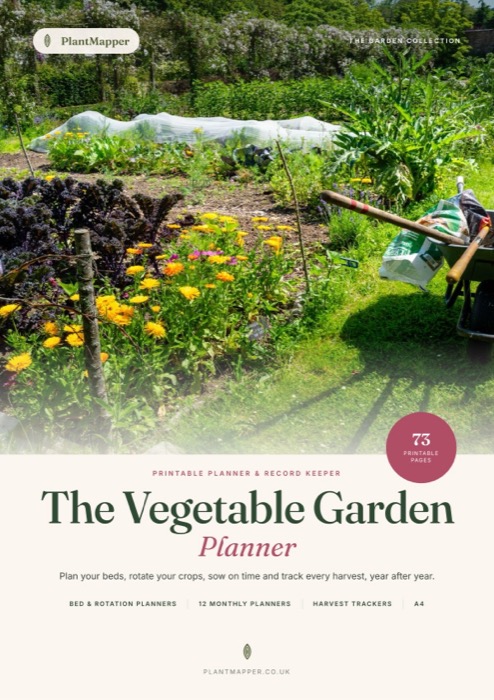
The Vegetable Garden Planner
Everything on this page is free - the zone calendar, the seasonal checklists, the sowing, planting and harvest guides and the common mistakes. The Vegetable Garden Planner is an optional extra for people who like to plan on paper: a printable workbook for mapping beds and tracking the season away from the screen. Use it alongside our free garden calculators and Plant Finder.
Year-at-a-glance planner
One printable overview of what to start, plant and harvest - fill in the dates from your zone calendar.
Monthly task sheets
A page per month for jobs, sowings and harvests, so nothing slips through the cracks in the busy weeks.
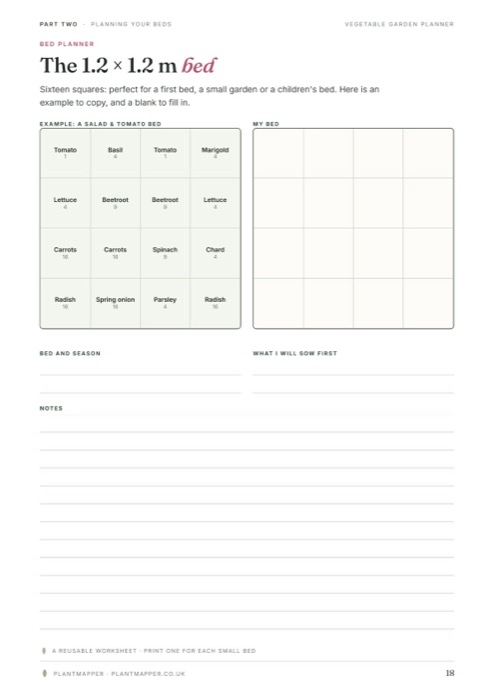
Bed & rotation planner
Grids to map raised beds and rows, plan companions and rotate crop families from year to year.
Succession sowing tracker
Simple charts for little-and-often sowings, so the salad bowl and the bean row never run dry.
Frost-date notes
Space to record your own last and first frost dates and what actually happened, so next year’s plan fits your yard.
Grower’s journal
Record what you planted, when it cropped and what to change - the notes that make each season better than the last.
Download the Vegetable Garden Planner
An instant digital download in US Letter and A4 - print it as often as you like to plan, rotate and track a productive vegetable garden. Inside: a raised-bed planner, crop-rotation pages, harvest and value trackers, sowing calendars and seasonal checklists, all in the calm PlantMapper style. Part of the wider PlantMapper Collection.
Download the Planner on Etsy (UK edition)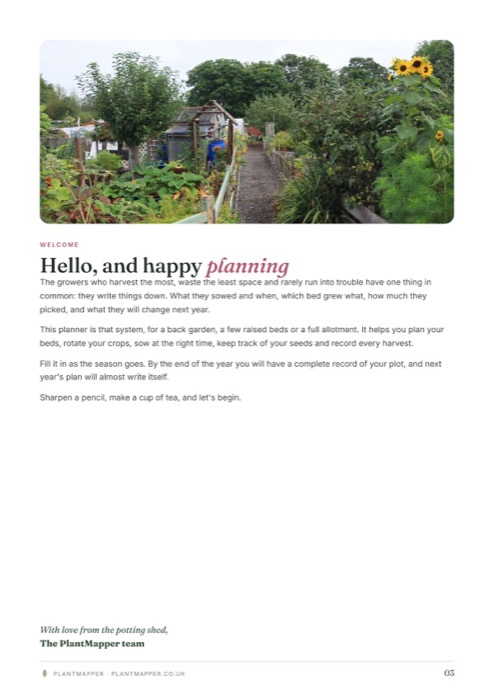
 73-page printable workbook · US Letter & A4
Disclosures & disclaimers
Affiliate disclosure
Some links on this page are affiliate links. If you buy through them, PlantMapper may earn a small commission at no extra cost to you. It never affects which products we suggest.
Gardening disclaimer
Frost dates and planting windows are approximate averages for each USDA zone. Your local dates depend on elevation, terrain and the year’s weather, so check your county extension office’s recommendations and the seed packet before planting.
Food-safety note
Wash all homegrown produce before eating, and only eat crops you have grown and can identify with certainty.