
Pollinator plants
Monarda, Pycnanthemum, Agastache, Solidago, Symphyotrichum
Native bee magnets: bee balm, mountain mint, anise hyssop, goldenrod and asters. Tall verbena and catmint are fine extras, but natives feed more specialist bees.
Most American yards are mostly lawn, which feeds almost nothing. Swap even part of it for native plants, add water and a little shelter, and the change is fast: native bees on the coneflowers, monarchs laying eggs on milkweed, hummingbirds at the bee balm and chickadees hunting caterpillars for their chicks. You don't need acres. A suburban backyard, a front-yard bed or a few pots on a balcony all count.
Wildlife arrives in its own time. Plant natives, be patient, and let part of the yard stay a little untidy, with leaves and stems left standing. That is where much of the life is.

A wildlife garden is a yard planned, even a little, to give animals food, water and a safe place to raise young. The key in North America is native plants. Most of our insects, especially caterpillars, can only eat the plants they evolved with, and nearly all songbirds feed their chicks on insects. Fill a yard with non-native ornamentals and lawn and the food chain stops; plant natives and it starts again. It does not have to look wild: a neat front bed of native perennials, a birdbath and a corner where the leaves stay is a great start.
From early spring bees to winter berries for robins and waxwings, there is something happening every month.
Less lawn to mow, water and fertilize, fewer chemicals and less fall cleanup. Native plants suited to your region need little help.
Native bees pollinate your vegetables; birds, toads, lady beetles and wasps quietly keep pests in check.
A balcony, a few pots or a strip by the driveway all help. Doug Tallamy's Homegrown National Park idea is exactly this: millions of yards, each converting some lawn to natives.
Birdsong, buzzing bees, fireflies on summer evenings and the flash of a hummingbird make a yard a restful place.
Many North American bird and insect populations have declined, and private yards cover a huge area of the country. What you plant matters.
Not at all. Clear edges, a mown path and a fence or bench make native planting look intentional, which also keeps neighbors and HOAs happy.
Small spaces work. A container of milkweed and a pot of native asters will still be found by monarchs and bees.
Every step counts. One native shrub, one birdbath or one fewer lawn treatment already makes a difference.
Planned for nature with native plants, water and shelter for bees, birds and butterflies.
You are hereRomantic, flower-filled beds, great for pollinators when you mix in natives.
Relaxed native planting under trees, a natural partner to a wildlife yard's shady corners.
Cool, leafy planting for low light, rich in shelter for birds and insects.
Nectar-rich herbs and drought-tolerant natives, a magnet for bees in a hot, dry yard.
Some inspiration before you plan: the bees, butterflies, birds and small creatures a wildlife-friendly yard brings in.


Put these five things in place and the wildlife finds you. They are also the basics behind the National Wildlife Federation's Certified Wildlife Habitat program, if you'd like a sign for the yard. Add one at a time.
Native plants first: they feed caterpillars, which feed baby birds. Add nectar, berries and seeds through the seasons.
A birdbath, a shallow dish with pebbles for bees, or a small pond. Change dish water every few days so mosquitoes can't breed.
Dense native shrubs, evergreens, brush piles and leaf litter give animals cover from hawks, cats and winter weather.
Nest boxes for bluebirds, wrens and chickadees, hollow stems and bare soil for native bees, and host plants for caterpillars.
Variety matters. More kinds of native plant, blooming from spring to fall, support more kinds of wildlife.
Start with natives and water. A few native perennials and a birdbath are the quickest way to bring a yard to life, often within weeks. Skip pesticides, and ask the nursery whether plants were treated with neonicotinoids.
These are the visitors an American yard can support, and what each one is looking for. Exact species vary by region, so a local native plant society or extension office is a great next step.
North America has around 4,000 native bee species. Give them native flowers from early spring to fall, bare sunny soil for ground nesters and hollow stems left standing.
Monarch caterpillars eat only milkweed, so plant a native one for your region. Add host plants such as parsley and dill for swallowtails, and fall nectar like asters for migrating monarchs.
Cardinals, chickadees, bluebirds, robins and cedar waxwings want insects, native berries and seeds, water, dense shrubs and nest boxes. Keep cats indoors; they are a leading cause of bird deaths.
Tubular red and orange flowers such as bee balm, cardinal flower, coral honeysuckle and native salvias, plus small insects to eat. A clean feeder with a 1:4 sugar-water mix helps; skip red dye.
American toads and tree frogs need a fish-free pond with sloping sides, damp cover and no lawn chemicals. In return they eat slugs and insects.
Lady beetles, lacewings, hover flies, fireflies and parasitic wasps are your free pest control. They need flowers, leaf litter, dark nights and no insecticides.
The biggest single step is to plant natives generously, with something in flower or fruit from spring to winter. These six groups cover the bases. Choose species native to your region, check them against your growing zone, and filter more plants in the Plant Finder.
Monarda, Pycnanthemum, Agastache, Solidago, Symphyotrichum
Native bee magnets: bee balm, mountain mint, anise hyssop, goldenrod and asters. Tall verbena and catmint are fine extras, but natives feed more specialist bees.
Buddleja (sterile types) vs. native Cephalanthus, Ceanothus
Butterfly bush offers nectar but feeds no caterpillars, and it is invasive in the Pacific Northwest and parts of the East; Washington lists it as a noxious weed. If you grow one, choose a sterile, seedless variety. Better: native buttonbush, New Jersey tea or Joe Pye weed.
Asclepias, Rudbeckia, Echinacea, Liatris
Many “wildflower” seed mixes are full of European imports. Ox-eye daisy is a noxious weed in several Western states, and spotted knapweed is invasive across much of the country. Choose a regional native mix: milkweed, black-eyed Susan, coneflower and blazing star.
Amelanchier, Ilex verticillata, Viburnum, Cornus, native Crataegus
Serviceberry, winterberry holly, arrowwood viburnum, gray dogwood and native hawthorns feed robins, waxwings and bluebirds and make dense nesting cover. Skip English hawthorn, pyracantha and cotoneaster where they are invasive, mainly the West Coast.
Echinacea, Rudbeckia, Helianthus, Schizachyrium
Coneflower, black-eyed Susan, native sunflowers and little bluestem. Leave the seed heads standing and goldfinches, juncos and sparrows feed on them all winter.
Quercus, Prunus serotina, Betula, Sorbus americana, Amelanchier
Native oaks support more caterpillar species than any other North American tree, and cherries, birches and willows are close behind. In small yards, try serviceberry or native mountain ash rather than European rowan.
Milkweed for monarchs, by region. Common milkweed suits much of the Northeast and Midwest, swamp milkweed handles wet soil, butterfly weed likes dry sun, showy milkweed fits the West and antelope horn milkweed the Southern Plains. Avoid tropical milkweed in the South and California: it stays green all winter and can disrupt migration and spread a monarch parasite. If you already have it, cut it back in fall and winter.

Think in habitats rather than flower beds. Work in a few of these and the yard offers food and shelter at every level, all year.
Canopy trees, understory trees, shrubs, perennials and groundcover each suit different animals. A layered yard holds far more life than lawn with a few foundation shrubs.
Replacing a patch of lawn with a native meadow or “pocket prairie” is one of the richest things you can do. Check local grass-height rules or HOA guidelines first.
A common goal is at least 70 percent native plants by area, with keystone plants such as oaks, goldenrod and asters at the core. Then add favorite non-invasive extras.
Skip the big fall cleanup. Standing stems hold bee nests and seeds for birds, and leaves under shrubs shelter fireflies, moth pupae and overwintering butterflies. Leave the leaves.
A few logs, an old stump or a safe dead snag hosts beetles and fungi, and woodpeckers and other cavity nesters that eat them.
Water brings life faster than anything. A small pond with sloping sides draws frogs, dragonflies and birds; keep water moving or add native plants and skip fish if you want frogs.
A quiet heap of branches and leaves in a back corner shelters toads, wrens, sparrows, beetles and overwintering insects.
The golden rule: less lawn, more natives, and one corner left a little wild. Turning off unneeded outdoor lights at night also helps fireflies and migrating birds.
Most of these come from doing too much rather than too little, or from planting the wrong things.
Leaf blowing, edging and bagging every leaf removes the habitat. Leave leaves under shrubs and in beds.
Cutting everything down in fall strips away winter food and nest sites. Leave stems standing until late spring.
Lawn insecticides, mosquito fogging and systemic products poison the food chain. Use Bti dunks for mosquitoes and let predators work.
Burning bush, Japanese barberry, Bradford pear and nandina are still sold in many places but invade woods and feed little. Replace them with natives.
Nowhere to hide or nest means few residents. Add dense native shrubs, an evergreen and a brush pile so animals can stay.
Turf, rock mulch and artificial grass are wildlife deserts. Shrink the lawn to what you actually use.
Unwashed feeders and birdbaths spread disease. Clean them every week or two, and take feeders in if bears are active in your area.
Double flowers and many annual bedding plants offer little nectar. Choose single, open blooms, ideally native.
Five ready-made ideas for different spaces. Swap in natives for your region using the Plant Finder or a local native plant society.
Size is no barrier: food, water and shelter fit on a patio, and monarchs and hummingbirds will still find it.
Plan for continuous bloom and the bed feeds pollinators from the first warm day to the last fall asters.
Firefly larvae live in leaf litter and moist soil for a year or more, and adults need darkness to find mates. Ask your neighbors to join in.
If you do just one thing, do this. A single quiet, untidy back corner becomes the richest patch in the yard.
Converting even 100 sq ft of lawn to native prairie is a big win for pollinators, and it means much less mowing.

Filter plants by your light, soil and space. These shortcuts are a good place to start.
Plan the practical side of new native beds, from plant numbers to mulch, with our free calculators.
As an Amazon Associate, PlantMapper may earn from qualifying purchases. Prices and availability are set by Amazon.
Give nature food, water and shelter and let the natives fill in, and the yard comes alive: buzzing with bees, busy with birds and richer every season.

Everything on this page is free: the five pillars, plant groups and schemes. The Wildlife Garden Starter Kit is an optional printable workbook for planning your habitat on paper. It was written for the original edition of PlantMapper, so swap in native plants for your region using this page, our free garden calculators and the Plant Finder.
Map your yard's habitats and plan where food, water, shelter and nesting will go, one simple page at a time.
Reusable pages to record who visits through the year: the first bee, the first monarch, the nesting birds.
Season-by-season checklists: what to plant, leave, feed and watch for, so the yard helps wildlife all year.
Ready-made and blank plans for pollinator beds, mini meadows and wildlife corners (swap in natives for your region).
Pages to record what thrived, what arrived and what you will try next year.
Simple year-to-year logs to watch your yard grow richer, with more life to count each season.
An instant digital download in US Letter and A4. Print it at home as often as you like and plan a wildlife-friendly yard that grows richer every year. Inside you will find habitat-planning worksheets, a wildlife plant directory, ready-made and blank planting plans for pollinator borders and mini meadows, seasonal action plans, wildlife tracker pages and a garden journal. It sits alongside our Cottage, Mediterranean, Tropical and Shady garden kits.
Download the Starter Kit on Etsy (UK edition)A printable workbook for your own yard. Wildlife arrives in its own time: plant natives and be patient.
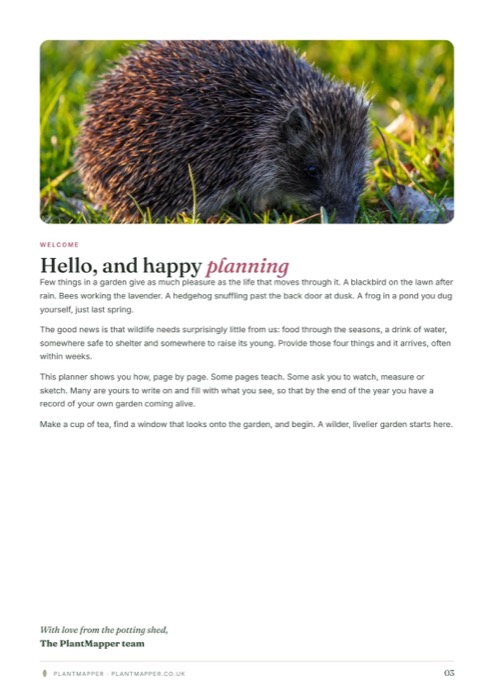
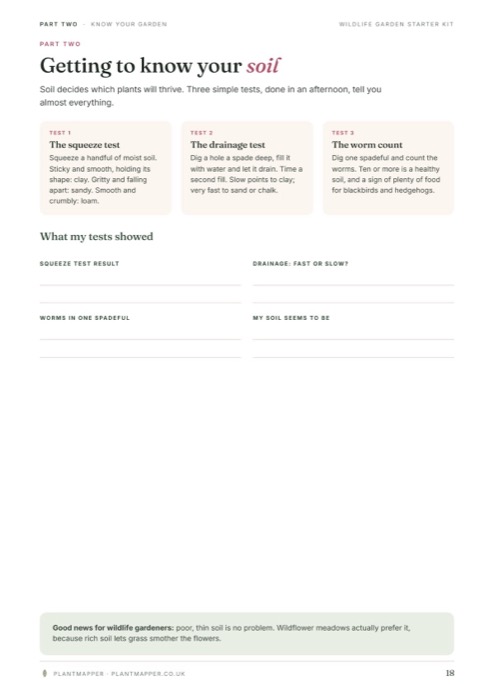
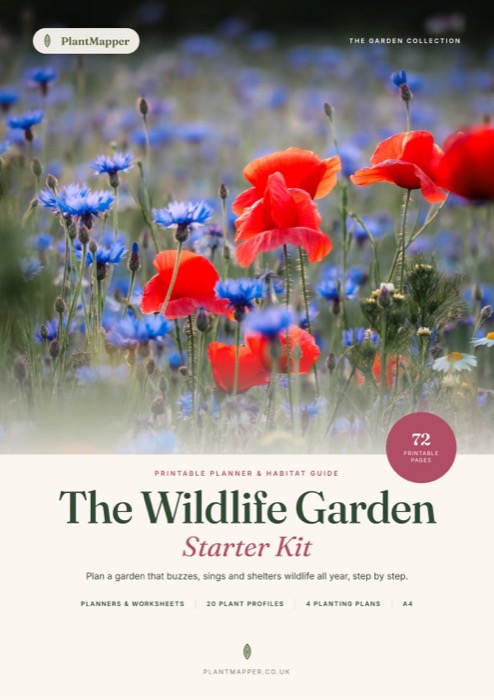 72-page printable planner · US Letter & A4
Some links on this page are affiliate links. If you buy through them, PlantMapper may earn a small commission at no extra cost to you. It never affects which products we suggest.
All advice is general guidance for yards across the US. Native ranges, zones and invasive lists vary by region, so check plants with your state's native plant society or extension service.
Some plants, including milkweed, are toxic if eaten, and ponds need care near young children. Don't feed bread to wildlife, follow local rules on feeding deer and bears, and keep a respectful distance from wild animals.
Yes. A balcony, a few pots or a small front-yard bed can offer food, water and shelter. A birdbath, a pot of native milkweed and a native shrub or two make a real difference, and small yards added together cover a huge area.
Five things: food (above all native plants, plus nectar, berries and seeds), water, shelter, places to raise young, and a variety of plants blooming from spring to fall. These are also the basics of the National Wildlife Federation's Certified Wildlife Habitat program.
Most native insects, especially caterpillars, can only eat plants they evolved with, and nearly all songbirds feed their chicks on insects. Native oaks, cherries, goldenrod and asters support far more caterpillars than typical non-native ornamentals, so a yard full of natives feeds the whole food chain.
Plant a milkweed native to your region, such as common milkweed in the Northeast and Midwest, swamp milkweed for wet soil, butterfly weed for dry sun or showy milkweed in the West, plus fall nectar flowers like asters and goldenrod for migrating adults. Avoid tropical milkweed in the South and California, or cut it back in fall and winter.
Plant tubular red, orange and pink flowers such as bee balm, cardinal flower, coral honeysuckle, native salvias and penstemons, so something blooms from spring to fall. A feeder with one part white sugar to four parts water, changed every few days in hot weather, helps too; no red dye is needed.
It offers nectar to adult butterflies but feeds almost no caterpillars, and it is invasive in the Pacific Northwest and parts of the East; Washington lists it as a noxious weed. If you grow it, choose a sterile, seedless variety, or plant native alternatives such as buttonbush, New Jersey tea and Joe Pye weed.