

Bedding is the cheapest thing in the coop and the one that decides everything else
Bedding looks like a detail. It is not. What goes on the floor of a coop controls how dry the air is, how much ammonia the birds breathe, how clean the eggs are, how often you have to clean, how many mites and flies you get, and - through all of that - how healthy the flock actually is. Keepers who have chronic problems with respiratory rattles, dirty eggs, smelly coops or bumblefoot are very often keepers with a bedding problem they have not recognized as one.
The good news is that this is one of the easiest things in chicken keeping to get right, and one of the cheapest to fix. There is no single perfect bedding - hemp, dust-extracted shavings, chopped straw, wood pellets and sand all work well in the right place - but there are materials that cause real harm, and there are a handful of principles that separate a coop which smells of warm hay from one that stings your eyes when you open the door.
Below you’ll find every bedding you’re likely to see at a feed store, farm store or tack shop, what each one is honestly good and bad at, which goes in the coop, the nest boxes, the brooder and the run, how to run deep litter, how often to change things in your climate, and what to do with the used material afterward. It’s written for backyard flocks of a handful of hens, not commercial houses - and because the right answer in dry Arizona is the wrong one in rainy Oregon, there are region-by-region notes further down.
Nine bedding warnings worth acting on today
Most bedding mistakes are quiet ones - nothing dramatic happens, the birds simply do less well than they should. These are the ones that cause real harm, and several of them are still recommended on forums and by well-meaning suppliers.
The nine that matter most
Every one of these is a common, avoidable mistake. Several are actively sold as chicken bedding.
!Toxic bedding materials
Cedar shavings release aromatic oils (plicatic acid and related phenols) that irritate the airway lining of birds. Also avoid treated, painted or reclaimed lumber shavings, MDF or particleboard dust, scented or clumping cat litter, rubber crumb, and any bedding sold with an added fragrance. If it smells strongly of anything, it does not belong in a coop.
!Wet bedding
Damp bedding is the single biggest cause of coop problems. It generates ammonia, grows mold, softens footpads and invites coccidiosis. Bedding should feel dry and rustle. If it packs down, smears or feels cold and heavy, it needed changing days ago.
!Ammonia smells
If you can smell ammonia standing up in the coop doorway, the birds - whose heads are at floor level all night - are in far higher concentrations. Ammonia damages the respiratory lining before you can smell it. A sharp smell is an emergency, not a chore.
!Moldy hay or straw
Never use bedding with white, gray or blue-green dust that puffs when disturbed. Mold spores - particularly Aspergillus - cause aspergillosis, which is often fatal and effectively untreatable in backyard birds. Reject any bale that smells musty or feels warm.
!Dusty bedding
Chickens have air sacs running through their body and no diaphragm. Fine dust from cheap sawdust, low-grade shavings or dry play-pit sand sits in the coop air all night. Buy dust-extracted products and never use sawdust as coop bedding.
!Hay as coop bedding
Hay is a feed, not a bedding. It is high in moisture and sugars, it molds quickly, it mats into an airless slab, and it is one of the most common sources of aspergillosis in backyard flocks. Straw and hay are not interchangeable.
!Deep litter done badly
Deep litter is a managed composting system, not an excuse to skip cleaning. Done without dry carbon, turning and ventilation it becomes a damp, ammonia-producing mat. If it ever smells sour or ammoniacal, the method has failed and it must come out.
!Blocked ventilation in winter
Keepers routinely pile in bedding and close vents in cold weather. Chickens cope with cold; they do not cope with damp. A sealed coop with deep bedding is how frostbite and respiratory disease happen. Add bedding and keep the ventilation open.
!Bedding-borne parasites
Red mite live in the structure, not the birds, and thrive under undisturbed bedding and in cracks near perches. Bedding that is never fully stripped hides them. A full strip-out and inspection at least seasonally is part of the job.
Everything on this page is general guidance for keepers. It is not veterinary advice. Persistent sneezing, rattling, gaping, watery eyes or a drop in condition need a qualified poultry or avian vet, not a change of bedding alone - although changing the bedding is very often part of the answer. Products vary: always read and follow the manufacturer’s instructions, and check that anything you use is sold as suitable for poultry.
The four materials most keepers end up choosing between
Chopped straw, dust-extracted wood shavings, wood pellets and sand cover the great majority of backyard coops, with hemp gaining ground quickly at US feed stores. Each behaves differently underfoot, in the nest box and in the compost pile.


Why bedding is important
A hen spends between eight and fourteen hours a night in the coop, head down, roughly 12-24 in above the litter, breathing whatever the floor is producing. Over a year that is around 4,000 hours. Nothing else in the coop has that much contact time with your birds.
Bedding does six separate jobs, and a material that does five of them well and one badly will still cause you problems. Understanding what you are actually asking the litter to do makes choosing between materials much simpler.
It absorbs droppings and moisture
The core jobA laying hen produces a surprising amount of moisture - droppings are roughly 75-80% water, and she breathes out more.
WhyLitter is the coop’s moisture buffer. Absorbent material locks water away from the air; non-absorbent material lets it evaporate straight into the coop.
SoAbsorbency is the first thing to judge a bedding on. Everything else follows from it.
It controls ammonia
Health criticalAmmonia is produced when bacteria break down uric acid in droppings, and it needs moisture to do it.
WhyDry litter slows the reaction dramatically. Damp litter accelerates it, and ammonia burns the respiratory lining long before humans can smell it.
SoDry bedding is a respiratory intervention, not housekeeping. See Chicken Health.
It insulates the floor
ComfortA layer of loose litter breaks the contact between birds and a cold, hard coop floor, and traps a little still air.
WhyChickens tolerate cold well but lose heat quickly through their feet and through conduction to a bare board or concrete base.
SoDeeper bedding in winter, shallower in summer. See Winter Care.
It cushions the landing
Injury preventionBirds jump down from perches, sometimes from three feet or more, several times a day.
WhyRepeated hard landings on a bare floor bruise footpads and are one route into bumblefoot, especially in heavy breeds.
SoAt least 3-4 in of loose litter under any perch, and low perches for heavy breeds.
It lets hens behave like hens
WelfareScratching, foraging and dust bathing are hard-wired behaviors, not optional enrichment.
WhyA flock with nothing to scratch in redirects that energy into feather pecking and bullying, which is very hard to reverse once it starts.
SoLoose, deep litter is a behavioral need. Scatter a little corn in it and the flock will work it for hours.
It keeps eggs clean and saleable
PracticalNest bedding is the last thing an egg touches before you pick it up.
WhyA dirty nest means dirty eggs, and washing eggs removes the natural cuticle and shortens their shelf life.
SoRefresh nest boxes more often than the floor - it is a two-minute job with a disproportionate payoff.
What makes good chicken bedding
Every suitable bedding shares the same handful of properties. When you are looking at an unfamiliar product - or a cheap bale at the feed store - run it through this list before it goes anywhere near the coop.
Absorbent
The first test
It should take up moisture quickly and hold it, rather than letting it pool or evaporate.
- Good hemp, wood pellets, dust-extracted shavings, chopped straw.
- Test drop a little water on a handful - it should vanish, not bead.
- Do not use anything that goes slimy or sticky when wet.
Low dust
Respiratory safety
Fine dust hangs in coop air all night and irritates a bird’s airway continuously.
- Look for “dust-extracted” or “dust-free” on the bag.
- Test drop a handful from waist height in sunlight and watch the cloud.
- Never sawdust, or the fine crumbs at the bottom of a cheap bale.
Clean and mold-free
Non-negotiable
Mold spores cause aspergillosis, which is usually fatal and effectively untreatable.
- Smell it sweet and dry is right; musty, sour or earthy is not.
- Feel it a warm bale has been stored damp - reject it.
- Reject any gray, white or blue-green bloom on the material.
Loose and scratchable
Behavior
Litter that mats into a slab stops birds foraging and traps moisture underneath.
- Good short chopped material, 1-2 in pieces, that stays open.
- Turn it a quick fork-over once or twice a week keeps it loose.
- Avoid long straw and hay, which knit together into a mat.
Safe if eaten
Chickens will eat it
Hens peck at everything. Bedding must be harmless in the small quantities they take in.
- Fine plant fibers - straw, hemp, untreated softwood, paper, cardboard.
- Watch long fibers and string, which can cause crop impaction.
- Never treated lumber, chemically scented products or clumping cat litter.
Available, affordable, compostable
The practical test
The best bedding is the one you will actually keep buying and changing.
- Cost judge by cost per month of use, not per bale.
- Storage you need somewhere dry and rodent-proof for it.
- Afterwards it should compost - sand and rubber do not.
The three-second field test: take a handful, squeeze it, and open your hand. Good bedding springs back open, feels dry and warm and smells faintly sweet. Bad bedding stays compressed, feels cool and damp, or throws a visible dust cloud. That one test catches almost every problem bale before it reaches the coop.
Bedding for coops versus bedding for runs
This is where a lot of keepers go wrong: they buy one material and use it everywhere. The coop and the run are asking for completely different things. The coop floor is dry, sheltered and heavily soiled overnight in a small area. The run is exposed, gets rained on, and needs drainage far more than it needs absorbency.
✓In the coop - absorbency and low dust
Enclosed, unventilated at bird level for hours, and where all the droppings land.
- Hemp the premium option - very absorbent, very low dust, long-lasting.
- Dust-extracted shavings the reliable everyday choice, widely available.
- Chopped straw good if kept dry, especially over a droppings board.
- Wood pellets excellent absorbency; break down to sawdust as they work.
- Depth 2-4 in normally, 4-6 in in winter or for deep litter.
- Nest boxes a separate, softer, deeper material - see below.
×In the run - drainage and drying
Rain, mud and standing water are the enemy; absorbency simply holds water in place.
- Not shavings or hemp they turn to sludge in the rain and cost a fortune to replace.
- Not hay it rots into an anaerobic, smelling mat within days.
- Wood chip coarse bark-free chip is the standard run surface - drains, dries, lasts a year or more.
- Sand or grit sharp/washed sand over a free-draining base works very well in dry climates.
- Hardstanding slabs or a membrane with chip on top for a permanently wet corner.
- Cover it a roof over part of the run does more for mud than any material can.
| Where | What it needs to do | Best options | Depth | Avoid |
|---|---|---|---|---|
| Coop floor | Absorb droppings, control ammonia, insulate, allow scratching | Hemp, dust-extracted shavings, chopped straw, wood pellets | 2-4 in (4-6 in winter) | Hay, sawdust, cedar, damp anything |
| Droppings board | Catch overnight droppings so they never reach the litter | A thin scatter of shavings, sand or pellets | ½-1 in | Deep litter - it defeats the point |
| Nest boxes | Cushion eggs, stay clean, feel enclosed and soft | Soft chopped straw, hemp, shavings, washable liners | 3-5 in, hollowed | Sand, pellets, anything abrasive |
| Brooder (chicks) | Non-slip, low dust, safe if eaten, easy to change daily | Paper towel first 3-5 days, then hemp or fine shavings | 1-1½ in | Newspaper alone, sand, cedar, large pellets |
| Covered run | Stay dry, let birds dust-bathe and forage | Wood chip, coarse sand, chopped straw in a dry corner | 3-6 in | Fine shavings, hemp - wasteful |
| Open run | Drain, resist mud, dry out between showers | Coarse wood chip over a free-draining base; sand in dry climates | 4-6 in, topped up yearly | Straw, hay, shavings, bark mulch |
| Wet or clay corner | Stop standing water and mud altogether | Membrane and slabs, or 6 in of chip over hardcore | As needed | Adding more organic matter on top |
| Dust bath | Stay bone dry and fine enough to work into feathers | Dry sifted soil, play sand and a little wood ash | 6-8 in in a covered tub | Diatomaceous earth in quantity; damp mixes |
Scroll sideways on a phone. If you take one thing from this table: coop bedding and run surfacing are not the same product, and using coop bedding outdoors is the most expensive mistake on this page.
Seasonal bedding advice box
Spring. Do the full strip-out and disinfect as the weather warms and before red mite become active. Reduce depth as the coop dries out. Watch for damp corners left over from winter.
Summer. Go shallower - 2-3 in is plenty - and change more often. Heat plus moisture equals flies, and fly strike is a genuine risk in warm weather. Keep the run dry and provide a proper dust bath.
Fall. Start building depth again, and fix drainage problems before the wet season rather than during it. This is the right time to start a deep litter bed if you use one.
Winter. Deeper bedding, more frequent topping up, and ventilation left fully open. Damp is the winter enemy, not cold. Full details in Winter Care.

Straw - advantages and disadvantages
Straw is the bedding most people picture when they think of a chicken coop, and it has been used for as long as chickens have been kept. It is the dried, hollow stalk left after cereal grain is harvested - barley, wheat or oat - and it is a bedding, not a feed. That distinction matters enormously, and it is the single most common confusion in backyard keeping.
Straw works well, but only under two conditions: it must be chopped rather than long, and it must be kept dry. Long straw mats into an airless slab that traps moisture underneath; wet straw molds faster than almost any other bedding.
✓Advantages
Why so many keepers still use it, and why it is a good choice in a dry coop.
- Cheap and available a bale from a feed store or a local farmer costs very little and lasts a long time.
- Excellent insulation hollow stems trap air, which makes it the warmest common bedding in winter.
- Comfortable in nest boxes soft, springy and easy for hens to shape into a hollow.
- Composts well high carbon, breaks down predictably, ideal for the pile.
- Encourages foraging birds work through it happily, especially with a little scattered corn.
- Familiar and forgiving hens take to it instantly; nothing to get used to.
×Disadvantages
The reasons experienced keepers often move away from it.
- Poor absorbency the waxy outer stem repels water - it holds far less than hemp or shavings.
- Mats when long unchopped straw knits into a mat that seals moisture underneath.
- Molds quickly when damp a genuine aspergillosis risk if it ever gets wet.
- Can harbor mites hollow stems give red mite and lice somewhere to shelter.
- Bulky to store a full bale needs dry, rodent-proof space you may not have.
- Quality varies wildly farm bales can be dusty, damp in the middle or contaminated.
Buy chopped, or chop it yourself. Chopped straw - sold in compressed bales as “chopped”, “dust-extracted” or “bedding straw” - is a completely different material to a farm bale of long straw. It absorbs better, stays loose, throws far less dust and composts faster. If you are buying farm bales, barley straw is generally the softest and most absorbent, wheat straw is the toughest and best for insulation, and oat straw sits between the two but is the most likely to be eaten.

Hay - why it is generally not recommended
Hay and straw look similar to anyone who has not handled both, and the words are often used interchangeably in conversation. They are completely different materials with completely different uses, and using hay as coop bedding is probably the most common single bedding error in backyard chicken keeping.
Hay is dried grass and legumes, cut green and cured as animal feed. It contains seed heads, leaf, sugars and moisture. Straw is the hollow stalk left over after grain has been harvested. It has almost no feed value, and that is precisely what makes it a good bedding.
| Hay | Straw | |
|---|---|---|
| What it is | Dried grass and legumes, cut green as a feed crop | Hollow cereal stems left after grain harvest |
| Purpose | Livestock feed | Livestock bedding |
| Color | Green to greenish-brown | Pale gold to yellow |
| Moisture and sugar | High - retains both | Very low |
| Mold risk in a coop | High Molds within days if damp | Lower If kept dry |
| Absorbency | Poor - and holds water against the floor | Moderate, better when chopped |
| Behavior underfoot | Mats into a dense, airless slab | Stays looser, especially chopped |
| Cost | More expensive - you are paying for feed value | Cheaper |
| Verdict for coop bedding | Not recommended | Good, if chopped and dry |
Scroll sideways on a phone. If a bale is green and smells sweet and grassy, it is hay - put it back.
Why hay causes real harm, not just inconvenience
Aspergillosis. Hay is the classic backyard source of Aspergillus mold spores. Inhaled spores colonise the air sacs and lungs. The disease is difficult to diagnose early, very difficult to treat, and frequently fatal. It is not contagious between birds - which means several birds falling ill at once points straight back at a shared environmental source.
Crop impaction. Long strands of hay are attractive to hens because hay is food. Eaten in quantity, long fibers can tangle in the crop and cause an impaction that needs veterinary attention.
It mats and traps moisture. Hay compresses into a slab. Droppings and moisture sit underneath it, out of the air, producing ammonia and giving coccidial oocysts an ideal environment.
The one exception. A small handful of clean, dry hay as an occasional winter foraging treat, eaten the same day, is a different thing from a coop floor covered in it. If in doubt, do not.

Hemp bedding
Hemp bedding is made from the shiv or hurd - the chopped woody inner core of the industrial hemp stalk, left over once the outer fiber has been stripped for textiles and rope. It arrives as short, light, honey-colored chips, and it is by a clear margin the most absorbent material in common backyard use.
It is the bedding many experienced keepers switch to after a few years of shavings, and it is now stocked by a growing number of US feed and farm stores. The only real objection is the price per bale - and that objection largely disappears once you work out cost per month rather than cost per bag.
Why it works so well
- Absorbency typically holds around four times its own weight in moisture - roughly double straw.
- Very low dust the shiv is heavy and chunky, so there is little fine material to become airborne.
- Low in sugars little for mold and bacteria to feed on, so it stays sweet far longer.
- Naturally low pH which slows the bacterial action that generates ammonia.
The combination of high absorbency and low dust is what makes it the best choice for birds with any respiratory history.
How to use it
- Depth 2-3 in on the coop floor is plenty - it is far more absorbent than it looks.
- Spot-clean daily wet patches lift out cleanly because hemp does not mat.
- Full change typically every 4-8 weeks with a small flock, longer than shavings.
- Nest boxes excellent - soft, holds a hollow, and keeps eggs noticeably cleaner.
Because it lasts longer, you handle it less often - which is worth more than the price difference to most keepers.
The honest downsides
- Cost per bale the highest of any common bedding - often two to three times shavings.
- Availability easy to order online and stocked by many feed stores and equine suppliers; patchier in rural areas, though improving.
- Lighter birds kick it it is light, so it travels - a lip or board across the pop-hole helps.
- Not for open runs far too expensive and too absorbent to put anywhere it will get rained on.
Work out cost per month, not per bale. Most keepers find hemp comes out level with or cheaper than shavings.
Compost and disposal
- Composts readily high carbon, breaks down faster than straw, and does not tangle in a fork.
- Excellent for the pile balances nitrogen-rich droppings almost perfectly.
- Typical timescale 6-12 months to a usable compost when turned and kept moist.
- No treatment buy untreated, unscented horticultural or animal-bedding grade only.
One of hemp’s quieter advantages: what you take out is genuinely useful in the garden.

Hemp bedding: brands, grades and what to buy
In the US, hemp bedding is sold under a handful of brand names, mostly aimed at horse owners and at small-pet and poultry keepers. Underneath the packaging it is the same thing: graded, dust-extracted hemp shiv (the woody core of the stalk), sold in compressed bags or bales. Horse-stall versions are usually the best value and are perfectly good chicken bedding.
There are several equivalents, and the differences between them are smaller than the marketing suggests. What matters is the grade of shiv, how well the dust has been extracted, and whether anything has been added.
Horse-stall hemp bales
The best value. Coarse, well dust-extracted hemp shiv in large compressed bales, often around 40 lb. Sold through equine suppliers and some feed stores; entirely suitable for poultry. One bale goes a long way in a small coop.
Small-animal hemp
Hemp sold in pet-store sizes for rabbits and guinea pigs. Same material, finer cut, much smaller bags - handy for a brooder, expensive for a whole coop.
Fine and “sensitive” grades
Finer, softer grades marketed for sensitive animals. Slightly better in nest boxes and brooders; slightly quicker to break down underfoot.
Poultry-branded hemp
Several brands package the same shiv in smaller, easier-to-carry bags aimed at backyard keepers. Convenient, but you pay noticeably more per pound.
What to check on the bag
“Dust-extracted”, “100% hemp” and no added fragrance, disinfectant or insecticide. Untreated is what you want.
Buying sensibly
Big compressed bales are far cheaper per pound than small bags, but they expand dramatically when opened - make sure you have dry, rodent-proof storage first.
A word on scented and treated bedding. Some hemp and shavings products are sold with added fragrance, essential oils or an insecticidal treatment. Avoid all of them for poultry. Birds have sensitive airways and no way to move away from an aroma in an enclosed coop, and any product with insecticidal claims must be specifically approved for use around poultry - many horse and small-animal products are not.
Bedding materials
Amazon picksAs an Amazon Associate, PlantMapper may earn from qualifying purchases. Prices and availability are set by Amazon. Always follow the manufacturer’s instructions, and introduce any new bedding or product to your flock gradually.
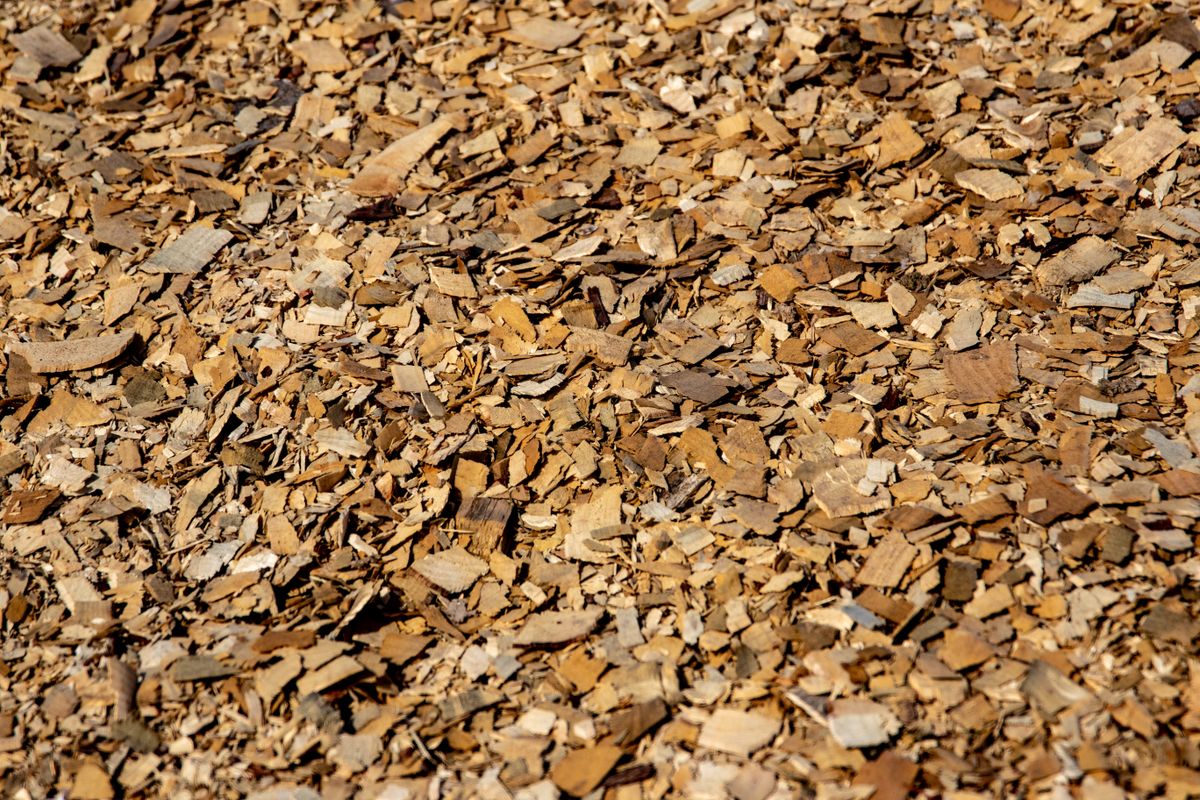
Wood shavings - suitable and unsuitable types
Pine shavings are the most widely used chicken bedding in America, and for most keepers they are the sensible default: absorbent enough, cheap enough, available everywhere and easy to handle. But “wood shavings” covers everything from a properly graded, dust-extracted bale of kiln-dried softwood flake to a sack of joinery waste, and the difference between those two things is the difference between a healthy coop and a chronic respiratory problem.
Two questions decide whether a shaving is suitable: what species of wood is it, and how much fine dust does it contain.
✓Suitable shavings
What to look for on the bale, and what to buy if you have the choice.
- Kiln-dried pine or spruce flake the standard, and what almost all bagged bedding is.
- Dust-extracted the single most important phrase on the packaging.
- Large flake rather than fine big flakes stay loose, absorb well and throw less dust.
- Untreated and unscented no added fragrance, oils, disinfectant or insecticide.
- Aspen the gold standard in the USA - a hardwood with no aromatic oils at all.
- Sold for animal bedding not for landscaping, mulching or stable flooring aggregate.
×Unsuitable shavings
These cause real harm, and several are sold cheaply as “shavings”.
- Cedar aromatic oils irritate the airway lining - never use it. See below.
- Sawdust far too fine; it is inhaled dust, not bedding.
- Treated, painted or preserved lumber carries the preservative straight into the coop and the compost pile.
- MDF, particleboard or plywood dust contains resins and formaldehyde-based adhesives.
- Reclaimed or dumpster lumber unknown treatment history - not worth the risk.
- Damp or warm bales have been stored badly and will already be moldy inside.
Where to buy, and what it costs. Feed stores, farm stores and tack shops sell compressed bales of pine shavings (labeled by expanded volume, commonly around 8-12 cubic feet) far more cheaply per pound than pet stores sell small bags of the same thing. One bale typically lasts a small backyard flock one to three months. Look for “kiln-dried” and “dust-free” or “screened” on the bag. If a supplier cannot tell you the wood species, assume you do not want it.
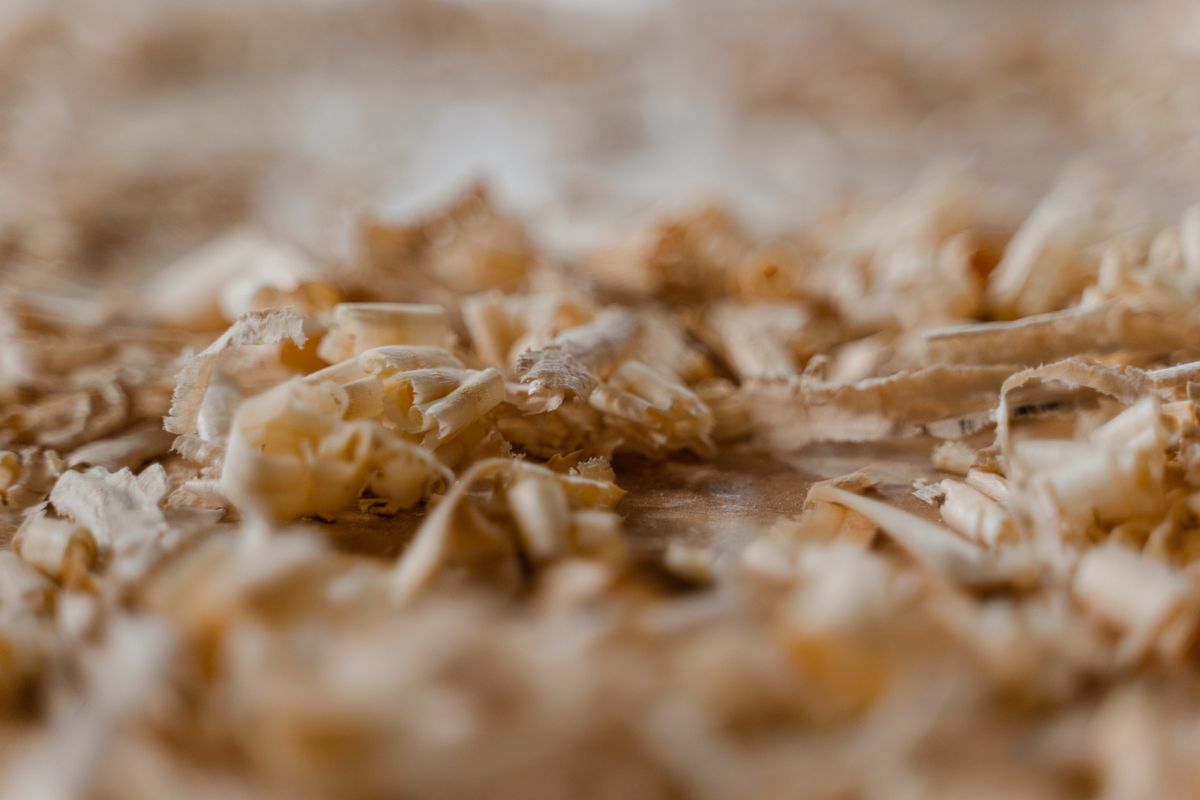
Pine shavings versus cedar shavings
This comes up constantly, and the short answer is simple: use pine, never use cedar. The longer answer is worth understanding, because the reasoning also applies to several other “natural” products that get suggested to chicken keepers.
Cedar - particularly Western red cedar - contains aromatic compounds, including plicatic acid and various phenols, which give it that pleasant cupboard smell and make it naturally rot- and insect-resistant. Those same volatile compounds are respiratory irritants. In an enclosed coop, where a bird’s head is at litter level for eight to fourteen hours a night and where birds have a highly efficient one-way respiratory system with air sacs running through the body, continuous low-level exposure is a genuine problem.
| Pine (and spruce, fir, aspen) | Cedar | |
|---|---|---|
| Aromatic oils | Low - and largely driven off by kiln drying | High Plicatic acid and phenols |
| Smell | Faint, fades in days | Strong and persistent |
| Respiratory effect | Minimal if dust-extracted | Irritates the airway lining with continuous exposure |
| Absorbency | Good | Good - but irrelevant given the above |
| Cost and availability | Cheap, everywhere | More expensive, sold mainly for cupboards and closets |
| Verdict for chickens | Recommended, dust-extracted | Do not use |
| Verdict for chicks | Fine flake only, after a few days | Never |
Scroll sideways on a phone. Aspen is the safest wood of all - a hardwood with essentially no aromatic oils - and it is easy to find in the US, usually sold in small-pet sizes.
Respiratory health advice box
Why birds are different. Chickens have no diaphragm. Air moves through the lungs and on into a system of air sacs that extend through the body cavity and into some bones, which makes gas exchange extremely efficient - and also makes inhaled irritants, dust and spores far more damaging than they would be to a mammal of the same size.
What that means for bedding. Dust, ammonia and aromatic oils are the three respiratory risks a keeper directly controls. Dust-extracted bedding, dry litter and open ventilation remove almost all of that risk at essentially no cost.
Signs to watch for. Sneezing, head shaking, a rattle or click when breathing, gaping, bubbly or watery eyes, swollen face, nasal discharge, reduced activity or a drop in laying. Any of these persisting beyond a day or two - or appearing in several birds at once - needs a poultry or avian vet.
Act on the environment as well. A respiratory case is a reason to strip and replace the bedding, open the ventilation fully and check for damp, whatever else the vet advises. Full detail in Chicken Health.

Dust-extracted bedding - what it means and why it matters
“Dust-extracted” on a bale means the material has been mechanically screened and blown to remove fine particles before packing. It is not a marketing flourish; it is the single most useful piece of information on the bag, and it is the main practical difference between a cheap bale and one that costs a couple of dollars more.
Dust matters because of how it behaves in a small, still, enclosed space overnight. Disturbed litter throws particles into the air; in a coop with limited air movement they stay suspended for a long time, at exactly the height where the birds are breathing. Fine dust also carries mold spores, dried droppings and bacteria with it.
What to look for
On the packaging
Manufacturers use several phrases, and they are not all equally meaningful.
- Best “dust-extracted” or “dust-free” with a stated process.
- Good “screened”, “de-dusted”, “low dust”.
- Meaningless “natural”, “premium” or “soft” on their own.
Who needs it most
Priority cases
Every flock benefits, but for some birds it is not optional.
- Chicks developing airways in a warm, enclosed brooder.
- Any respiratory history birds that have had mycoplasma, IB or aspergillosis.
- Small or badly ventilated coops less air movement means dust hangs longer.
The sunlight test
Free and quick
You do not need a laboratory to judge a bedding’s dust load.
- Method take a handful and drop it from waist height into a shaft of sunlight.
- Good flakes fall, almost nothing hangs in the air.
- Reject a visible cloud that lingers for several seconds.
Protect yourself too
Often forgotten
Keepers get far higher single-session exposure than the birds do.
- Wear a mask an N95 for strip-outs, tipping bales and sweeping.
- Damp it down a light mist before sweeping cuts airborne dust dramatically.
- Never dry-brush a dry broom on a dry floor is the dustiest thing you can do.
Storage matters
After you buy it
Good bedding stored badly becomes bad bedding.
- Keep it sealed in a lidded trash can or the original wrapper, off the floor.
- Keep it dry damp bedding grows mold before it ever reaches the coop.
- Rodent-proof it rats and mice foul stored bedding and nest in it.
The bottom of the bale
The hidden dust
Fines settle during transport, so the last portion is always the dustiest.
- Tip it outside never open or shake out a bale inside the coop.
- Use the last bit on the run or the compost pile rather than the coop floor.
- Watch cheap bales the cheaper the bale, the larger that fraction tends to be.

Sand as chicken bedding
Sand has a devoted following, particularly in Texas, the desert Southwest and other warm, dry parts of the country, and an equally firm set of critics in the rainy Northwest and the humid Southeast. Both groups are right, because the answer depends almost entirely on climate, drainage and the type of sand.
The critical point is that sand is not a bedding in the normal sense at all. It does not absorb moisture, it does not compost, and it provides no insulation. What it does is drain, dry and let you sift droppings out like a cat litter box. Used that way, in the right place, it works extremely well.
The right sand
- Use coarse, washed construction sand (often sold as all-purpose or concrete sand) with mixed grain sizes.
- Do not use fine play sand - it is dusty, holds moisture and compacts to concrete.
- Do not use builders’ soft sand, which is fine, clay-rich and sets hard.
- Grain matters you want it to drain and rake, not to pack down.
Almost every “sand was a disaster” story involves fine play sand or soft sand.
Where it works
- Dry climates hot, dry summers and low rainfall - its natural home.
- Covered runs a roofed run with a sand floor stays dry and rakes clean.
- Droppings boards a thin layer under the perch, sifted daily, is excellent.
- Dust baths mixed with dry soil and a little wood ash, it is close to ideal.
Sand is a management system as much as a material - it only works if you sift it.
Where it fails
- Wet, cold winters wet sand does not drain, does not dry and freezes solid.
- Uncovered runs in rainy climates it becomes a cold, heavy, sour slurry.
- Insulation sand is a heat sink - cold in winter, and it holds heat in summer.
- Deep litter sand does not compost, so the two approaches are incompatible.
West of the Cascades or anywhere with long wet winters, an uncovered sand run is more trouble than mud was.
Using it properly
- Base 4-6 in over a free-draining sub-base - never straight onto clay.
- Sift daily a purpose-made or homemade sifting scoop; it takes two minutes.
- Top up add a bag or two annually as fines wash through.
- Nest boxes never - sand is abrasive and does not cushion eggs.
Managed daily, sand is one of the lowest-odor systems there is. Neglected, it is one of the worst.
The dust question. Sand can be dusty when very dry and finely graded, which is a legitimate respiratory concern, particularly indoors. Coarse washed sand throws far less dust than play sand, and a light misting before raking in hot weather effectively solves it. Silica dust is a genuine hazard to you as well - wear a mask when moving dry sand in quantity.
Wood pellets as bedding
Wood pellet bedding - kiln-dried softwood compressed into hard cylinders - came to poultry from the horse world, and it works on a completely different principle to loose bedding. The pellets are extremely dense and extremely dry. As they take up moisture they swell and collapse into a soft sawdust, which means the bedding tells you exactly where the wet is.
One important safety point up front: use bedding-grade or heating-grade pellets made from untreated wood only. Never use pellets containing binders, accelerants or additives, and never use anything sold for barbecue smoking with added flavorings.
✓What pellets do well
Why keepers who switch to them rarely switch back.
- Outstanding absorbency they hold several times their weight, far more than shavings.
- Very low dust when new they are hard, dense and effectively dust-free in the bag.
- Compact storage a 40-lb bag takes up a fraction of the space of an equivalent bale.
- Visible wet spots collapsed sawdust shows you precisely what to lift out.
- Odor control kiln-dried softwood holds ammonia well when kept dry.
- Cheap per week of use usually the lowest cost per week of any good bedding.
×What to watch
None of these are dealbreakers, but they surprise people.
- Hard underfoot at first many keepers mist them lightly or crush them before use.
- Becomes sawdust once collapsed it is fine material - keep the coop well ventilated.
- Not for nest boxes too hard and too heavy to cushion an egg.
- Never smoking or flavored pellets additives and oils have no place in a coop.
- Check the ingredients “100% softwood, no additives” is what you want.
- Keep them dry in storage a wet bag of pellets is a bag of sawdust.
How keepers actually use them: spread 1-2 in of pellets on the coop floor, mist very lightly with water so the surface layer softens, and let the birds do the rest. Rake through weekly, lift out the collapsed gray patches, and top up with fresh pellets. Many people run pellets on the coop floor and a softer material - hemp or chopped straw - in the nest boxes, which is a sensible combination.

Chopped cardboard and paper bedding
Chopped cardboard bedding - sold in bales as flat, dust-extracted strips - is a seriously underrated option, and it deserves better than its reputation as the cheap choice. Loose shredded paper from a home office shredder is a different proposition altogether, and much more of a compromise.
Chopped cardboard bedding
RecommendedBales of flat cardboard strips, dust-extracted and highly absorbent. Sold widely for horses and small animals.
WhyCorrugated cardboard is engineered to hold air and it wicks moisture very effectively, so it absorbs well and stays warm underfoot.
SoA genuinely good coop bedding, especially for birds with respiratory sensitivity. Cost sits between straw and hemp.
Shredded office paper
Use with careFree, if you have a shredder. Absorbent while loose, but it does not stay loose for long.
WhyThin paper mats into a papier-mâché slab once damp and then seals moisture against the floor, which is exactly what you do not want.
SoAcceptable as a top-up or in nest boxes, changed frequently. Not a good primary floor bedding.
Newspaper
Not on its ownFlat newspaper is slippery, non-absorbent and a well-known cause of splayed leg in chicks.
WhyChicks need grip. A smooth surface prevents them getting proper purchase and their legs slide outwards during the critical first days.
SoNever use flat newspaper as a walking surface. Shredded newspaper under other bedding is acceptable; flat sheets are not.
Glossy print and colored card
AvoidMagazines, glossy flyers, printed packaging and anything with heavy colored ink or a plastic coating.
WhyCoatings and some inks are not intended for animal contact or for composting, and glossy stock does not absorb at all.
SoStick to plain, uncoated cardboard or plain newsprint. Modern black newsprint inks are generally soy-based and fine.
Egg trays and cardboard offcuts
Useful extrasMolded paper egg trays torn up make good nest-box liners and excellent brooder floor grip.
WhyThe molded texture gives chicks something to grip and can be thrown straight on the compost pile afterwards.
SoA good use for something you already have. Remove all tape, staples and plastic labels first.
Composting paper bedding
AfterwardsPaper and cardboard are high-carbon materials and compost readily once torn up.
WhyTheir carbon balances the nitrogen in droppings well, though they break down more slowly than hemp or straw if left in large pieces.
SoTear or shred before adding to the pile, keep it moist, and turn it. Do not compost glossy or plastic-coated card.

The Deep Litter Method explained
Deep litter is a genuine composting system operated inside the coop, not simply “leaving the bedding down longer”. Done properly, a bed of carbon-rich litter and droppings composts slowly in place, the birds do the turning, the beneficial microbial population suppresses pathogens, the bed generates a little gentle warmth in winter, and you end up cleaning out twice a year instead of weekly.
Done improperly it becomes a damp, matted, ammonia-producing slab, which is where its bad reputation comes from. The difference between the two is entirely about moisture, carbon and ventilation - and the system tells you clearly which one you have, because a working deep litter bed smells of earth and a failing one smells of ammonia.
Start in fall, on a clean, dry floor
Strip the coop completely, clean it, let it dry thoroughly and treat for red mite if needed. Deep litter must start from a clean base - you are establishing a microbial population, and you do not want to start with an existing problem buried underneath it.Lay 4-6 in of dry carbon material
Chopped straw, hemp, dust-extracted shavings, chopped cardboard or a mix. Carbon is the fuel of the system: droppings supply nitrogen, and you need far more carbon than nitrogen. Sand and other inert materials cannot be used - they do not compost.Keep the ventilation fully open
Composting produces moisture and gases. Deep litter requires good airflow above bird height, all year, including the coldest nights. Closing vents to keep a deep litter coop warm is the classic way to turn the system into an ammonia problem.Turn or fluff it weekly
Run a fork through the litter once a week, particularly under the perches where droppings concentrate. Scattering a handful of scratch grain over it recruits the flock to do most of the work for you. Litter that is never turned mats and goes anaerobic.Add fresh material regularly
Top up with an inch or two of dry carbon every one to two weeks, and immediately whenever the surface looks dark, damp or compacted. The bed should grow gradually to 8-12 in over a season.Use a droppings board under the perches
Roughly 60-70% of a hen’s droppings are produced overnight in a small area. Scraping a board each morning removes most of the nitrogen load and makes the whole system far easier to keep in balance.Judge it by smell, every single time
Earthy and sweet means it is working. Ammonia, sourness or a sulfurous smell means it has failed and gone anaerobic - add dry carbon and turn it immediately, and if that does not fix it within a day or two, strip it out and start again.Strip it out once or twice a year
Spring is the usual full clean-out, before red mite become active, sometimes with a second in fall. Leave an inch or so of the old bed behind to seed the microbial population of the next one. Everything you remove is excellent, well-started compost.
Deep Litter Method advice box
It is not for every coop. Deep litter needs headroom, real ventilation, a floor that will not rot, and enough space that the litter is not saturated. Small plastic coops, mobile arks and any coop with limited height are not suitable - use a clean-weekly system instead.
The carbon-to-nitrogen balance is the whole trick. If it smells, you need more dry carbon and more turning, not less bedding. Almost every deep litter failure is too much nitrogen, too little carbon, and not enough air.
Parasites still need managing. A deep bed is not a substitute for red mite control. Inspect perch ends, cracks and joints regularly, and treat the structure as usual - mites live in the coop, not in the birds.
Watch the birds, not the calendar. Coughing, sneezing, watery eyes, dirty feet or reluctance to go in at night are all reasons to strip the bed early, whatever the schedule says.
Never run deep litter in a damp coop. If the floor is wet, the roof leaks or the ventilation is inadequate, fix those first. Deep litter amplifies a moisture problem; it does not absorb one.

Nest box bedding
Nest boxes are the highest-value bedding in the coop and the one most keepers under-serve. A hen wants a soft, deep, slightly hollowed, enclosed space; the egg wants a clean cushion to land on. Nest bedding should be changed far more often than floor litter, and it takes about two minutes.
Depth and shape
3-5 in, banked slightly higher at the edges so the hen can shape a hollow. Shallow nests mean eggs roll, knock together and crack.
Best materials
Soft chopped straw, hemp or fine dust-extracted shavings. All three cushion well, hold a hollow and keep eggs visibly cleaner.
Avoid in nests
Sand and wood pellets - both are hard, heavy and abrasive, and neither cushions an egg. Save them for the floor.
Washable liners
Molded rubber or plastic nest pads under a layer of loose bedding make cleaning quicker and are easy to scrub and disinfect.
How often
Refresh weekly, and immediately after any broken egg - a broken egg in the nest is how egg-eating starts, and it is very hard to stop.
Cleaner eggs, less washing
Clean nests mean fewer washed eggs, which matters: washing removes the natural cuticle and shortens how long an egg keeps.
Stop hens sleeping in the nest boxes. Birds that roost in a nest box foul it all night, which ruins the bedding and the eggs. The usual causes are perches set too low (they should be higher than the nest boxes), overcrowding, or red mite driving birds off the perch. Blocking the boxes at dusk for a week generally re-trains the habit.

Bedding for chicks
Chick bedding has to do everything adult bedding does, plus two more things: it must provide grip, and it must be safe when eaten, because very young chicks peck at everything and have not yet learned what food is. Get this wrong in the first week and you can cause permanent leg deformity or a fatal impaction.
Days 1-5: paper towel
Plain kitchen paper or paper towel over the brooder floor gives excellent grip and is changed once or twice a day. Simple, cheap and effectively foolproof.
From about day 5: hemp or fine shavings
Once chicks reliably recognize their feed, switch to hemp or fine dust-extracted pine shavings, 1-1½ in deep. Both are safe if a little is eaten.
Low dust is critical
A brooder is warm, enclosed and has limited airflow. Dust-extracted bedding is essential here, not optional. Never use sawdust.
Never use for chicks
Flat newspaper (splayed leg), cedar (respiratory), sand in the first weeks (impaction risk), large pellets, cat litter of any kind, or anything scented.
Change frequently
Brooder bedding is changed daily or every other day. Chicks are highly susceptible to coccidiosis, and damp brooder litter is the classic route to an outbreak.
Keep it dry around the drinker
Wet bedding under the waterer is the single most common brooder problem. Raise the drinker onto a block and use a narrow-lipped chick drinker.
Brooder bedding - the six that cause real harm
Chicks are far less forgiving than adult birds. These mistakes cause permanent damage or deaths.
!Flat newspaper
Slippery. Chicks cannot grip, their legs slide outwards and splayed leg develops within days. It is often permanent if not caught immediately.
!Cedar shavings
Aromatic oils in a warm, enclosed brooder are far more concentrated than in a coop. Never use cedar for chicks under any circumstances.
!Sand in week one
Chicks eat it. Sand in the crop and gizzard of a very young chick can cause a fatal impaction. Wait until they are several weeks old, if at all.
!Damp litter
The classic route to a coccidiosis outbreak, which can kill a whole batch of chicks in days. Bedding under and around the drinker must stay dry.
!Dusty bedding
Developing airways in a warm enclosed space with limited air movement. Dust-extracted only, and never sawdust.
!Deep litter in a brooder
Deep litter is for adult birds in a ventilated coop. Brooder bedding is changed frequently and completely; there is no composting phase.
Splayed leg is an emergency. If a chick’s legs slide out sideways and it cannot stand, move it onto a grippy surface immediately and consider a soft hobble - caught in the first day or two it usually corrects, and left it usually does not. Any chick that is hunched, not eating, or passing blood needs immediate attention; coccidiosis moves very fast in young birds and needs a vet.

Bedding during winter
Almost everything that goes wrong in a coop in winter comes back to moisture. Chickens are extremely well insulated and cope with cold far better than most keepers expect; what they cannot cope with is damp air, which conducts heat away from combs and wattles and causes frostbite, and which drives ammonia production in the litter.
The instinct to seal the coop up and pile in bedding is exactly half right. Pile in the bedding - and leave the ventilation completely alone.
Go deeper
4-6 in
Increase depth from fall onwards for insulation and for the extra absorbency you will need.
- Why more air trapped underfoot, and more capacity before it turns damp.
- Build gradually add an inch or two at a time rather than all at once.
- Not a substitute depth does not replace a dry coop and a sound roof.
Never close the vents
The critical rule
Ventilation above bird height must stay fully open all winter, every night.
- Rule draft-free at perch level, freely ventilated above it.
- Test condensation on the inside of the coop means far too little airflow.
- Never block vents with bedding, cardboard or plastic sheet.
Top up more often
Weekly or better
Birds spend far longer indoors in winter, so the litter takes a much heavier load.
- Method lift out wet patches and add fresh dry material on top.
- Under the perch the first place to go damp - check it every few days.
- Do not just keep adding on top of wet litter - lift it out first.
Choose warmer materials
Straw and hemp
Some beddings insulate much better than others, which matters in a cold snap.
- Warmest chopped straw - hollow stems trap air.
- Best all-round hemp, for absorbency plus reasonable insulation.
- Coldest sand - a heat sink that can freeze solid.
Consider deep litter
Fall start
A working deep litter bed generates a little gentle warmth and needs less handling.
- Start in fall, on a clean dry floor, with 4-6 in of carbon.
- Requires real ventilation and weekly turning - no exceptions.
- Abandon it the moment it smells of ammonia rather than earth.
Watch the pop-hole and run
Where wet gets in
Rain, snow and mud tracked in on feet ruin bedding faster than the birds do.
- Fix roof the area outside the pop-hole, or fit a small porch.
- Run coarse wood chip; top it up before the wet season, not during it.
- Never let a leak or a drip continue for a single day in winter.
Frostbite is a damp problem, not a cold one. Combs and wattles are damaged by moisture in the air, not by low temperature alone. A coop with damp, ammoniacal litter and closed vents will produce frostbite at temperatures a well-ventilated dry coop shrugs off. The full cold-weather picture is in Winter Care.

Bedding during summer
Summer flips the priorities. Insulation stops mattering; heat, flies and parasites start. Bedding goes shallower, changes more often, and the run becomes at least as important as the coop, because that is where the birds actually spend the daylight hours.
Go shallower
2-3 in
Deep bedding holds heat, and a hot coop is a real welfare risk in a heat wave.
- Depth enough to absorb and to scratch in, no more.
- Airflow open every vent, window and door you safely can.
- Never run deep litter through a heat wave in a small coop.
Change more often
Heat accelerates everything
Bacterial breakdown, ammonia production and fly breeding all speed up in warm weather.
- Full change roughly every 2-3 weeks rather than 4-6.
- Spot-clean daily - it takes two minutes and prevents most problems.
- Watch any damp patch in summer becomes a fly problem within a day.
Flies and fly strike
The summer danger
Flies lay in warm damp organic matter, and maggots can infest a live bird’s skin.
- Highest risk birds with dirty vent feathers, and any damp corner.
- Check vent area of every bird weekly in hot weather.
- Emergency maggots on a live bird is a same-day veterinary emergency.
Keep it dry, differently
Spills, not rain
In summer the moisture usually comes from drinkers rather than weather.
- Move drinkers out of the coop entirely where you can.
- Raise them onto blocks to stop splashing into the litter.
- Shade water in the run so birds do not crowd indoors to drink.
Provide a proper dust bath
Free parasite control
Dust bathing is how chickens manage lice and mites themselves. Give them somewhere good.
- Mix dry sifted soil, coarse sand and a little cold wood ash.
- Site it under cover so it stays bone dry all summer.
- Go easy on diatomaceous earth - it is a respiratory irritant in quantity.
Red mite season
Peak risk
Red mite populations explode in warm weather and live in the coop, not on the birds.
- Inspect perch ends, joints and crevices weekly with a flashlight after dark.
- Strip out bedding fully and treat the structure at the first sign.
- Remember changing bedding alone will not clear an infestation.
Seasonal bedding at a glance
Depth. Winter 4-6 in · spring and fall 3-4 in · summer 2-3 in. Deep litter runs deeper still, but only in a well-ventilated coop with headroom.
Frequency. Winter: top up weekly, full change every 4-6 weeks. Summer: spot-clean daily, full change every 2-3 weeks. Nest boxes: refresh weekly all year, and immediately after any breakage.
Full strip-out and disinfect. Twice a year as a minimum - spring before mite season, and fall before the birds start spending long nights indoors.
The rule that overrides the calendar. If it smells, looks dark, feels damp or has stopped rustling, change it today regardless of when you last did. The birds are a better guide than any schedule.

Moisture control and ammonia prevention
Ammonia is produced when bacteria and enzymes break down the uric acid in chicken droppings, and that reaction needs water. Dry litter slows it almost to a stop; damp litter accelerates it sharply. This is why moisture control and ammonia control are the same job.
The important and slightly alarming part: ammonia damages the respiratory lining at concentrations below the level at which humans can smell it. If you can smell it standing in the doorway, the birds - whose heads are at litter level all night - are in much higher concentrations, and damage is already being done. Ammonia is heavier in still air near the floor, exactly where the flock sleeps.
Ventilation, always
First fixAir movement above bird height, every day of the year, in every season.
WhyVentilation removes the moisture the birds breathe out and the ammonia the litter produces. Nothing else in the coop does that job.
SoVents open at all times, positioned above perch height so there is no draft on roosting birds.
A droppings board
Biggest single winA removable board or tray under the perches, scraped every morning.
WhyRoughly 60-70% of droppings are produced overnight in a very small area. Removing them removes most of the nitrogen and most of the moisture before it ever reaches the litter.
SoTwo minutes a day, and it doubles or triples how long the floor bedding lasts.
Water out of the coop
Easy fixDrinkers indoors spill, splash and evaporate into a small enclosed space.
WhyA single knocked-over drinker soaks the whole floor and produces ammonia within a day.
SoSite drinkers in the run wherever possible; where they must be indoors, raise them and use a nipple or cup system.
Fix leaks the same day
Non-negotiableA leaking roof, a failed felt seam or rain blowing through a vent will ruin bedding continuously.
WhyYou cannot out-bed a leak. The litter simply rewets, and no amount of fresh material on top will change that.
SoCheck the coop after the first real rain of fall, and again after every storm. See Chicken Coops.
Raise the coop and drain the site
StructuralA coop sitting on wet ground draws moisture up through the floor continuously.
WhyGround moisture and rain splash keep the base damp regardless of what you put on top of it.
SoRaise it on legs or blocks with clear air underneath, and fix the drainage around it. See Chicken Runs.
Do not overstock
Often the real causeToo many birds in too small a coop produces more moisture than any bedding can absorb.
WhyEvery bird breathes out moisture all night. Double the birds and you double the load on the same floor area and the same vents.
SoAllow at least 4 sq ft of coop floor per standard-size hen (about 2 sq ft for bantams), and more if they are confined for long periods.
Ammonia - what to watch for and what to do
Ammonia is invisible, cumulative, and one of the few genuinely serious problems a keeper causes directly.
!You can smell it
If there is any sharp smell at standing height, concentrations at floor level are far higher. Strip the wet litter out today, open every vent and find the moisture source.
!Your eyes sting
A distinct irritation on entering the coop means levels well above anything a bird should be living in. Treat it as urgent.
!Litter is dark and packed
Litter that has gone dark, heavy and no longer rustles is producing ammonia continuously, even before you can smell anything.
!Condensation inside the coop
Water on the inside of walls or the roof means the coop is not ventilating. Damp air is the precursor to every ammonia problem.
!Birds coughing or with watery eyes
Sneezing, head shaking, bubbly eyes or a rattle can all follow ammonia exposure. Fix the environment and speak to a vet.
!Dirty, stained feet and feathers
Birds picking up litter on their feet means the bed is wet. Wet litter also softens footpads, which is one route into bumblefoot.
The immediate fix is always the same: take out all the damp litter today, ventilate fully, find and stop the water getting in, and replace with dry material. Do not simply add fresh bedding on top - that buries the problem and keeps it producing. Persistent respiratory signs in one or more birds need a poultry or avian vet.
Cleaning & moisture control
Amazon picksAs an Amazon Associate, PlantMapper may earn from qualifying purchases. Prices and availability are set by Amazon. Always follow the manufacturer’s instructions, and introduce any new bedding or product to your flock gradually.

Cleaning schedules
The single most useful habit in chicken keeping is a very short daily check and a slightly longer weekly one. Almost nothing on this page needs more than ten minutes at a time; problems only become big jobs when the small ones are skipped.
This is a bedding-focused schedule. The full coop-cleaning routine - disinfectants, red mite treatment, drinkers and feeders - has its own guide: Cleaning.
Every day
Two minutes
- Scrape the droppings board - the highest-value two minutes in the coop.
- Lift out any wet patch you can see, especially under the perch.
- Glance at the nest boxes and remove any broken egg immediately.
- Check the drinker has not leaked into the litter.
- Smell the air as you open the door - it should smell of dry hay.
- Collect the eggs - clean nests mean clean eggs.
Every week
Ten minutes
- Turn or fluff the litter with a fork, especially under the perches.
- Top up with fresh dry bedding where it has thinned.
- Refresh the nest boxes completely - new bedding, not a top-up.
- Check the run surface for mud, puddles and thinning chip.
- Shine a flashlight on the perch ends after dark for red mite.
- Wash drinkers and feeders properly, not just a rinse.
Every 2-6 weeks
Half an hour
- Full bedding change - everything out, floor swept, fresh in.
- Sweep and scrape the floor and the corners, damp not dry.
- Check the floor for damp patches, rot and soft boards.
- Inspect nest box liners and scrub any that are soiled.
- Top up the run surface material if it has thinned.
- Refresh the dust bath with dry material.
Every 3-6 months
Half a day
- Full strip-out - every scrap of bedding removed.
- Wash the whole interior with a poultry-safe disinfectant.
- Let it dry completely before any bedding goes back in.
- Treat for red mite - structure, joints, perch sockets.
- Check and clear the vents of cobwebs, dust and nests.
- Inspect the roof and felt for leaks and lifted seams.
Twice a year
Spring & fall
- Deep clean before mite season in spring, and before winter in fall.
- End or restart deep litter if you run it.
- Re-treat any lumber with a poultry-safe wood preservative.
- Review depth and material for the season ahead.
- Clear and re-lay the run surface if it has broken down.
- Restock bedding before you need it, not after.
Straight away
Whenever it happens
- Any ammonia smell - strip the wet litter out today.
- Any leak or spill - dry it, fix it, replace the bedding.
- A broken egg in a nest - before egg-eating becomes a habit.
- Signs of red mite - full strip and treat, do not wait.
- A sick bird - fresh bedding and isolation, plus a vet.
- Flies or maggots - in hot weather this is urgent.

How often should bedding be replaced?
There is no universal answer, because it depends on how many birds you have per square foot, whether they are confined, the season, the material, and above all whether you use a droppings board. The figures below are realiztic starting points for a small backyard flock of three to six hens, spot-cleaned daily.
Treat them as a schedule to be overridden by your nose. If the litter smells, looks dark or has stopped rustling, it needs changing regardless of the date.
| Material | Spot-clean | Top up | Full change (summer) | Full change (winter) | Notes |
|---|---|---|---|---|---|
| Hemp | Daily | Every 1-2 weeks | 3-4 weeks | 6-8 weeks | Longest-lasting loose bedding; wet patches lift out cleanly |
| Dust-extracted shavings | Daily | Weekly | 2-3 weeks | 4-6 weeks | The everyday benchmark most keepers work from |
| Chopped straw | Daily | Weekly | 2 weeks | 3-4 weeks | Change sooner if it starts to mat or feel heavy |
| Long straw | Daily | Twice weekly | 1-2 weeks | 2-3 weeks | Mats quickly - chopped is far better in every respect |
| Wood pellets | Daily | Weekly | 3-4 weeks | 5-6 weeks | Lift the collapsed gray sawdust patches, top up with fresh pellets |
| Chopped cardboard | Daily | Weekly | 2-3 weeks | 4-5 weeks | Absorbs well; warm underfoot; composts readily |
| Shredded paper | Daily | Twice weekly | 1 week | 1-2 weeks | Mats once damp - best as a supplement, not a main bedding |
| Sand (coop) | Sift daily | Rake daily | Top up yearly | Top up yearly | Not changed but sifted; replace fines annually |
| Deep litter | Board daily | Fresh carbon every 1-2 weeks | Not run in high summer | Strip 1-2× a year | Turn weekly; strip immediately if it ever smells of ammonia |
| Nest boxes (any) | Check daily | - | Weekly | Weekly | Plus immediately after any broken egg |
| Brooder (chicks) | Twice daily | - | Every 1-2 days | Every 1-2 days | Damp brooder litter is the classic coccidiosis route |
| Run - wood chip | Rake weekly | Top up seasonally | Replace 1-2 years | Replace 1-2 years | Remove and compost when it breaks down to soil |
Scroll sideways on a phone. A droppings board under the perches typically doubles every full-change interval in this table, because it removes most of the overnight load before it reaches the floor.
Four signs it needs changing now, whatever the schedule says: it smells of anything other than dry hay; it no longer rustles when you rake it; it looks dark and flattened rather than loose and pale; or the birds have stopped scratching in it. That last one is the most reliable indicator of all - hens will not work through litter they find unpleasant.

Safe disposal and composting of used bedding
Chicken manure is high in nitrogen - too high to use fresh, where it will scorch roots and burn foliage. Composted with the carbon-rich bedding it arrives mixed with, it becomes one of the best soil improvers available to a gardener, and it is completely free.
The one absolute rule: never put fresh chicken manure or bedding straight onto growing plants, and never onto edible crops at any stage without full composting first.
Compost everything organic, separately if you can
Straw, hemp, shavings, wood pellets, cardboard and paper bedding all compost well with the droppings they carry. A dedicated chicken-bedding pile or bay is ideal, because it lets you give it the long maturing time it needs without holding up your kitchen compost.Get the carbon-to-nitrogen balance right
Bedding is the carbon and droppings are the nitrogen, and the mix that comes out of a coop is usually already close to right. If the pile smells of ammonia it needs more carbon - add dry leaves, cardboard or more bedding. If nothing is happening at all, it needs more nitrogen or more water.Keep it moist, not wet, and turn it
A compost pile should feel like a wrung-out sponge. Turn it every few weeks to get air in; an airless pile goes sour and anaerobic instead of composting. A pile that heats up strongly in the first two weeks is working exactly as it should.Give it six to twelve months
Chicken bedding compost needs longer than yard waste, both to break down the woody material and to reduce pathogens. Six months is the practical minimum, nine to twelve is better, and hot composting that reaches high temperatures for a sustained period is faster and safer.Use it on the right things
Finished chicken-bedding compost is superb dug into beds and borders in fall or winter, around fruit trees and bushes, and on hungry crops such as brassicas, pumpkins and sweet corn. Go lighter with root crops, and avoid it entirely around ericaceous plants such as blueberries.Observe the food-crop waiting periods
Well-composted material is fine to dig in ahead of planting. If any doubt remains about how well composted it is, keep it away from salad and any crop eaten raw, and allow a clear interval of at least 90-120 days between application and harvest - the standard guidance for manure on food crops.Handle sand, grit and any non-compostable material separately
Sand does not compost. Sifted droppings from a sand system go on the pile; the sand itself is topped up and eventually spread as a soil conditioner on heavy ground, or disposed of with household waste. The same applies to any rubber or plastic nest liners.If you cannot compost, dispose of it responsibly
Yard waste programs vary from city to city, and many do not accept manure or animal bedding in the curbside yard-waste cart. Check your city or county website rather than assuming. Never dump bedding in a creek, a drainage ditch, the woods or on public land.
Handling used bedding safely
Wear a mask and gloves. Stripping a coop stirs up dust, dried droppings and potentially mold spores. An N95 mask and gloves cost very little; a dose of aspergillosis or salmonella does not.
Damp it down first. A light misting before you start cuts airborne dust dramatically, and makes the job faster as well as safer.
Wash your hands properly afterwards, keep coop footwear separate from house shoes, and supervise children closely around the coop and the compost pile. Salmonella and campylobacter are the practical risks.
Site the pile sensibly - away from wells, creeks and storm drains, and not immediately against a boundary fence where run-off or smell could affect a neighbor.
People at higher risk - those who are pregnant, elderly, very young or immunocompromised - should avoid handling used bedding and fresh manure altogether.
Handling, storage & tools
Amazon picksAs an Amazon Associate, PlantMapper may earn from qualifying purchases. Prices and availability are set by Amazon. Always follow the manufacturer’s instructions, and introduce any new bedding or product to your flock gradually.
Choosing bedding across the US
The best bedding depends as much on your climate as on the material. Use these notes alongside the comparison table below, and find your growing zone if you’re not sure how cold your winters get.
Northeast & Midwest
Cold, damp wintersLong winters mean birds spend days indoors, so litter takes a heavy load and moisture builds up fast.
Best fitDeep litter with pine shavings or chopped straw started in fall, or hemp; deeper bedding (4-6 in) from November.
SoKeep ventilation open even in zone 3-5 cold snaps, and scrape the droppings board daily.
Southeast & Gulf Coast
Heat & humidityMuggy air means litter never fully dries, and mold, flies, mites and coccidiosis thrive for much of the year.
Best fitShallow pine shavings or hemp, changed often; coarse sand or wood chips under a roofed run.
SoGo shallow in summer, check weekly for damp patches, and avoid long straw, which mats and molds.
Texas & the Southwest
Hot, dry, dustyLow humidity keeps litter dry, but heat and dust are the problems, and summer temperatures can top 100°F.
Best fitCoarse washed construction sand, sifted daily, works well here in coops and runs; dust-free shavings or hemp otherwise.
SoKeep bedding shallow in summer and avoid dusty products; wet the run lightly on very dusty days.
Pacific Northwest
Long wet wintersMonths of rain west of the Cascades mean muddy runs and damp air that bedding has to fight constantly.
Best fitHemp or pine shavings in the coop; deep wood chips under a roofed run. Skip uncovered sand.
SoRoof part of the run before you spend money on bedding - it does more for mud than any material.
Mountain West & Plains
Wind & deep coldDry air and bitter wind chill, with big temperature swings and dusty summers.
Best fitChopped straw or deep litter for insulation in winter; dust-free shavings or hemp in summer.
SoBlock drafts at perch height but keep high vents open, and store bales out of the wind and snow.

Chicken bedding comparison table
Every common bedding, scored on what actually matters. There is no perfect column here - the right choice depends on your coop, your climate and your budget. For most American backyard keepers the shortlist comes down to hemp, dust-extracted shavings, chopped straw or wood pellets in the coop, and coarse wood chip in the run.
| Bedding | Absorbency | Dust | Warmth | Cost | Lifespan | Composts | Best for | Verdict |
|---|---|---|---|---|---|---|---|---|
| Hemp (shiv) | Excellent | Very low | Good | High per bale | Longest | Yes, readily | Coop floor, nest boxes, brooders | Best all-round |
| Dust-extracted pine shavings | Good | Low | Good | Low-medium | Medium | Yes | Coop floor, nest boxes | Reliable default |
| Aspen shavings | Good | Low | Good | Medium | Medium | Yes | Coop floor, brooders - common in the USA | Excellent, if available |
| Chopped straw | Moderate | Low-medium | Excellent | Low | Medium | Yes, well | Winter coops, nest boxes | Good if kept dry |
| Long straw (farm bale) | Poor | Variable | Excellent | Very low | Short | Yes | Insulation, dry runs | Chop it first |
| Wood pellets | Excellent | Very low new | Moderate | Low per use | Long | Yes | Coop floor, droppings boards | Very efficient |
| Chopped cardboard | Very good | Very low | Good | Medium | Medium | Yes | Coop floor, respiratory-sensitive birds | Underrated |
| Shredded paper | Good at first | Low | Moderate | Free | Short | Yes | Nest boxes, emergency top-up | Mats quickly |
| Sand (coarse, washed) | None - drains | Medium if fine | Poor | Low | Years | No | Dry climates, covered runs, dust baths | Climate-dependent |
| Wood chip (coarse) | Drains | Low | N/A | Low | 1-2 years | Yes, slowly | Runs and muddy ground | Best run surface |
| Grass clippings | Poor | Low | Poor | Free | Very short | Yes | Nothing - heats and molds fast | Do not use |
| Hay | Poor | Medium-high | Good | High | Very short | Yes | Feeding rabbits and horses | Do not use |
| Sawdust | Good | Very high | Moderate | Free-low | Short | Yes | Nothing in a coop | Do not use |
| Cedar shavings | Good | Low | Good | High | Medium | Yes | Nothing involving birds | Do not use |
| Cat litter (any type) | Excellent | High | Poor | High | Medium | No | Nothing involving birds | Do not use |
Scroll sideways on a phone. “Do not use” in the final column means exactly that - each of those five causes documented harm or is actively unsafe in a coop.
Common bedding mistakes
None of these are exotic. Every one is made routinely by well-intentioned keepers, and several are still recommended online. If you recognize more than two of them in your own setup, you have found the reason for whatever problem brought you to this page.
Twelve mistakes that cause most bedding problems
Ranked roughly by how much harm they do, not by how common they are.
!Using hay instead of straw
The classic. Hay is a feed: it holds moisture and sugar, mats into a slab and molds fast. It is the most common backyard source of aspergillosis.
!Using cedar shavings
Sold as bedding, and marketed for its smell. Those aromatic oils are exactly the problem - they irritate the airway with continuous exposure.
!Using sawdust
Free, absorbent, and far too fine. Sawdust is inhaled dust, not bedding, and it is one of the quickest ways to create a respiratory problem.
!Closing the vents in winter
Understandable and completely wrong. Chickens handle cold; damp causes frostbite and respiratory disease. Add bedding, never subtract ventilation.
!Adding fresh bedding on top of wet
It buries the problem and keeps it producing ammonia underneath. Wet litter has to come out, not be covered up.
!Not using a droppings board
The easiest big win in the coop, skipped by most keepers. Two minutes a day removes most of the overnight moisture and nitrogen load.
!Bedding too shallow
A thin scatter absorbs almost nothing, gives no cushion under the perch and gives the birds nothing to scratch in. Depth is cheap.
!Using coop bedding in an open run
Shavings, hemp and straw are absorbent, which is precisely wrong outdoors. They turn to sludge in the rain at real expense.
!Buying whatever bale is cheapest
Ungraded bales are dusty, sometimes damp in the middle and sometimes moldy. The saving is small and the risk is not.
!Deep litter in an unventilated coop
Deep litter is a composting system and composting produces moisture. Without airflow and headroom it becomes an ammonia factory.
!Storing bedding badly
Good bedding stored damp or where rodents can reach it becomes bad bedding before it ever gets used. Sealed, dry, off the floor.
!Never doing a full strip-out
Topping up indefinitely hides red mite, damp corners and rot. Strip completely at least twice a year and look at what is underneath.
If you fix only three things: stop any water getting into the coop, fit a droppings board under the perches, and buy dust-extracted bedding. Between them those three changes solve the overwhelming majority of bedding-related problems, and none of them costs much.
The chicken bedding checklist
Everything above reduced to the jobs that actually get done. Work through the setup column once and the rest becomes routine.
Setting up
Once
- Choose the coop bedding - hemp, dust-extracted shavings, chopped straw or pellets.
- Choose a separate run surface - coarse wood chip, not coop bedding.
- Fit a droppings board under the perches.
- Move drinkers out of the coop, or raise them.
- Check ventilation is open above perch height and unobstructed.
- Sort dry, rodent-proof storage before the first bale arrives.
Buying
Every time
- Look for “dust-extracted” on the bag.
- Check the wood species - pine, spruce or aspen; never cedar.
- Smell the bale - sweet and dry, never musty or warm.
- Reject anything scented or chemically treated.
- Buy big bales from a feed or farm store, not small bags from a pet store.
- Never buy hay as bedding.
Daily
Two minutes
- Scrape the droppings board.
- Lift out any wet patch.
- Smell the air as you open the door.
- Check the drinker has not leaked.
- Collect the eggs.
- Remove any broken egg from a nest immediately.
Weekly
Ten minutes
- Fork through and fluff the litter.
- Top up where it has thinned.
- Refresh the nest boxes completely.
- Shine a flashlight on the perch ends for red mite.
- Rake the run and check for puddles.
- Refresh the dust bath.
Every few weeks
Half an hour
- Full bedding change - summer 2-3 weeks, winter 4-6.
- Sweep the floor damp, not dry.
- Check the floor for damp, rot and soft boards.
- Top up the run surface.
- Restock bedding before you run out.
- Adjust depth for the season.
Twice a year
Half a day
- Full strip-out and disinfect.
- Treat the structure for red mite.
- Let it dry completely before re-bedding.
- Clear the vents of dust and cobwebs.
- Check the roof for leaks and lifted felt.
- Start or end deep litter as the season turns.
Chicken bedding: frequently asked questions
The questions keepers ask most often about straw, hay, shavings, hemp, sand, pellets, deep litter, smells and cleaning schedules.
What is the best bedding for chickens?
There is no single best bedding, but for most backyard keepers the shortlist is short: hemp, dust-extracted pine shavings, chopped straw or wood pellets on the coop floor, and coarse wood chip in the run. Hemp is the best all-round coop bedding - the most absorbent, the lowest in dust and the longest-lasting - but it costs the most per bale. Dust-extracted shavings are the sensible default for most people: cheap, available everywhere and perfectly good. Chopped straw is warmest in winter, and wood pellets are the most efficient per pound spent. What matters far more than which of these you pick is that it is dry, low in dust, mold-free and deep enough to scratch in.
Is straw or wood shavings better for chickens?
Shavings absorb better; straw insulates better. Dust-extracted wood shavings hold considerably more moisture, stay looser and are less prone to matting, which makes them the better everyday choice in most coops. Chopped straw traps more air in its hollow stems, so it is warmer underfoot and better suited to a cold winter coop or to nest boxes. Many keepers use both - shavings on the floor and straw in the nest boxes, or straw over the winter and shavings the rest of the year. The one thing to avoid is long, unchopped straw, which mats into an airless slab and seals moisture underneath it.
Can I use hay as chicken bedding?
No, and this is probably the most common bedding mistake in backyard chicken keeping. Hay is dried grass cut green as a livestock feed; straw is the hollow stalk left after grain harvest and is a bedding. Hay retains moisture and sugars, mats into a dense airless slab, and molds very quickly in a coop - and moldy bedding is the classic source of Aspergillus spores, which cause aspergillosis, a respiratory disease that is difficult to treat and frequently fatal. Long hay strands can also cause crop impaction, because hens will eat hay since it genuinely is food. Use straw instead.
Are pine shavings safe for chickens?
Yes, provided they are kiln-dried and dust-extracted, and not cedar. Kiln drying drives off most of the volatile compounds in pine, and dust extraction removes the fine particles that cause respiratory irritation. Buy large-flake, dust-extracted, untreated pine or spruce sold specifically for animal bedding - not sawdust, not joinery waste, and not shavings from treated, painted or reclaimed lumber. Aspen, a hardwood with essentially no aromatic oils, is even safer and is widely available in North America.
Why is cedar bedding bad for chickens?
Cedar - particularly Western red cedar - contains aromatic compounds including plicatic acid and various phenols. These are what give it its distinctive smell and its natural rot resistance, and they are respiratory irritants. Birds have a highly efficient one-way respiratory system with air sacs running through the body and no diaphragm, which makes them far more sensitive to airborne irritants than mammals of similar size. A hen spends eight to fourteen hours a night with her head close to the litter, so exposure is continuous. Use pine, spruce or aspen instead - never cedar, and never for chicks.
Is hemp bedding worth the money?
For most keepers, yes, once you calculate cost per month rather than cost per bale. Hemp shiv absorbs roughly four times its own weight - about double straw - produces very little dust, is low in the sugars that feed mold and bacteria, and lasts noticeably longer between full changes. Because it does not mat, wet patches lift out cleanly, so a hemp bed stays serviceable when a shavings bed would need replacing. It also composts readily. The bale price is the highest of any common bedding, and it is too expensive and too absorbent to use in an open run, but in the coop it usually works out level with or cheaper than shavings.
Which hemp bedding should I buy in the US?
Yes. Hemp bedding is sold in the US under several brand names, most of them aimed at horse stalls or small pets, and the poultry-branded bags are the same graded, dust-extracted hemp shiv in smaller packaging. Horse-stall bales from an equine supplier or feed store are usually the best value per pound. Whatever the brand, check the bag says 100% hemp and dust-extracted, with no added fragrance, disinfectant or insecticide.
Can I use wood pellets as chicken bedding?
Yes, and they are one of the most efficient options available. Bedding-grade or heating-grade wood pellets made from 100% untreated softwood are extremely absorbent and effectively dust-free in the bag. As they take up moisture they swell and collapse into a soft sawdust, which conveniently shows you exactly which patches to lift out. Spread 1-2 in, mist lightly so the surface softens, rake weekly and top up. Never use pellets containing binders or accelerants, and never use barbecue smoking pellets, which have added flavorings and oils.
Is sand good bedding for a chicken coop?
It depends almost entirely on your climate and on the type of sand. Coarse, washed construction sand (sold as all-purpose or concrete sand) drains freely, can be sifted like a cat litter box and produces very little odor when managed daily - which is why it is popular in Texas, Arizona, Nevada and other hot, dry areas. Fine play sand is a different matter: it is dusty, holds moisture and compacts to something like concrete. In a rainy Pacific Northwest winter or a humid Southeastern summer, an uncovered sand run stays wet, sours and in the North freezes solid. Sand also provides no insulation and does not compost, so it cannot be used with deep litter.
What does dust-extracted mean and does it matter?
Dust-extracted means the bedding has been mechanically screened and blown to remove fine particles before packing. It matters a great deal. A coop is a small, enclosed, relatively still space, and dust thrown up by birds scratching stays suspended at exactly the height where they are breathing, all night. Fine dust also carries mold spores, dried droppings and bacteria. Dust-extracted bedding costs a little more and removes most of that risk. You can test any bedding yourself: drop a handful from waist height through a shaft of sunlight and watch whether a cloud lingers.
How deep should chicken bedding be?
As a general rule, 2-4 in on the coop floor, going to 4-6 in in winter, and 2-3 in in high summer when depth traps unwanted heat. Nest boxes want 3-5 in, banked at the edges so the hen can shape a hollow. Brooders want only 1-1½ in, changed very frequently. A deep litter bed builds from 4-6 in at the start of the season up to 8-12 in. There should always be enough loose material for birds to scratch through and to cushion the landing from the perch.
How often should I change chicken bedding?
Spot-clean daily and top up weekly; a full change every 2-3 weeks in summer and every 4-6 weeks in winter is typical for a small flock on shavings. Hemp and wood pellets stretch those intervals; long straw and shredded paper shorten them. Nest boxes get refreshed weekly all year, and brooder bedding every day or two. A droppings board under the perches roughly doubles every interval, because it removes most of the overnight load before it reaches the floor. Override the schedule whenever the litter smells, looks dark or has stopped rustling.
What is the deep litter method?
Deep litter is a managed composting system run inside the coop. You start in fall on a clean, dry floor with 4-6 in of dry carbon-rich material, add fresh material regularly, turn it weekly - the birds do most of that for you if you scatter a little grain - and let the droppings compost slowly in place. Done properly the bed smells earthy, develops a beneficial microbial population, generates a little gentle warmth in winter and only needs stripping out once or twice a year. It requires genuinely good ventilation, headroom and plenty of carbon; without those it turns into a damp, ammonia-producing mat.
Does deep litter smell?
A working deep litter bed smells earthy and slightly sweet, like a forest floor or a good compost pile. If it smells of ammonia, sourness or sulfur, the system has gone anaerobic and failed. The cause is almost always the same: too much moisture, not enough dry carbon material, not enough turning, or inadequate ventilation. Add dry bedding and fork the bed through immediately; if that does not fix it within a day or two, strip it out completely and start again on a clean floor.
What bedding should I use for baby chicks?
Use plain paper towel for the first three to five days - it gives excellent grip while chicks learn what food is - then switch to hemp or fine dust-extracted pine shavings, 1-1½ in deep, changed every day or two. Never use flat newspaper as a walking surface, because it is slippery and causes splayed leg. Never use cedar. Avoid sand in the first weeks, since chicks eat it and it can cause a fatal impaction. Keep the bedding around the drinker scrupulously dry, as damp brooder litter is the classic route into coccidiosis.
Why is my chicken coop so smelly?
Almost always moisture. Ammonia is produced when bacteria break down uric acid in droppings, and that reaction needs water - so a damp coop smells and a dry one does not. Work through the usual causes in order: a leaking roof or wind-driven rain; a drinker inside the coop; too many birds for the floor area; blocked or inadequate ventilation; bedding left too long; or a coop sitting on wet ground. Strip out all the damp litter today, open the vents fully, fix the water source and replace with dry material. Do not simply add fresh bedding on top of wet.
How do I stop ammonia build-up in the coop?
Five things, in order of impact: keep the litter dry, ventilate above bird height all year, fit and scrape a droppings board under the perches, keep drinkers out of the coop, and do not overstock. The droppings board is the single biggest easy win, because roughly 60-70% of a hen’s droppings are produced overnight in a very small area. Remember that ammonia damages the respiratory lining at concentrations below what humans can smell - if you can smell it in the doorway, act the same day.
Is ammonia in the coop dangerous to chickens?
Yes. Ammonia irritates and damages the lining of the respiratory tract, reduces the birds’ ability to clear pathogens and makes them far more susceptible to infections such as mycoplasma and infectious bronchitis. It also irritates the eyes and depresses growth and laying. Because it is heavier in still air near the floor, roosting birds are exposed to much higher concentrations than you are while standing. Damage begins below the human detection threshold, which is why “it only smells a bit” is not a reassuring observation.
Can wet bedding make my chickens ill?
Yes, in several distinct ways. Wet litter produces ammonia, which damages the airway. It grows mold, which causes aspergillosis. It provides ideal conditions for coccidial oocysts, which cause coccidiosis, especially in young birds. It softens footpads, which is one route into bumblefoot. It attracts flies, which in warm weather can lead to fly strike. And it makes birds and eggs dirty. Almost every common backyard poultry problem has damp litter somewhere in its history.
What bedding is best for winter?
Chopped straw insulates best, hemp is the best all-round compromise, and a properly managed deep litter bed is the traditional cold-weather system because it generates a little gentle warmth as it composts. Increase depth to 4-6 in and top up more frequently, because the birds spend far longer indoors. The one thing not to do is close the ventilation. Chickens tolerate cold well; they do not tolerate damp, and a sealed coop with deep bedding is precisely how frostbite and respiratory disease develop.
What bedding is best for summer?
Go shallower - 2-3 in - and change more often, every two to three weeks. Deep bedding holds heat, and heat is a genuine welfare risk in a heat wave. Hemp and dust-extracted shavings both work well. Open every vent, window and door you safely can, move drinkers out of the coop, and check every bird’s vent area weekly, because damp litter plus warm weather is how fly strike happens. Provide a dry, covered dust bath: it is free parasite control and the birds will use it constantly.
What should I put in chicken nest boxes?
Soft chopped straw, hemp or fine dust-extracted shavings, 3-5 in deep and banked slightly at the edges so the hen can shape a hollow. Avoid sand and wood pellets in nests - both are hard, heavy and abrasive, and neither cushions an egg. Washable rubber or plastic nest pads underneath a layer of loose bedding make cleaning much quicker. Refresh nest bedding weekly, and immediately after any breakage, because a broken egg in a nest is how egg-eating starts and it is very difficult to stop once established.
What should I put on the floor of a chicken run?
Coarse wood chip is the standard and the best all-round answer: it drains, dries out between showers, resists mud and lasts a year or two before it needs replacing. Coarse washed sand works very well over a free-draining base in a dry climate or under cover. Do not use coop bedding - shavings, hemp and straw are all absorbent, which is exactly wrong outdoors, and they turn to sludge in the rain at considerable expense. More important than any material: roofing part of the run does more for mud than anything you can spread on the ground. See Chicken Runs.
Can I compost used chicken bedding?
Yes, and it makes excellent compost. Bedding provides the carbon and the droppings provide the nitrogen, so what comes out of a coop is usually already close to a good mix. Keep the pile moist but not wet, turn it every few weeks so it stays aerobic, and give it six to twelve months. Never use fresh chicken manure on growing plants - it is far too high in nitrogen and will scorch them. For food crops, use only fully composted material and allow a clear interval of at least 90-120 days between application and harvest. Sand does not compost and must be handled separately.
Can I put used chicken bedding in my yard waste cart?
It depends on your city. Some municipal yard-waste and composting programs accept animal bedding and poultry manure in the curbside cart, many do not, and the rules change from time to time. Check your city or county solid-waste website rather than assuming. Composting it yourself is almost always the better answer, and never dump bedding in a creek, a ditch, the woods or on public land.
Where can I buy chicken bedding in the US?
Feed stores and farm-supply chains are the easiest: they stock compressed bales of pine shavings, straw, horse-stall pellets and often hemp. Tack shops and equine suppliers carry hemp and pellets, and in fall and winter home improvement stores sell 40-lb bags of wood stove pellets - fine for a coop floor if the bag says 100% wood with no additives. Pet stores have the same materials in much smaller, pricier bags.
Does deep litter work in a cold Northern winter?
Yes, with limits. In zones 3-5 the top of the bed can freeze during a hard cold snap and composting slows right down, so it generates less warmth than people hope. Start the bed in fall on a dry floor, keep adding dry carbon through winter, keep the ventilation open, and expect the composting to pick up again in spring. Pine shavings, chopped straw and leaves all work well as the carbon.
What bedding is best in a hot, humid climate like the Southeast?
Keep it shallow, dry and changed often. Pine shavings or hemp at 2-3 inches, refreshed every two to three weeks, beats a deep bed that holds heat and moisture. Fix leaks, keep waterers outside the coop, use a droppings board, and put coarse sand or wood chips under a roofed run. Humidity speeds up mold, coccidiosis, flies and mites, so check the litter more often than the calendar suggests.
Does bedding attract rats and mice?
Bedding itself is not what attracts them - spilled feed is. But bedding gives rodents cover, nesting material and somewhere to tunnel, and stored bales are a favorite nesting site. Keep feed in metal trash cans with tight lids, remove feeders overnight if rodents are active, store bedding in sealed containers off the floor, and rake through litter regularly so tunnels do not become established. Rats are a serious problem around poultry: they take eggs and chicks, foul feed and carry disease. See Predator Protection.
Will changing bedding get rid of red mite?
No, and this is an important misunderstanding. Red mite live in the structure of the coop - in cracks, joints, perch ends and under fittings - and only come out at night to feed on the birds. Changing bedding removes some of them but leaves the population intact. Dealing with red mite means a complete strip-out, a thorough clean, treating the structure itself with an appropriate product, and repeating on a cycle to catch newly hatched mites. Bedding hygiene helps and undisturbed deep bedding hinders, but bedding alone is not the answer. See Chicken Health.
How much bedding do I need for a small flock?
For three to six hens in a typical backyard coop, one compressed bale of pine shavings or hemp generally lasts between one and three months, depending on the season, whether you use a droppings board and how confined the birds are. Wood stall pellets are usually the cheapest per week of use; long straw is the cheapest per bale but the shortest-lived. Buy from a feed store, farm store or tack shop rather than a pet store - the same product in a big bale is dramatically cheaper per pound - but only buy what you can store somewhere genuinely dry and rodent-proof.

Summary & key recommendations
If you remember only a handful of things from this guide, make them these.
Dry beats everything
Absorbency, low dust and dry litter solve more coop problems than any other single change. Wet bedding is behind almost every issue on this page.
Straw yes, hay never
Straw is a bedding; hay is a feed that molds, mats and causes aspergillosis. They are not interchangeable, whatever the bale looks like.
Buy dust-extracted
It is the most useful phrase on any bag of bedding, and it costs very little more. Never use sawdust, and never use cedar.
Fit a droppings board
Two minutes a day removes 60-70% of the overnight load and roughly doubles how long your bedding lasts.
Coop and run are different
Coop bedding absorbs; run surfacing drains. Coarse wood chip outdoors, absorbent bedding indoors - never the other way round.
Deeper in winter, vents open
Chickens cope with cold and not with damp. Add bedding for winter, and leave the ventilation completely alone.
Deep litter is a system
Started clean, kept carbon-rich, turned weekly and properly ventilated it is excellent. Any ammonia smell means it has failed.
Compost what you take out
Six to twelve months turns coop bedding into one of the best free soil improvers a garden can have.
More from the Chickens guides
Bedding sits alongside housing, feeding and health - these guides cover the rest of the flock’s year, and the full set of ten is now live.
Good bedding makes cleaning quick - a routine makes it effortless
Choosing the right material is half the job; the other half is the short, repeatable routine that keeps it working. Cleaning is next in this silo and covers the full strip-out, disinfecting and red mite routine. In the meantime, the structure everything here sits on is covered in Chicken Coops and Chicken Runs, the cold-season view is in Winter Care, and anything unwell belongs on Chicken Health. New to all of this? Take it from the top with Chicken Keeping Basics, or browse the whole Chickens hub.
Dry, low-dust, deep enough to scratch, and changed before it smells - four things that prevent most of this page.

Disclosures & disclaimers
Not veterinary advice
Everything on this page is general educational guidance for chicken keepers. It is not a diagnosis, not a treatment plan and not a replacement for examination by a qualified poultry or avian veterinary professional. Respiratory signs - sneezing, rattling, gaping, watery or bubbly eyes, nasal discharge - and any sudden drop in condition or laying need veterinary attention. Changing the bedding is very often part of the answer, but it is not a substitute for a diagnosis.
Bedding products and manufacturer instructions
Bedding products vary considerably between brands, batches and countries. Always read and follow the manufacturer’s instructions, and check that a product is sold as suitable for poultry - many bedding, disinfectant and parasite products are formulated and labeled for horses or small mammals only. Never use a product with insecticidal or medicinal claims around poultry unless it is specifically approved for that use where you live.
Dust, mold and your own health
Stripping a coop generates dust that may contain dried droppings, bacteria and mold spores. Wear a well-fitting N95 mask and gloves, damp the litter down before you start, and work outdoors or with the door open where possible. People who are pregnant, elderly, very young or immunocompromised should avoid handling used bedding. Silica dust from dry sand is a recognized respiratory hazard - mask up when moving it in quantity.
Zoonoses and hand hygiene
Poultry and their bedding can carry salmonella, campylobacter and other organisms transmissible to people. Wash your hands thoroughly after handling birds, bedding, eggs or the compost pile, keep coop footwear separate from indoor shoes, do not eat or drink while working in the coop, and supervise children closely around poultry and used bedding.
Composting, manure and food crops
Fresh chicken manure and bedding must never be applied to growing plants, and must never be used on food crops without full composting. Compost for at least six months - nine to twelve is better - and allow a clear interval of at least 90-120 days between application and harvest for any crop eaten raw. Site piles away from wells, drains and creeks. Local rules on storing and spreading manure, and on what may go in yard-waste collections, vary by state, county and city - check before you assume.
Affiliate disclosure
Some links on this page are Amazon affiliate links. If you buy through them, PlantMapper may earn a small commission at no extra cost to you. It never affects what we suggest, no product here is presented as a substitute for good husbandry or veterinary care, and we only list categories of product that are genuinely useful to a backyard keeper.