

Quick answers
- What are the most common chicken health problems?
- Mites (northern fowl mite and red roost mite), lice, scaly leg mite, worms, coccidiosis in chicks, sour crop, egg binding, bumblefoot, respiratory infections and summer heat stress. Most begin with small signs: a hen standing apart, fluffed up, off her feed or not laying.
- How can I tell if a chicken is ill?
- Look for a pale or shrunken comb, hunched posture, closed eyes, a dirty vent, runny droppings, sneezing or bubbly eyes, or a crop that is still full in the morning.
- When should I take a chicken to the vet?
- Straight away if she is struggling to breathe, can't stand, is bleeding, or is straining with no egg for more than a few hours. Otherwise separate her, keep her warm and watch her closely.
- How do I get rid of chicken mites?
- Find out which mite first. Red roost mites hide in the coop by day, so check roost ends with a flashlight after dark; northern fowl mites live on the bird, so part the vent feathers in daylight. Clean out the coop, use a product labeled for poultry exactly as the label says, and repeat on the label’s schedule to catch newly hatched mites.
Chickens hide illness - so the keeper who looks closely wins
A chicken is a prey animal, and on the menu for just about everything in an American backyard - raccoons, hawks, foxes, coyotes, even the neighbor’s dog. Her instinct is to look fine for as long as she possibly can, because the bird that looks weak is the one that gets picked off. So she keeps scratching, keeps her head up and keeps pace with the flock well after she has started to feel bad. When you finally notice, she has often been sick for several days.
So the most useful skill isn’t a head full of disease names. It’s knowing your own birds well enough to spot a small change: the hen who is usually first to the scratch grains now hanging back, a bright red comb gone dull pink, a bird walking to the feeder instead of running. Catch it at that stage and the fix is usually quick and cheap.
The page follows the order you’ll meet a problem in: what you can see, what it probably means, how urgent it is, and what to do first. Use the symptom checker to jump to the right section, and check the region-by-region notes, because a flock in Phoenix faces different threats from one in Vermont. This is general guidance for keepers. It doesn’t replace a veterinarian who sees poultry, and it’s no substitute for knowing your own birds.
Quick-reference emergency guide
If any of these describes a bird in front of you right now, stop reading and act. Everything else on this page can wait an hour; these cannot.
Nine signs that mean act today
These are same-day problems. Several are same-hour problems.
!Straining, tail down, not laying
A hen straining, standing penguin-upright, pumping her tail with nothing produced may be egg bound. Untreated this kills within 24-48 hours. Warmth, calm, a bath and a vet - never push or break an egg inside a bird. Egg binding →
!Red or pink tissue protruding from the vent
A vent prolapse is a genuine emergency, because flockmates will peck at it within minutes and the damage becomes fatal. Isolate immediately, out of sight of the flock, and call a vet. Vent prolapse →
!Open-mouth breathing, gurgling or gasping
Laboured breathing, a rattle, clicking, gaping or head-stretching is always urgent in a bird. Move to a warm, dust-free, well-ventilated space and get veterinary advice the same day. Respiratory problems →
!Blood, wounds or a bird attacked
Any bleeding bird must be separated instantly - chickens are drawn to blood and will peck a wound open. Predator bites in particular cause deep punctures that infect fast. Injuries →
!A bird that will not stand
Collapse, inability to stand or a bird found sitting apart with eyes closed is serious whatever the cause. Warmth, quiet, water within reach and a vet. Do not force-feed a collapsed bird.
!Blood in the droppings
Bloody or dark, tarry droppings, especially in young birds, alongside huddling and fluffed feathers, suggests coccidiosis, which can kill a batch of growers in days. Coccidiosis →
!Maggots on a live bird
Fly strike. Warm weather, a soiled vent and damp conditions. This is a same-day veterinary emergency - do not attempt to manage it alone. Vent problems →
!Several birds ill or dead at once
Sudden multiple losses, swollen heads, blue combs or a flock that goes quiet together needs immediate veterinary contact. Suspected bird flu or Newcastle disease must be reported to your state veterinarian. Avian influenza →
!A crop that is hard, huge or foul-smelling
A crop still full and firm first thing in the morning, or a squelchy crop with sour breath, needs attention today. Never massage a hard crop hard, and never hold a bird upside down. Crop problems →
This page is general educational guidance, not veterinary advice. It cannot diagnose a bird, and no article can. If you are worried, call a vet. Many US clinics don’t see chickens, so ask for an avian, exotics or mixed/farm-animal practice, and an experienced poultry vet will often tell you over the phone whether it can wait. Suspected avian influenza or virulent Newcastle disease must be reported to your State Veterinarian or to USDA APHIS (toll-free 1-866-536-7593). Never medicate a laying hen without checking the egg-withdrawal time on the label or with your vet.
How to read the urgency colors
- Monitor Keep a close eye, check again tomorrow, and write down what you see. No immediate action needed beyond good husbandry.
- Act soon Do something today - isolate, treat, change the environment - and book a vet if it has not improved in a couple of days.
- Vet visit Needs a qualified poultry or avian vet. Not something to manage at home with guesswork.
- Emergency Same-day veterinary attention. Delay costs birds.
These colors are used consistently everywhere on this page, including the symptom checker below.
You cannot spot abnormal until you know normal
Spend five minutes a week actually looking at your birds rather than glancing at them. Comb color, eye brightness, feather condition, how they stand, how they move, what the droppings look like. Almost every section below starts with a change from that baseline.


Early warning signs your chickens may be unwell
These are the changes that show up before anything dramatic. None of them is a diagnosis on its own; together they are the difference between a problem you catch and a problem that catches you.
Comb and wattle color
Most useful single signA healthy comb is full, firm and bright. Pale, shrunken, dull, purple or blue is not.
WhyComb color reflects circulation and oxygenation. Pale suggests anemia - often red mite or worms. Purple or blue suggests a heart, circulation or respiratory problem.
SoPale: check for mite tonight and consider worms. Purple or blue: veterinary attention today.
The eyes
Quick checkBright, round, fully open and dry. Not half-closed, bubbly, watery, cloudy or swollen.
WhyHalf-closed eyes in a bird that is otherwise awake is one of the most reliable indicators that something hurts or that a fever is developing.
SoBubbly or watery eyes point at respiratory infection. Persistent squinting warrants a vet.
Position in the flock
Free to checkHealthy hens are near the front, first out of the coop and first to a treat.
WhyA bird that hangs back, stands apart, faces a corner or is last out has usually felt unwell for a day or two already.
SoWatch that bird specifically for 24 hours - and pick her up and feel her keel.
Droppings
Daily, freeFirm and khaki with a white urate cap; roughly one in ten is the frothier cecal type.
WhyDroppings change before behavior does. Persistent watery, green, yellow, foamy, bloody or very dark droppings all mean something.
SoOne odd dropping means nothing. A day of odd droppings from the same bird means something.
Weight and keel
Hands-onFeel the keel bone down the breast. It should be firm but padded on both sides.
WhyFeathers hide condition completely. A hen can lose a third of her body weight and still look normal from six feet away.
SoA sharp, prominent keel means real weight loss - worms, disease or competition for feed.
Sound and breathing
Listen at nightStand in the coop after dark and listen. It should be almost silent.
WhyRattles, clicks, wheezes and sneezes are far easier to hear when the flock is settled and the yard is quiet.
SoAny repeated respiratory noise from a settled bird needs veterinary advice.
Quick tip - the daily ten-second scan. As you open up each morning, count the birds and watch them come out. You are looking for three things only: is anyone missing, is anyone slow, and is anyone standing apart? That scan catches the great majority of problems on this page while they are still small.

Changes in behavior to watch for
Behavior is the earliest signal you get, and it is free. These six changes account for most of the “something is not right but I cannot say what” feelings keepers describe.
Standing apart, fluffed up
The classic
A bird puffed up, hunched, tail down, eyes half closed, often facing a wall.
- Means she feels cold, feverish or in pain - a general “sick bird” posture.
- Do isolate somewhere warm and quiet, offer water and watch closely.
- Never assume it will pass - this posture rarely improves on its own.
Reluctant to leave the coop
Overnight change
A bird that stays in when the others come out, or goes back in during the day.
- Consider red mite (feeding at night), injury, or general illness.
- Check perch ends with a flashlight after dark before anything else.
- Also look at her feet - a limping bird will avoid the ramp.
Not eating or drinking
Serious quickly
Chickens have a fast metabolism; a day off feed matters, and off water matters far more.
- Watch at the feeder, not just the feed level - a bullied bird eats nothing.
- Act see loss of appetite below.
- Urgent a bird not drinking at all in warm weather is a same-day problem.
Sudden change in laying
Informative
An abrupt stop, or a change in shell quality, from a hen who was reliable.
- Common causes molt, daylight, stress, broodiness, age, illness, mite.
- Ask did anything change - feed, weather, a new bird, a raccoon or fox prowling the coop at night?
- See reduced egg production.
Aggression or new bullying
Flock-level
Sudden pecking, feather pulling or one bird being driven off the feeder.
- Usual causes overcrowding, boredom, too few feed stations, a new bird, light levels.
- Danger blood attracts more pecking - separate a bleeding bird immediately.
- See stress and bullying.
Sleeping in odd places
Easy to miss
A bird roosting on the floor, in a nest box, or refusing the perch.
- Consider red mite on the perch, leg or foot pain, bullying, or illness.
- Check the perch, then the bird’s feet and legs.
- Note floor-sleeping birds get dirty and are more exposed to damp.
Chicken symptom checker
Type what you can see, or filter by urgency. Every row links to the full section further down the page. This is a triage aid to help you think clearly and act quickly - it is not a diagnosis, and it cannot replace a vet examining the bird.
| What you can see | Most likely causes | Urgency | First move |
|---|---|---|---|
| Straining, penguin stance, no egg | Egg binding | Emergency | Warmth, calm, a warm bath; call a vet. Egg binding → |
| Red tissue protruding from the vent | Vent prolapse | Emergency | Isolate out of sight of the flock; call a vet. Prolapse → |
| Gasping, gurgling or open-mouth breathing | Respiratory infection, gapeworm, heat stress | Emergency | Warm, dust-free, ventilated space; vet today. Respiratory → |
| Bleeding, or an open wound | Pecking injury, predator attack | Emergency | Separate instantly; clean and assess; vet for punctures. Injuries → |
| Maggots on the skin or vent | Fly strike | Emergency | Same-day veterinary emergency. Vent problems → |
| Blood in the droppings | Coccidiosis | Emergency | Isolate, dry litter, veterinary treatment today. Coccidiosis → |
| Blue or purple comb | Circulatory or respiratory failure, heat stress | Emergency | Cool or warm as appropriate; vet immediately. Respiratory → |
| Several birds ill or dead together | Infectious disease | Emergency | Vet today; report suspected bird flu or Newcastle disease. Avian influenza → |
| Panting, wings held out, very still | Heat stress | Emergency | Shade, cool water, airflow; do not plunge in cold water. Heat stress → |
| Crop hard and full in the morning | Impacted crop | Vet visit | Water only, no food; vet before any intervention. Impacted crop → |
| Squelchy crop, sour breath | Sour crop | Vet visit | Vet advice; never hold a bird upside down. Sour crop → |
| Limping or not weight-bearing | Bumblefoot, sprain, fracture, Marek’s | Act soon | Catch and examine both feet and legs. Leg injuries → |
| Dark scab or swelling on the footpad | Bumblefoot | Act soon | Clean, dry bedding; vet for anything more than early. Bumblefoot → |
| Pale, shrunken comb | Red mite, worms, anemia, illness | Act soon | Check the perch ends with a flashlight tonight; consider worming. Red mite → |
| Gray specks on eggs or perches | Red mite | Act soon | Strip, clean and treat the coop structure. Red mite → |
| Scratching, restless at night | Mites or lice | Act soon | Part the feathers around the vent and check. Parasites → |
| Raised, crusty, thickened leg scales | Scaly leg mite | Act soon | Treat as directed; treat every bird in the flock. Scaly leg → |
| Sneezing, watery eyes, nasal discharge | Respiratory infection, ammonia, dust | Act soon | Improve ventilation and litter; vet if persistent. Respiratory → |
| Weight loss despite eating | Worms, disease, competition at the feeder | Act soon | Feel the keel on every bird; consider a worm count. Worms → |
| Watery or foamy droppings for a day or more | Worms, coccidiosis, infection, diet | Act soon | Isolate, keep litter dry, seek advice if it persists. Worms → |
| Soft, thin or shell-less eggs | Calcium, age, heat, disease, stress | Act soon | Offer free-choice oyster shell; review feed. Egg quality → |
| Bare patches, missing feathers | Molt, feather pecking, mite, broodiness | Monitor | Check the season, then check for parasites. Molting → |
| Sudden drop in laying | Daylight, molt, stress, age, illness | Monitor | Rule out the ordinary causes before worrying. Egg production → |
| Bird standing apart, fluffed up | Almost anything - a general sick sign | Act soon | Isolate somewhere warm and quiet; observe closely. Isolating a bird → |
| Blackened comb tips in winter | Frostbite | Act soon | Improve ventilation, keep the coop dry; do not rub. Frostbite → |
| Wart-like scabs on comb and wattles | Fowl pox | Act soon | Isolate; control biting insects; vet advice. Fowl pox → |
| Sudden paralysis or a splayed leg | Marek’s disease, injury, deficiency | Vet visit | Veterinary assessment - do not guess. Marek’s → |
| Being chased off the feeder | Bullying, overcrowding, too few stations | Monitor | Add feeders and space; watch at feeding time. Stress & bullying → |
No symptoms match that search. Try a shorter word - or clear the filters.
Scroll the table sideways on a phone. This is a starting point for your own observation, not a diagnosis - when in doubt, call a vet.
“Possible causes” comparison chart
The same sign can mean several things, and the useful skill is narrowing it down. This chart takes the most common presentations and sets out what separates one cause from another.
| Presentation | Likely if… | Also consider | Rule it out by | Typical urgency |
|---|---|---|---|---|
| Pale comb | Bird is restless at night and reluctant to roost - red mite | Worms, coccidiosis, internal laying, age | Check the perch ends with a flashlight after dark; check droppings; feel the keel | Act soon |
| Sudden stop in laying | It is fall and feathers are dropping - molt | Shortening daylight, broodiness, stress, mite, age, illness | Check the calendar and the feather cover before anything else | Monitor |
| Soft or shell-less eggs | Hen is young or very old, or the weather is hot - calcium or age | Infectious bronchitis, stress, disturbed nights, poor diet | Offer free-choice oyster shell; check for respiratory signs | Act soon |
| Limping | Footpad has a dark scab - bumblefoot | Sprain, fracture, scaly leg, Marek’s, vitamin deficiency | Catch the bird and examine both feet, hocks and legs | Act soon |
| Weight loss | Appetite is normal but condition is dropping - worms | Bullying at the feeder, disease, internal laying, Marek’s | Feel every keel; watch a full feed; consider a fecal worm count | Act soon |
| Sneezing and watery eyes | The coop smells of ammonia - environmental irritation | Mycoplasma, infectious bronchitis, dusty bedding, gapeworm | Strip the litter and ventilate; if it persists it is not the coop | Act soon |
| Feathers missing on the back | There is a rooster in the flock - mating wear | Feather pecking, molt, mite, broody plucking | Look at which birds and where; mating wear is saddle and shoulders | Monitor |
| Diarrhea | Bird is a young grower and huddled - coccidiosis | Worms, diet change, excess treats, heat, infection | Look for blood; check age; check litter moisture | Act soon |
| Not moving, sitting apart | Tail pumping, straining, penguin stance - egg binding | Peritonitis, infection, injury, poisoning, extreme heat or cold | Feel the abdomen gently; check the vent; act fast either way | Emergency |
| Swollen face or eyes | More than one bird affected - infectious disease | Injury, abscess, sinusitis, fowl pox | Count how many birds are affected; call a vet | Vet visit |
| Crop full in the morning | Firm and hard, bird dull - impacted crop | Sour crop, tumor, foreign body, long grass or bedding fibers | Feel it first thing before she eats; note firm versus squelchy | Vet visit |
| Sudden death, no warning | Bird was laying well and in good condition - heart or reproductive failure | Heat stress, poisoning, predator shock, disease | Check the survivors carefully; consider a post-mortem if several | Vet visit |
Scroll sideways on a phone. Two or more birds showing the same sign at the same time always raises the urgency - that pattern points at something infectious or environmental.

Loss of appetite
Chickens eat almost continuously in daylight, so a bird that is not eating is a bird telling you something. The difficulty is that loss of appetite is a symptom of almost everything, so the useful work is separating the ordinary causes from the serious ones.
Watch at the feeder rather than watching the feed level. A bullied hen, a hen with a sore crop and a hen with a fever all look identical from the kitchen window.
She cannot get to the feed
Most common causeBullying, too few feed stations, or a feeder sited where a dominant bird can guard it.
WhyFlock hierarchy is real and enforced. A bottom-of-the-order hen may eat only what is left, which in a tight setup is very little.
SoAdd a second and third feeder well apart. See stress and bullying.
The feed itself
Easy to checkStale, damp, moldy or simply a new bag she does not like.
WhyChickens are surprisingly conservative. An abrupt change of brand or form - pellets to mash - can put a flock off for a day or two.
SoSmell and feel the feed. Change types gradually over a week. See Feeding Chickens.
Too many treats
Very commonCorn, scraps and mealworms fill a crop without providing balanced nutrition.
WhyChickens will always choose corn over layer pellets, exactly as a child chooses cookies over dinner.
SoTreats to no more than about 10% of intake, and always after the main feed.
A crop problem
Check first thingFeel the crop before she eats in the morning - it should be flat and empty.
WhyIf food is not leaving the crop she will stop eating because there is nowhere for it to go.
SoSee crop problems - and do not intervene physically before advice.
Heat
SummerBirds eat markedly less in hot weather and shift their feeding to dawn and dusk.
WhyDigestion generates heat, so a bird under heat stress reduces intake to stay cool.
SoFeed early and late, provide shade and cool water. See heat stress.
Illness or pain
The one that mattersLoss of appetite plus fluffed posture, pale comb or abnormal droppings is a sick bird.
WhyA fever, an infection, a parasite burden or pain all suppress appetite - and in a small bird that becomes serious quickly.
SoIsolate, keep warm, ensure water is within reach, and get veterinary advice.
Quick tip - water matters far more than food. A chicken can manage a day without eating. A chicken that stops drinking is in trouble within hours, particularly in warm weather. If you can only get one thing into a poorly bird, make it water - and check she can physically reach the drinker from wherever she is.

Weight loss
This is the single most under-detected problem in backyard flocks, because feathers conceal it utterly. A hen can lose a third of her body weight and still look perfectly normal from a few feet away. The only way to know is to handle your birds.
Learn the keel check
Pick the bird up calmly and run a finger down the breastbone (keel) that runs front to back along the underside. In good condition the keel is a firm ridge with a padded muscle on each side, roughly level with it. In a thin bird the keel stands out like a blade with hollows either side. Do this on every bird monthly and you will never be surprised.Weigh them if you want real data
A cheap kitchen or luggage scale and a pet carrier turns a vague impression into a number. Weighing the flock every couple of months, written on the coop-door card, catches slow losses that the eye never sees.Work through the causes in order
Competition at the feeder first, because it is the most common and the easiest to fix. Then worms, which are the most common medical cause. Then dental - sorry, beak - problems such as a badly overgrown or crossed beak. Then chronic disease, internal laying and, in birds under two, Marek’s.Check the crop and the vent
A bird losing weight with a persistently full crop has a crop problem. A bird losing weight with a soiled vent and loose droppings has a gut problem. Both narrow things down usefully.Do a worm count rather than guessing
Fecal worm-count kits are inexpensive and tell you whether you actually have a burden, which is far better than routine blind worming. Use a dewormer that is labeled for chickens, or one your vet prescribes, and follow the egg-withdrawal time exactly.Escalate if it continues
Weight loss that continues despite good feed, no competition and a clear worm count needs a vet. Progressive wasting in a young bird in particular can indicate Marek’s disease.

Reduced egg production
A drop in laying is the most common reason keepers start looking for problems, and most of the time the cause is entirely normal. Work through the ordinary explanations first - in that order - before you start suspecting disease.
| Cause | What it looks like | What to do |
|---|---|---|
| Shortening daylight | Gradual fall decline; stops around the shortest days | Normal. Lighting can be used but is optional and has welfare trade-offs - see Winter Care |
| Molt | Feathers everywhere, birds look scruffy, laying stops abruptly | Normal, annual, 4-12 weeks. Support with good protein; do not push for eggs |
| Age | A gradual year-on-year decline from about year three | Normal. Hybrids drop off faster than pure breeds; plan your flock accordingly |
| Broodiness | A hen flattened in the nest box, growling, refusing to move | Normal behavior. Break it or let it run - see Best Egg Laying Breeds |
| Stress | Sudden stop after a predator scare, a move, a new bird or a loose dog | Usually resolves in one to three weeks once the cause is removed |
| Heat | Sharp drop in a heat wave, often with thinner shells | Shade, cool water, electrolytes; see heat stress |
| Nutrition | Slow decline, poor shells, dull feathering | Layer feed as the bulk of the diet, treats under 10%, oyster shell free-choice |
| Red mite | Pale combs, reluctance to roost, restless nights | Treat the coop, not just the birds - see red mite |
| Worms | Weight loss, loose droppings, dull condition | Fecal worm count, then a dewormer labeled for chickens - see worms |
| Hidden nests | Production “drops” but the birds look perfect | Check under shrubs, decks and outbuildings. Keep them shut in until mid-morning for a week |
| Egg eating | Shell fragments, sticky nest bedding, a suspiciously clean nest | Collect more often, darken the nests, fix the underlying cause fast |
| Infectious bronchitis | Sudden flock-wide drop with misshapen or shell-less eggs, plus coughing | Veterinary advice - see infectious bronchitis |
Scroll sideways on a phone. If the birds look and behave well, a drop in laying is far more likely to be daylight, molt or age than disease.
Quick tip - count the flock, not the hen. Keepers often say “she has stopped laying” when what they mean is that the basket is lighter. Unless you trap-nest, you rarely know which hen is which. Record total eggs per week rather than per bird - the trend over a month tells you far more than any single day.

Soft, thin or shell-less eggs
An occasional odd egg is normal, particularly from a pullet just coming into lay or a hen at the end of her season. A run of them is a signal - usually about calcium, sometimes about infection.
Soft or shell-less eggs
- Calcium the shell is almost pure calcium carbonate; a hen needs a lot, daily.
- Offer oyster shell free-choice in a separate hopper - never mixed into feed.
- Check the feed layer pellets should be the bulk of the diet, treats under 10%.
- Vitamin D3 is needed to use calcium at all; birds with no daylight access can run short.
Young pullets and very old hens produce the occasional soft egg with no cause for concern.
Thin, rough or ridged shells
- Age shells thin steadily as a hen gets older - entirely normal.
- Heat birds pant, blood chemistry shifts, shell quality drops in a heat wave.
- Stress or disturbance a fright at night interrupts shell formation.
- Excess phosphorus too much wheat or corn unbalances the calcium ratio.
A sandpapery or chalky patch on the shell is usually harmless; consistently fragile shells are not.
Misshapen or corrugated eggs
- Infectious bronchitis classically causes wrinkled, misshapen, pale, shell-less eggs.
- Look for respiratory signs at the same time - coughing, sneezing, watery eyes.
- Flock-wide and sudden is the pattern that points at infection rather than nutrition.
- Vet advice IB is viral, common, and its effects on laying can be permanent.
One odd-shaped egg means nothing. A flock producing them for a week means something. See infectious bronchitis.
Blood or meat spots, odd yolks
- Blood spots a tiny ruptured vessel at ovulation - safe to eat, not a disease.
- Double yolks common in pullets whose cycle has not settled.
- Green or gray yolks usually diet-related; strongly colored yolks come from forage.
- Fishy or off smells check the feed and the storage rather than the hen.
These are cosmetic in the great majority of cases. Persistent watery whites can indicate age or IB.
Calcium, grit and the two things people confuse
Oyster shell is not grit. Soluble oyster shell provides calcium for shells and dissolves in the gizzard. Insoluble granite grit stays in the gizzard and grinds food. Laying hens need both, and they need them offered separately and free-choice, not mixed into feed.
Do not add calcium to the feed. A hen regulates her own calcium intake remarkably well when it is offered separately. Forcing extra calcium on non-laying birds, roosters and growers can damage kidneys.
Eggshells can be recycled - dried, crushed small and offered in the shell hopper. Crush them properly so they are not recognizable as eggs, or you risk teaching egg eating.
Vitamin D3 makes the calcium usable. Birds with outdoor access rarely run short. Permanently housed birds depend entirely on the feed, which is one reason a complete layer ration matters. See Feeding Chickens.

Egg binding
An egg-bound hen has an egg stuck in the oviduct and cannot pass it. Left alone she will usually die within 24 to 48 hours. It is most common in pullets who start laying very young, in overweight or very old hens, in calcium-deficient birds, and in hot weather.
✓Recognizing it
Usually obvious once you know what you are looking at.
- Penguin stance - standing unusually upright.
- Straining and tail pumping with nothing produced.
- Repeated nest visits, sitting, getting up, sitting again.
- Walking oddly, wide-legged, or reluctant to move at all.
- A firm swelling low in the abdomen between the legs.
- Fluffed, dull and off feed as it progresses.
×What not to do
Well-meant home remedies cause most of the deaths.
- Never break the egg inside her. Shell fragments cut the oviduct and cause fatal infection.
- Never pull or squeeze hard. The oviduct tears very easily.
- Do not insert anything beyond gentle external lubrication.
- Do not leave her with the flock - a straining vent gets pecked.
- Do not wait to see if she passes it overnight.
- Do not assume it is constipation - treat it as an emergency.
What you can safely do while you get help
Isolate her somewhere warm, dark and quiet. Stress makes it worse, and warmth genuinely helps - around 77-86°F if you can manage it safely, without any risk of overheating or fire.
A warm bath. Standing her in warm (not hot) water to belly depth for 15-20 minutes, supporting her the whole time, relaxes the muscles and is the standard first-aid measure. Dry her thoroughly afterwards - a wet bird chills fast.
Lubricate the vent externally with a plain, water-based lubricant. Gentle, external, no insertion.
Calcium can help the oviduct contract, and vets often give it. Do not improvise doses at home - ask the vet what to give and how much.
Call the vet regardless. If she has not passed the egg within a few hours of the bath, she needs professional help. Vets can manage this safely with sedation and lubrication in ways that are simply not available at home.
Vent prolapse
A prolapse is when part of the oviduct is pushed out and stays out, appearing as a pink or red mass protruding from the vent. It happens after straining - often after laying a very large egg, or in a hen who is overweight, very young, or has been egg bound.
The immediate danger is not the prolapse itself. It is the flock. Chickens are drawn to red tissue and will peck an exposed prolapse within minutes, and that damage is what kills.
Isolate her instantly, out of sight
Not just separated - out of visual contact with the other birds, in a dim, quiet space. Dim light also reduces the urge to lay again, which is exactly what you want.Clean the tissue gently
Rinse with clean, lukewarm water or sterile saline to remove any bedding or droppings. Be gentle: the tissue is fragile and swollen.Reduce the swelling
Vets commonly use a cold compress or a hypertonic sugar solution to draw fluid out of the swollen tissue before it can be replaced. Ask for guidance rather than improvising.Call a vet the same day
Replacing a prolapse and keeping it in place is a veterinary job. Prolapses recur readily, and a hen who prolapses once often needs help to stop laying for a while.Keep her in the dark and off high-energy feed
Reducing light hours and avoiding anything that stimulates laying gives the tissue time to recover. Follow your vet’s advice on how long.Be prepared for a hard conversation
A prolapse that has been pecked, or one that recurs repeatedly, may not be recoverable. Talk to the vet honestly about welfare - that is a kinder decision than a slow decline.
Quick tip - prevention is mostly about weight and light. Overweight hens and pullets brought into lay too early on high-energy feed are the two biggest risk groups. Feed a proper layer ration rather than lots of corn, avoid pushing pullets into lay with artificial light before they are physically ready, and keep an eye on condition. Prolapse is much easier to prevent than to fix.

Bumblefoot
Bumblefoot is a bacterial infection of the footpad, usually Staphylococcus, that enters through a small cut or bruise. It presents as swelling and a characteristic dark scab on the underside of the foot, and it is one of the most common problems in heavy breeds.
It is far easier to prevent than to treat, and far easier to treat early than late. Once infection has tracked into the tendons and bone the outlook is poor, so the value is entirely in catching it when it is a small dark spot rather than a swollen foot.
What causes it
Almost always environmental
A break in the skin plus bacteria plus pressure.
- Perches too high for heavy breeds - the landing impact bruises the pad.
- Rough or narrow perches splinters, sharp edges, thin dowels.
- Wet, dirty litter softens the pad and supplies the bacteria.
How to spot it early
Monthly check
Pick each bird up and look at the underside of both feet.
- Stage 1 a small dark spot or shiny patch on the pad, no swelling.
- Stage 2 a black scab, mild swelling, the bird may not limp yet.
- Stage 3 swollen foot, heat, obvious limping - vet, not home care.
The environmental fix
Do this first
Treating the foot without fixing the cause simply produces another case.
- Perch height no higher than 18-24 in for heavy breeds; add a ladder.
- Perch shape 2 in wide with rounded edges beats a thin round dowel.
- Dry litter deep, dry and changed - see Bedding.
Treatment
Vet-led
Early cases sometimes resolve with hygiene alone; established ones do not.
- Early clean, dry, soft dry bedding, and monitor closely.
- Established veterinary treatment - often debridement plus antibiotics.
- Do not cut into a foot at home; you risk spreading infection and causing pain.
Who gets it
Risk groups
Some birds are far more prone than others.
- Heavy breeds Orpingtons, Brahmas, Jersey Giants, big hybrids.
- Overweight birds extra load through the same footpad.
- Older birds and any bird with an existing leg problem shifting weight.
Prevention
Cheap and effective
Five things that between them prevent most cases.
- Low, wide, smooth perches and a ramp for heavy birds.
- Dry deep litter and a dry, well-drained run surface.
- Monthly foot checks written on the coop-door card.

Crop problems - sour crop and impacted crop
The crop is a storage pouch at the base of the neck where food sits before moving into the digestive system. It should fill through the day and be completely empty first thing in the morning. That single check - feeling the crop before the birds eat - is how crop problems get caught.
Both conditions below are genuinely dangerous and both are commonly made worse by well-meant home treatment. Two rules override everything else: never hold a chicken upside down to empty a crop - birds inhale the contents and drown - and get veterinary advice before any physical intervention.
Sour crop
Yeast overgrowthA squelchy, fluid-filled crop, foul or yeasty breath, and often a bird that is dull and off her food.
WhyUsually a fungal (Candida) overgrowth, often secondary to something else that slowed the crop down - an impaction, antibiotics, or a gut problem.
SoVeterinary advice. Antifungal treatment is usually needed; probiotics and a soft diet support it. Never invert the bird.
Impacted crop
Physical blockageA crop that stays firm, hard and full overnight, sometimes visibly bulging, with the bird gradually going off food.
WhyLong fibrous grass, coarse bedding, string, feathers or a foreign body forms a mass that cannot pass through the narrow outlet.
SoWater only, no food, and veterinary advice today. Surgery is sometimes required and is routine for a vet.
Pendulous crop
ChronicA permanently stretched, hanging crop that never fully empties.
WhyUsually follows repeated impactions or a long-standing overload; the crop wall loses its tone.
SoManageable rather than curable - a crop bra and careful feeding, guided by a vet.
What causes most cases
PreventionLong grass is by far the most common culprit in backyard flocks.
WhyChickens cannot chew. Long, tough grass strands wind into a ball; so do straw, hay and coarse bedding when a bird is bored or short of feed.
SoMow before letting birds onto long grass, provide insoluble grit free-choice, and never let a hungry flock onto a rough pasture.
Grit is not optional
UnderratedBirds without access to insoluble grit cannot grind fibrous food properly.
WhyThe gizzard needs hard, insoluble grit to work. Free-ranging birds pick up their own; confined birds depend on you.
SoOffer granite grit free-choice, separately from oyster shell. See Feeding Chickens.
The morning check
Ten secondsFeel the crop of any bird you are worried about first thing, before she eats.
WhyAn empty crop in the morning means the system is working. A full one means it is not, and tells you whether it is firm (impacted) or squelchy (sour).
SoThat distinction is the first thing a vet will ask you for.
The two things never to do with a crop problem
Never hold a chicken upside down to empty her crop. This is widely repeated online and it kills birds. Chickens cannot vomit safely; inverting them causes crop contents to flood the airway and the bird effectively drowns. There is no safe home version of this.
Never massage hard. Gentle massage of a soft crop under veterinary guidance is one thing; vigorously working a hard impaction risks damaging the crop wall and pushing material into the airway.
Do withhold food, not water, while you get advice on an impacted crop. Water helps; more food on top of a blockage does not.
Do note firm versus squelchy, and the smell. That single observation is what separates impaction from sour crop, and it will shape the treatment.

Coccidiosis
Coccidiosis is caused by Eimeria, a microscopic gut parasite that is present in essentially every chicken environment. It is a dose problem rather than a presence problem: birds cope with a low background level and build immunity, but a heavy dose in warm, damp litter overwhelms them.
It is the single biggest killer of chicks and young growers, and it can move from healthy to fatal in a couple of days. Adult birds are usually immune to the strains on their own ground, which is why new or moved birds are at higher risk.
The signs
Act same day
Classically in birds between about three and sixteen weeks old.
- Droppings watery, sometimes with fresh blood or a rusty brown tinge.
- Posture hunched, fluffed, eyes closed, huddling together.
- Also off food and water, pale comb, sudden deaths in a batch.
Why it takes hold
Environmental
Oocysts need warmth and moisture to become infective.
- Damp litter is the number one factor - wet bedding multiplies the dose.
- Overcrowding concentrates the oocysts in a small area.
- Warm weather speeds the whole cycle up dramatically.
What to do
Vet-led
Do not wait to see whether it improves - it usually does not.
- Veterinary treatment is needed; effective anticoccidials exist and work well.
- Isolate affected birds and keep them warm, with easy access to water.
- Never self-medicate with human or livestock products.
Prevention
Where the effort belongs
Almost entirely about litter, density and water.
- Dry litter changed promptly - see Bedding.
- Raised drinkers so bedding around them stays dry.
- Rotate ground and avoid running young birds on the same patch year after year.
Chicks specifically
Highest risk
The brooder is where most outbreaks start.
- Change brooder litter every day or two, without fail.
- Medicated chick starter containing a coccidiostat is an option - but not alongside a coccidiosis vaccine.
- Vaccinated chicks must not have medicated feed - it cancels the vaccine.
Immunity
Long game
Controlled, low-level exposure is how birds become resistant.
- Gradual exposure on clean, dry ground builds immunity safely.
- New birds have no immunity to your strains - watch them closely.
- Disinfectants mostly do not kill oocysts - dryness and sunlight do more.
Worm infestations
Almost every chicken with outdoor access carries some worms. The question is never “do they have worms” but “do they have enough worms to matter”. Routine blind worming every few months is falling out of favor for good reason: it drives resistance and it treats birds that do not need treating.
| Worm | How it presents | Notes |
|---|---|---|
| Roundworm (Ascaridia) | The most common. Weight loss, dull condition, poor laying; large white worms occasionally visible in droppings | Direct life cycle - picked up straight off contaminated ground |
| Cecal worm (Heterakis) | Often no signs of its own | Carries Histomonas (blackhead), which is far more serious in turkeys |
| Hairworm (Capillaria) | Weight loss, pale comb, diarrhea; can be serious in small numbers | Damages the gut lining; often underestimated |
| Gapeworm (Syngamus) | Gasping, head-shaking, neck-stretching, a characteristic “gaping” motion | Lives in the windpipe. Easily mistaken for respiratory infection |
| Tapeworm | Usually mild; segments occasionally visible around the vent | Needs an intermediate host such as a beetle, slug or earthworm |
| Blackhead (Histomonas) | Sulfur-yellow droppings, severe illness | Rare but serious in chickens, devastating in turkeys - a vet job |
Scroll sideways on a phone. Gapeworm is worth knowing about specifically, because it looks exactly like a respiratory infection and is treated completely differently.
How to worm sensibly
Do a fecal worm count first. Your vet can run one, and mail-in kits are inexpensive; they take a pooled sample from several fresh droppings, and tell you whether treatment is actually needed. Twice a year, plus any time birds lose condition, is a sensible rhythm.
Use a dewormer labeled for chickens, at the dose on the label, for the full course. Very few dewormers are FDA-approved for chickens, and fewer still for laying hens. Many products keepers pass around online are livestock or pet dewormers used “extra-label”, which legally needs a veterinarian’s direction, including how long to discard eggs. Ask your vet which product and withdrawal time fit your flock.
Observe the egg-withdrawal period stated on the product, without exception. Some products approved for laying hens have a zero-day egg withdrawal; others, and anything used extra-label, do not. Read the label, do not assume.
Manage the ground as well. Worm eggs survive in soil for months. Rotating ground, keeping it well drained, avoiding permanently muddy patches and not overstocking does as much as any wormer. See Chicken Runs.
Be skeptical of natural wormers. Garlic, pumpkin seeds, diatomaceous earth and apple cider vinegar are widely promoted; the evidence that they clear an established burden is weak. They are not a substitute for a proper dewormer when a worm count says treatment is needed.

Red mite
Dermanyssus gallinae, known in the US as the red roost mite or chicken mite, is the parasite most likely to defeat a backyard keeper, and it defeats them for one reason: it does not live on the chicken. It lives in the structure of the coop - perch ends, joints, cracks, under roofing felt or tar paper - and comes out at night to feed, then hides again by day.
That is why dusting the birds achieves so little, and why a keeper can look at a flock in daylight, see nothing, and still have thousands of mites in the coop. In warm weather the population can explode within two weeks, and in the Southeast and Gulf Coast they may never get a winter break. A heavy burden causes anemia that kills.
How to know you have it
- Check the perch ends and joints with a flashlight at night - gray when hungry, red after feeding.
- The tape test press clear tape along a perch end and hold it to the light.
- Gray ash-like dust in crevices is mite debris and shed skins, not dirt.
- Tiny dark specks on eggs or a rash of small bites on your own arms after handling.
The birds tell you too: reluctance to roost, restlessness at night, pale combs, a drop in laying.
What actually works
- Strip everything out and remove all bedding from the coop.
- Hot water and a stiff brush into perch ends, joints, seams and under any felt.
- Treat the structure with a product labeled for poultry houses (permethrin- and spinosad-based sprays are widely sold in the US), exactly as the label says. The label is the law.
- Repeat on the label cycle - eggs hatch after the first treatment, always.
One treatment never clears an infestation. The repeat is the part people skip and it is the part that matters.
Making the coop hostile
- Smooth timber and sealed cracks give mites nowhere to hide.
- Removable perches can be lifted out, scrubbed and dried in the sun.
- Plastic coops are dramatically easier to clear than wooden ones.
- Avoid old pallet wood and anything with deep splits you can never clean.
Every design decision that makes the coop easier to clean makes red mite easier to beat. See Cleaning.
Supporting the birds
- Check combs - pale means anemia and needs veterinary attention.
- Provide a dust bath with dry soil, sand and a little wood ash.
- Watch the weakest birds - young, old and unwell birds suffer first.
- Never let it run “until winter” - heavy burdens kill.
Anemia from red mite is a genuine cause of death, particularly in young or already unwell birds.
Parasite control & coop hygiene
Amazon picksAs an Amazon Associate, PlantMapper may earn from qualifying purchases. Prices and availability are set by Amazon. Always follow the manufacturer’s instructions, and introduce any new bedding or product to your flock gradually.
Northern fowl mite, lice and scaly leg mite
These three all live on the chicken rather than in the coop, which makes them easier to find and easier to treat than red mite - provided you actually look. Part the feathers around the vent in daylight; that is where they concentrate.
Northern fowl mite
Lives on the birdOne of the most common external parasites in North American flocks. Unlike the red roost mite, this one spends its whole life on the chicken, concentrated around the vent and tail base, and populations often build in cooler weather.
WhyYou find it by parting the feathers around the vent in daylight: dark specks moving on the skin, dirty-looking feather bases, and blackened, crusty skin in heavy cases.
SoTreat the birds with a product labeled for use on poultry, and repeat as directed. Wild birds are a common route in, so keep them off feed and housing.
Lice
Very common, less seriousStraw-colored, fast-moving insects, roughly ⅛ in, again around the vent. The clearest sign is clusters of pale egg cases cemented to the feather shafts.
WhyLice feed on skin scale and feather debris rather than blood, so they irritate rather than cause anemia - but heavy burdens do affect condition and laying.
SoLouse powder labeled for poultry, applied as directed and repeated; plus a good dry dust bath, which is how birds manage lice themselves.
Scaly leg mite
Slow and disfiguringKnemidocoptes burrows under the leg scales, lifting them into a thickened, crusty, white-gray mass. It develops slowly over months.
WhyIt is contagious between birds and spreads via perches, so by the time one bird looks obviously affected the others usually carry it too.
SoTreat as your vet or the product directs, treat every bird, and treat the perches. Never pick the scales off - that is painful and causes bleeding.
Dust bathing is the natural defense
Free and effectiveDry soil, sand and a little cold wood ash in a covered tub or a dry corner.
WhyWorking dust into the feathers smothers external parasites and absorbs excess oil. Birds do this instinctively and constantly when given somewhere dry.
SoKeep it bone dry and under cover. Go easy on diatomaceous earth - it is a respiratory irritant to birds and to you.
Wild birds and new stock
How they arriveWild birds around feeders, and new chickens brought home without quarantine.
WhyBoth are the standard routes by which mites and lice enter a clean flock.
SoQuarantine new birds for two to four weeks and check them thoroughly. See isolating a bird.
Check monthly, in daylight
The habitPick up each bird, part the feathers around the vent and look at the skin.
WhyExternal parasites are trivial to treat when caught early and miserable when they are not. The whole check takes about a minute per bird.
SoPair it with the monthly keel and foot check and you have a complete monthly health check.

Respiratory infections
Respiratory disease is common in backyard flocks and always deserves attention, because birds have an extraordinarily efficient one-way respiratory system with air sacs running through the body and no diaphragm. That makes them superb at extracting oxygen and unusually vulnerable to anything inhaled.
The first question is always whether this is environmental or infectious, because the answers are completely different.
✓Signs to act on
Any of these persisting beyond a day or two needs veterinary advice.
- Sneezing and coughing particularly if more than one bird is doing it.
- Rattling, clicking or wheezing audible when the flock is settled at night.
- Gaping - stretching the neck and opening the beak to breathe.
- Bubbly, watery or swollen eyes and nasal discharge.
- Swollen face or sinuses which points strongly at infection.
- A drop in laying alongside any of the above.
×Environmental causes to rule out first
Fix these before assuming disease - they cause identical signs.
- Ammonia from damp litter is the most common cause of all. Smell the coop at head height.
- Dust from cheap bedding, sawdust or dry sweeping.
- Poor ventilation - condensation inside the coop is the giveaway.
- Moldy bedding or feed causing aspergillosis, which is often fatal.
- Overcrowding concentrating moisture and dust.
- Gapeworm - treated as a worm, not as an infection.
The common infectious causes - in outline
Mycoplasma gallisepticum (MG). Very common in backyard flocks. Causes swollen sinuses, bubbly eyes, sneezing and a long grumbling course. Birds that recover usually remain carriers for life, which matters enormously when you buy or sell stock. Treatable with veterinary antibiotics; not curable.
Infectious bronchitis (IB). A highly contagious virus - see the next section.
Infectious laryngotracheitis (ILT). Less common, more severe: gasping, coughing blood, high mortality. A vet job, and vaccination exists in some regions.
Aspergillosis. Fungal, from moldy bedding or feed. Not contagious between birds, which is why several birds falling ill at once points at a shared environmental source. Very difficult to treat - prevention is everything.
What you can do while you get advice: move affected birds somewhere warm, dry, dust-free and well ventilated, keep water within easy reach, and strip and replace the litter. Never give antibiotics you have not been prescribed for that bird.
Infectious bronchitis
IB is one of the most contagious viruses of chickens, spreading by air and on clothing and equipment. In backyard flocks it usually presents as a respiratory illness that most birds recover from - but its effect on the reproductive tract is what makes it memorable.
What it looks like
- Respiratory signs coughing, sneezing, watery eyes, nasal discharge.
- A sudden collapse in laying across the whole flock, not one bird.
- Misshapen eggs wrinkled, ridged, pale, soft or shell-less.
- Watery whites in the eggs that are laid.
The combination of respiratory signs plus a flock-wide egg-quality collapse is the classic picture.
Why it matters long term
- Young birds infected before point of lay can suffer permanent oviduct damage.
- “False layers” look and behave normally but never lay properly.
- Internal laying is a possible consequence and can be fatal.
- Shell quality may never fully return in affected hens.
This is why IB is taken seriously even though most birds survive the acute illness.
What to do
- Call a vet - there is no treatment for the virus itself.
- Supportive care warmth, ventilation, easy access to water, reduced stress.
- Watch for secondary infection which is what usually causes deaths.
- Do not move birds on or off the premises while it is running.
Vaccination is standard in commercial poultry and available in some regions for backyard flocks - ask your vet.
Keeping it out
- Quarantine new birds for two to four weeks, always.
- Buy from reputable sources and ask about vaccination status.
- Do not share equipment between flocks.
- Change footwear and wash hands after visiting other keepers.
IB travels on the wind and on people. Biosecurity is the only real defense. See Cleaning.

Marek’s disease
Marek’s is a herpesvirus that causes tumors and nerve damage, and it is one of the few diseases that regularly kills apparently healthy young backyard birds. It typically affects birds between about six weeks and six months, and it is spread by dander - microscopic feather dust - which travels on the wind and persists in the environment for a very long time.
Classic signs
Young birdsThe best-known form is progressive paralysis - often one leg forward and one back, the “splits” posture.
WhyThe virus damages peripheral nerves, so birds lose control of legs, wings or neck while remaining bright and hungry at first.
SoVeterinary assessment. Do not assume any paralysed bird has Marek’s - injury and deficiency look similar and are treatable.
Other presentations
Easily missedProgressive weight loss despite eating, gray or irregular pupils, and unexplained deaths in young stock.
WhyThe ocular and visceral forms are less recognizable than paralysis, so they are often put down to something else.
SoA post-mortem is the only way to be certain, and is worth doing if you lose several young birds.
Vaccination
The main defenseChicks are vaccinated at day old, at the hatchery - it cannot usefully be done later. Most US mail-order hatcheries offer it as an add-on when you order.
WhyVaccination prevents tumors and death; it does not prevent infection, so vaccinated birds can still carry and shed the virus.
SoCheck the Marek’s vaccination option when you order chicks, and if you buy started or point-of-lay pullets from a farm store or breeder, ask whether they were vaccinated.
There is no treatment
Hard truthOnce a bird is showing signs, there is no cure. Care is supportive and the outlook is poor.
WhyThe virus integrates into the bird’s cells; antivirals are not a practical option in poultry.
SoTalk to your vet honestly about welfare. Prolonging a paralysed bird’s life is rarely kind.
It stays in the environment
Plan around itDander-borne virus persists in housing and dust for months to years.
WhyThis is why a flock can lose birds to Marek’s repeatedly, and why cleaning alone does not eliminate it.
SoIf you have had confirmed Marek’s, buy vaccinated stock in future and discuss restocking with a vet.
Do not panic-diagnose
ImportantLameness has many causes: injury, bumblefoot, riboflavin deficiency, slipped tendon, spraddle leg in chicks.
WhySeveral of those are entirely treatable, and mistaking them for Marek’s means a bird is written off unnecessarily.
SoGet a proper opinion before making any decision you cannot undo.
Fowl pox
Fowl pox is a viral disease spread mainly by biting insects, especially mosquitoes, and through wounds. It is most common where mosquitoes are active for much of the year - the Southeast, the Gulf Coast and Florida - and in late summer and early fall everywhere else. Despite the name it is unrelated to chickenpox in people and poses no risk to humans.
✓Dry pox - the common form
Unpleasant to look at, usually recovers.
- Wart-like scabs on the comb, wattles, eyelids and other bare skin.
- Gray then dark brown scabs that crust and fall away over two to four weeks.
- Birds usually keep eating and the flock generally recovers.
- Laying may dip temporarily while birds are affected.
- Supportive care - good nutrition, clean water, no stress.
- Isolate affected birds and control biting insects where you can.
×Wet pox - the serious form
This one is genuinely dangerous and needs a vet.
- Lesions inside the mouth throat and windpipe rather than on the skin.
- Difficulty breathing and difficulty swallowing.
- Much higher mortality than the dry form.
- Veterinary attention is essential - do not manage this at home.
- Vaccination exists and is worth discussing in high-risk regions.
- Do not confuse pox scabs with pecking injuries or frostbite.
Quick tip - reduce the mosquitoes, reduce the pox. Because biting insects are the main route, the practical prevention is drainage: no standing water in buckets, tires, gutters, saucers or puddles near the coop. Keeping drinkers clean and emptying anything that holds rainwater does more than any treatment.
Avian influenza
This section is deliberately brief, because avian influenza is not something a keeper manages at home. In the US, highly pathogenic avian influenza (HPAI) is a reportable disease, which means suspicion of it must be reported - not confirmation, suspicion. Since 2022 it has turned up in backyard flocks across most of the country, often during the spring and fall waterfowl migrations.
What matters for a backyard keeper is knowing the pattern that should make you pick up the phone, and knowing who to call before you need to: your State Veterinarian’s office, or USDA APHIS on its toll-free sick-bird line, 1-866-536-7593.
The pattern that means call your State Veterinarian today
Do not wait, do not move birds, and do not visit other keepers.
!Sudden multiple deaths
Several birds dying quickly with little or no warning is the single most important sign.
!Swollen head, comb or wattles
Often with a blue or purple discoloration of the comb and wattles.
!A flock that goes quiet
Marked lethargy, birds off feed and water together, huddling.
!Respiratory signs across the flock
Coughing, sneezing, gaping, discharge - affecting many birds at once.
!Sudden collapse in laying
A whole-flock stop, often alongside the signs above.
!Nervous signs
Tremors, twisted neck, incoordination or paralysis in several birds.
Report it the same day. Call your State Veterinarian’s office or USDA APHIS (1-866-536-7593); your county Cooperative Extension office can also put you in touch. Testing for reportable diseases is handled by state and federal officials, and some states also have their own poultry registration or movement rules. Rules and risk levels change, so check your state department of agriculture’s current guidance rather than relying on any article, including this one. USDA’s “Defend the Flock” program has free biosecurity checklists for backyard keepers. Practical prevention is ordinary biosecurity: keep wild birds away from feed and water, feed under cover, quarantine new birds, keep footwear at the coop and do not share equipment between flocks.
Quick tip - wild birds are the route that matters. Waterfowl are the main reservoir. Feeding under cover, never scattering feed in the open, netting or roofing the run where you can, and keeping standing water to a minimum are the measures that actually reduce risk in a backyard flock, especially if you live near a pond, lake or flyway. See Predator Protection for netting and roofing.

Frostbite
From Minnesota to Maine and across the Northern Plains and Rockies, frostbite is the classic winter problem - but chickens tolerate cold far better than most keepers expect. What they do not tolerate is damp air, and frostbite is overwhelmingly a humidity problem: moisture in the coop condenses on combs and wattles, then freezes.
This is why sealing a coop up to keep it warm is exactly the wrong move, and why a well-ventilated coop at 14°F often has no frostbite while a sealed one at 28°F does.
What it looks like
Comb tips first
Pale or waxy white patches first, turning gray, then black over several days.
- Where comb tips, wattle edges, toes and occasionally the feet.
- Most at risk large single combs - Leghorns, and most roosters.
- Black tissue will usually dry and drop off; watch for infection underneath.
The real cause
Counter-intuitive
Moisture, not temperature. Condensation inside the coop is the warning sign.
- Ventilate above bird height, all winter, every night.
- Draft-free at perch level but freely ventilated above it.
- Never close vents to keep birds warm - that causes frostbite.
Keep the coop dry
Daily
Every source of moisture in a winter coop makes frostbite more likely.
- Drinkers outside the coop wherever possible.
- Scrape the droppings board daily - droppings are 75-80% water.
- Lift wet litter out rather than adding fresh on top.
What to do if it happens
Gently
Most cases are managed conservatively.
- Do not rub or massage frostbitten tissue - it causes more damage.
- Do not thaw fast with hot water or a heat gun.
- Vet advice for anything beyond small comb tips, or if tissue looks infected.
Prevention that works
Cheap
Four things prevent nearly all backyard frostbite.
- Open vents all winter and fix any leak the same day.
- Wide, flat perches so birds cover their toes with their bodies.
- Deep dry bedding and no damp corners. See Winter Care.
Heaters
Usually the wrong answer
Most flocks in zones 5 and warmer never need one, and cold-hardy breeds manage well even in zones 3-4 in a dry, ventilated coop. If you do add heat, use a flat-panel radiant heater made for coops, never a heat lamp.
- Fire risk is real and heat lamps are a common cause of coop fires.
- Acclimatization is lost - a power outage then becomes dangerous.
- Better spend the money on ventilation and dry bedding instead.
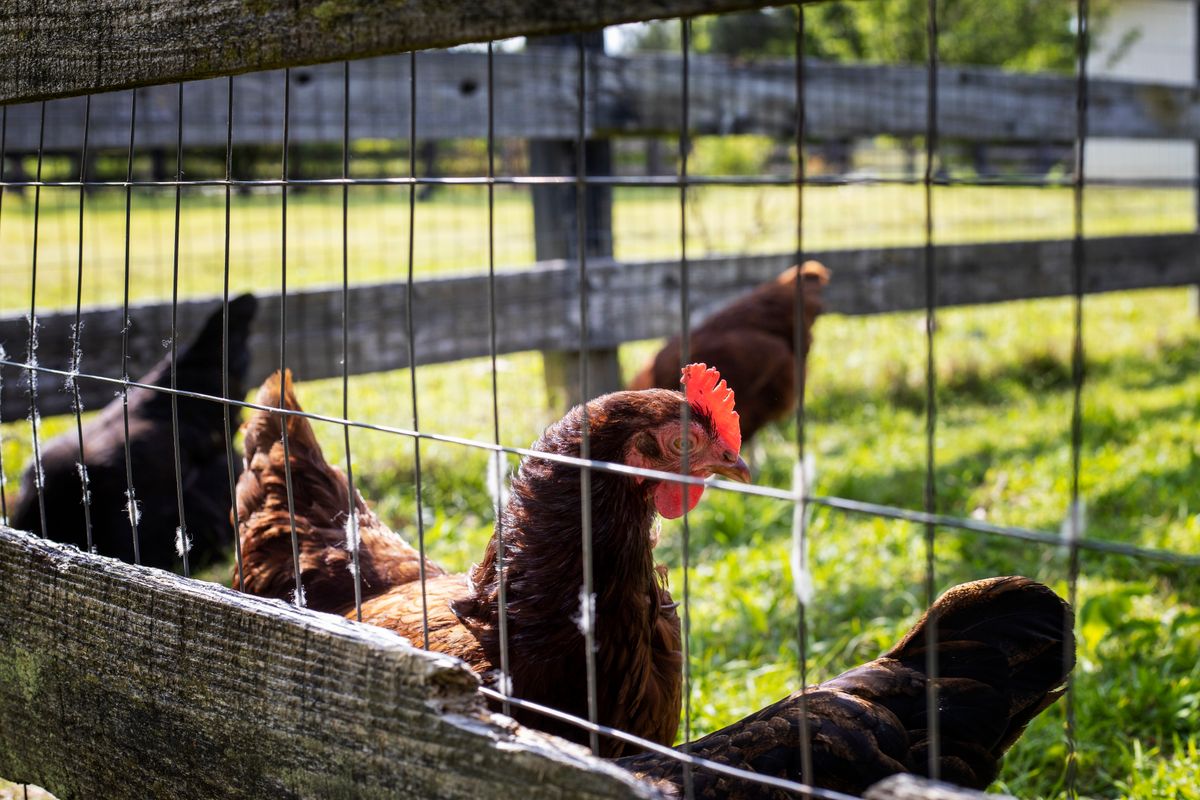
Heat stress
Heat kills more backyard chickens than cold does. Birds have no sweat glands and are wearing a down jacket they cannot take off; they lose heat by panting, by holding their wings away from the body and by radiating from comb, wattles and legs. Above roughly 85°F that stops being enough, and heavy, feather-footed and dark-feathered breeds struggle first. Across Texas, the desert Southwest and the humid Southeast, summer heat is the biggest seasonal killer of backyard flocks, and humidity makes it worse because panting cools a bird less in muggy air.
Learn the escalation
Mild: panting, wings held out, less active, eating less. Moderate: rapid open-mouth breathing, pale comb, standing still with wings spread. Severe: staggering, lying down, unresponsive, seizures. Severe heat stress is a veterinary emergency and birds can die within minutes.Shade first, always
Not a shed - a shed in the sun is an oven. Real shade with air moving under it: trees, shade cloth over part of the run, a tarp raised well clear of the ground so air flows. Aim to have shade available all day, not just at noon.Cool water, in more places than usual
Multiple drinkers in shade, refilled often so the water stays cool. Adding a few ice cubes or a frozen bottle is fine. Birds drink far more in heat and a single drinker in a heat wave is a line and a fight.Move air
A fan in or near the coop makes a genuine difference, because moving air helps evaporative loss from the respiratory tract. Use an outdoor-rated fan on a GFCI-protected outlet, out of reach and kept free of dust.Cool the ground, not the bird
Damp shaded earth, a shallow tray of cool water they can stand in, and a dug-out cool patch under a bush all work. Never plunge an overheated chicken into cold water - the shock can kill. If you must cool a collapsing bird, use cool (not cold) water on the feet and legs and get veterinary advice.Adjust feeding
Feed early morning and evening, because digestion generates heat. Cut back on corn and other high-energy scratch in a heat wave - save it for winter, where it belongs.Electrolytes, sensibly
Poultry electrolyte supplements can help during genuine heat stress, used as directed and for a limited period. They are not a daily supplement and they do not replace shade and water.Watch the vulnerable
Heavy breeds, birds in full lay, overweight birds, very young chicks and older hens all struggle first. Check them specifically, twice a day, through any hot spell.
Quick tip - a panting chicken is not necessarily in trouble. Panting with wings slightly out on a warm day is normal thermoregulation, exactly like a dog. What matters is the escalation: rapid open-mouth breathing, standing rigidly still, pale comb, unresponsiveness. Learn the difference and you will neither panic nor miss it.

Dehydration
A chicken drinks roughly two to three times as much as she eats by weight, and far more in hot weather or when laying heavily. Water is the single most important input in the whole system, and it is the one most often quietly compromised - a frozen drinker, a fouled bowl, a bullied bird, an empty container nobody checked.
How to spot it
FastLethargy, pale or dull comb and wattles, sunken-looking eyes, and skin over the breast that stays tented when gently pinched.
WhyBirds lose condition remarkably quickly without water; a laying hen dehydrates faster still because so much water goes into the egg.
SoOffer water immediately, in easy reach, and get veterinary advice if she will not drink.
Frozen water
WinterThe most common cause in cold climates, and easily missed because the drinker looks full.
WhyIce forms a lid; birds cannot break it. A flock can go from morning to evening with no water at all while the keeper sees a full drinker.
SoCheck it twice a day in frost. See Winter Care for practical anti-freeze options.
Fouled or algae-green water
SummerBirds will drink less from dirty water, and biofilm harbors bacteria.
WhyWarm weather plus daylight plus organic matter equals algae and biofilm within days.
SoScrub weekly with a brush - rinsing is not enough. See Cleaning.
Not enough drinkers
Flock dynamicsOne drinker in a flock with a strong hierarchy means the bottom birds drink last.
WhyDominant hens guard resources, especially in hot weather when everyone wants the same thing at the same time.
SoTwo or more drinkers, well apart, in shade. It costs almost nothing.
Height and access
Easy fixDrinkers set too high, too low, or where an unwell bird cannot reach them.
WhyAn isolated or poorly bird often simply cannot get to water, which turns a manageable illness into a fatal one.
SoBack height for the flock; and put water within beak reach of any bird you isolate.
Electrolytes
Used properlyPoultry electrolyte and vitamin supplements support birds under genuine stress.
WhyUseful in heat, after transport, during illness recovery or after a shock - they help replace what is lost, not prevent the loss.
SoUse as directed and for a limited period. Always offer plain water alongside.
Supportive care & supplements
Amazon picksAs an Amazon Associate, PlantMapper may earn from qualifying purchases. Prices and availability are set by Amazon. Always follow the manufacturer’s instructions, and introduce any new bedding or product to your flock gradually.

Injuries from pecking
Feather pecking and, at its worst, cannibalism are among the most distressing problems a keeper meets, and they escalate with frightening speed once blood is drawn. Chickens are strongly attracted to the color red, so a small wound becomes a serious one within hours if the bird stays with the flock.
✓What to do immediately
Speed matters more than anything else here.
- Separate the injured bird instantly - not the bully, the victim.
- Clean the wound gently with clean water or sterile saline.
- Cover the red - purple or blue antiseptic wound sprays sold for poultry mask the color.
- Keep her separate until fully healed and feathered over.
- Reintroduce carefully, ideally alongside a companion rather than alone.
- Vet for anything deep, dirty, over the abdomen, or not improving.
×Why it started
Treat the cause or it simply happens again.
- Overcrowding - the single biggest driver, in coop and run.
- Boredom - nothing to scratch, peck or explore.
- Too few feeders and drinkers, or badly placed ones.
- Low protein or an unbalanced diet, especially during molt.
- Bright light and long artificial day-lengths.
- An existing wound, prolapse or parasite attracting attention.
Vent pecking and fly strike - the two that turn fatal
Vent pecking is the most dangerous form. Birds are drawn to the vent, particularly after laying or where there is a prolapse or soiled feathers, and injuries there can be fatal within hours. Any bird with a damaged or bleeding vent must be removed from the flock immediately.
Fly strike follows soiled or damaged skin in warm weather: flies lay eggs, maggots hatch and feed on living tissue. Check every bird’s vent area weekly through summer. Maggots on a live bird are a same-day veterinary emergency - do not attempt to manage it alone.
Keep vents clean. Trim soiled feathers around the vent on birds prone to messy droppings, and fix the underlying loose droppings rather than just cleaning up after them.
Enrichment genuinely works. A hanging cabbage, a deep litter bed to scratch in, a dust bath, perches at different heights, and scattered scratch feed all reduce pecking measurably.
Anti-peck sprays and bits exist, but they manage the symptom. If you are reaching for them regularly, the flock needs more space, more feeders or more to do.

Feather loss and molting
Adult chickens replace their feathers once a year, usually in fall as daylight shortens, and it takes anywhere from four to twelve weeks. Birds look dreadful, stop laying, and can be miserable and touchy while it happens. All of that is normal.
The useful skill is telling a molt from a problem, because bare patches have several other causes.
| Pattern of feather loss | Most likely cause | Tell it apart by |
|---|---|---|
| Feathers everywhere, patchy all over, pin feathers visible | Molt | The season (usually fall), pin feathers coming through, laying has stopped |
| Bare back and saddle on some hens only | Mating wear from a rooster | Only hens he favors; skin is usually intact; a hen saddle solves it |
| Bare vent and lower back, birds look ragged | Feather pecking | Feathers are broken or pulled, sometimes bloody; you can watch it happening |
| Bare belly on one hen, feathers in the nest | Broody hen plucking herself | She is sitting flat in the nest and growls at you |
| Thin, ragged plumage with itching and restlessness | Mites or lice | Part the feathers at the vent and look at the skin |
| Slow feather loss with poor regrowth | Nutrition | Feathers are about 85% protein - poor diet shows here first |
| Sudden feather loss with fright | Fright molt | A handful of feathers released when grabbed - a predator escape mechanism |
Scroll sideways on a phone. If in doubt, the season and the presence of pin feathers settle it - a molting bird is growing feathers, a pecked bird is not.
Quick tip - support the molt, do not fight it. Molting takes a great deal of protein, which is why laying stops: the bird simply cannot do both. Raise the protein a little with a good-quality feed, avoid handling birds more than necessary because new pin feathers have a blood supply and hurt, and accept the pause. Trying to force laying through a molt, with light or otherwise, is bad for the bird and rarely works.

Predator injuries, leg injuries and limping
Injuries are the one category where the right first move is almost always the same: get the bird away from the flock, then assess. Chickens do not extend sympathy to an injured flockmate - quite the reverse.
Predator injuries
Vet, alwaysPuncture wounds from teeth or talons - raccoons, opossums, foxes, coyotes, dogs, weasels, hawks and owls - often small on the surface and far worse underneath.
WhyPredator mouths carry heavy bacterial loads; punctures seal over and infect from the inside, so a bird that looks fine on the day can be seriously ill by day three.
SoEvery bird involved in an attack gets examined properly, and any wound means veterinary attention and isolation. See Predator Protection.
Leg injuries and limping
Work through itSprains, strains, and occasionally fractures - usually from a bad landing off a high perch or a scuffle.
WhyChickens are heavy-bodied birds with light legs; a drop of three feet onto hard ground is enough, especially in the big breeds.
SoExamine both feet and legs first - bumblefoot and scaly leg are far more common than fractures. Confine a limping bird somewhere small and flat and re-check daily.
Bumblefoot
Check the padA dark scab and swelling on the underside of the foot - the most common cause of persistent limping.
WhyIt is a bacterial infection entering through a small wound, driven by high perches, rough perches or wet litter.
SoSee bumblefoot above for the full picture.
Wing injuries
Less commonA drooping wing, held away from the body or dragging.
WhyUsually caught in wire, trodden on, or damaged escaping something. Occasionally a fracture.
SoConfine the bird, restrict flying and perching, and take veterinary advice before strapping anything - a badly applied wrap does real harm.
Cuts and tears
CommonSharp wire, protruding nails, splintered timber and damaged mesh.
WhyMost run injuries come from something in the run that should have been fixed - which makes them entirely preventable.
SoClean, assess, isolate if bleeding, and walk the run afterwards looking for the cause.
Bleeding is an emergency
Whatever the causeAny bleeding bird must come out of the flock immediately.
WhyChickens are drawn to red and will peck a wound open - a survivable injury becomes a fatal one within hours.
SoSeparate first, treat second. That order matters more than the treatment itself.

Poisoning risks
Chickens are curious and indiscriminate, and they will sample almost anything. Most poisoning cases in backyard flocks come from a small number of avoidable sources, and the signs are usually sudden: staggering, tremors, collapse, sudden death, or several birds affected at once.
If you suspect poisoning, remove the source, get birds onto clean water, and call a vet immediately - take a sample or photograph of whatever you think they ate.
Botulism
Often fatal
From decaying organic matter, stagnant water or a dead animal in the run.
- Signs progressive paralysis from the legs upward, limp neck.
- Prevent no standing water, no rotting matter, remove carcasses promptly.
- Urgent veterinary attention - antitoxin exists but timing matters.
Rodenticides
Avoidable
Rat and mouse poison is a common and entirely preventable killer.
- Direct birds eat the bait; it is often grain-based and attractive.
- Secondary birds eat poisoned rodents, or predators eat poisoned birds.
- Never use rodenticide where poultry can reach it. Use a professional.
Moldy feed and bedding
Mycotoxins
Moldy grain, damp feed and moldy bedding produce toxins that damage liver and gut.
- Signs vague ill health, poor laying, weight loss, sudden deaths.
- Prevent store feed dry and sealed; never feed anything that smells musty.
- Also moldy bedding causes aspergillosis. See Bedding.
Lead and metals
Old buildings
Flaking lead paint, old solder, lead shot and discarded metal in the soil.
- Risk sites old sheds, demolished buildings, former workshops, old orchards.
- Signs weakness, green droppings, neurological signs, weight loss.
- Check before siting a run on ground with an industrial or old-building history.
Garden chemicals
Read the label
Slug and snail baits, herbicides, insecticides, lawn treatments and wood preservatives.
- Slug and snail baits metaldehyde baits are still sold in the US and are highly toxic - use iron phosphate types and still keep birds off treated ground.
- Timings observe the re-entry interval on any product you use.
- Treated wood don’t let birds peck old pressure-treated lumber (pre-2004 CCA wood contains arsenic); use stains sold as safe for animal housing, fully dried.
Kitchen and human foods
Genuinely harmful
A short list of things that should never go to chickens.
- Avoid avocado (persin), chocolate, caffeine, alcohol, anything salty or moldy.
- Raw dried beans contain phytohemagglutinin and are dangerous - cook them.
- Green potato and green tomato foliage contain solanine.
Toxic plants
Free-ranging chickens usually avoid genuinely toxic plants when they have plenty of other forage - birds are better at this than people assume. Risk rises sharply when birds are confined, hungry, bored, or turned out onto a small area with nothing else to eat, and when garden clippings are thrown into the run.
As a garden site we would rather give you the list than pretend it does not matter. The single most useful precaution is never to throw prunings or weedings into the run without checking what they are.
| Plant | Part of concern | Why it matters | Practical risk to a backyard flock |
|---|---|---|---|
| Yew (Taxus) | All parts except the aril | Taxine alkaloids; cardiac | High Rapidly fatal - Japanese and English yews are everyday foundation shrubs in US yards; never throw clippings in |
| Foxglove (Digitalis) | All parts | Cardiac glycosides | Serious Rarely eaten by choice, but keep clippings out |
| Rhubarb | Leaves | Oxalic acid | Moderate A classic mistake - leaves get thrown to hens with kitchen waste |
| Potato and tomato foliage | Green leaves, stems, green tubers | Solanine | Moderate Very common in a vegetable garden; keep birds off after clearing |
| Avocado | Skin, stone, leaves | Persin | High Genuinely dangerous to birds - never feed any part |
| Rhododendron and azalea | Leaves, flowers | Grayanotoxins | Serious Common garden shrubs; clippings are the usual route |
| Oleander | All parts, fresh or dried | Cardiac glycosides | High A common hedge in the South, Texas, Arizona and California - keep it well away from runs |
| Bracken | Fronds, rhizomes | Ptaquiloside, thiaminase | Moderate A concern where runs back onto rough ground |
| Pokeweed | Roots, berries, mature leaves | Saponins, oxalates | Moderate A native weed that pops up along fences in the East and South; pull it before it fruits |
| Daffodil, tulip and hyacinth bulbs | Bulbs especially | Various alkaloids | Moderate Birds dig; be careful where you plant bulbs |
| Nightshades (bittersweet, black nightshade) and jimsonweed | Berries, foliage | Solanine and related | Serious Often self-seeds along fence lines - worth learning to spot |
| Oak | Acorns, young leaves | Tannins | Low Rarely a problem unless birds are confined under an oak in a heavy mast year |
| Onion family in quantity | Bulbs, leaves | N-propyl disulfide | Low Small culinary amounts are fine; large quantities can cause anemia |
Scroll sideways on a phone. This list is not exhaustive and toxicity varies with quantity, part and season - if in doubt, keep the plant out of the run and ask a vet.
Quick tip - the run audit that takes ten minutes. Walk the run and its boundary once each spring with this list in mind. Look particularly along fence lines, under trees and anywhere clippings get tipped - that is where the risky plants end up. Then agree one rule with everyone in the household: garden waste goes on the compost pile, never over the fence to the chickens.

Nutritional deficiencies
A complete commercial layer ration is formulated to supply everything a laying hen needs, so genuine deficiencies are rare in well-fed backyard flocks. When they do happen the cause is almost always the same: treats, scraps and scratch grain have quietly displaced the balanced feed.
| Deficiency | How it shows | Practical fix |
|---|---|---|
| Calcium | Soft, thin or shell-less eggs; in severe cases weak bones and lameness | Oyster shell free-choice; layer ration as the bulk of the diet |
| Protein | Poor feathering, slow molt recovery, feather pecking, poor laying | A quality ration; more during molt; treats under 10% of intake |
| Vitamin D3 | Poor shells and bone problems even when calcium is adequate | Outdoor access, or a complete feed for permanently housed birds |
| Riboflavin (B2) | Curled-toe paralysis in chicks; weakness and poor growth | Fresh chick starter (check the mill date on the bag) - vitamins degrade in old feed |
| Vitamin E and selenium | Neurological signs in young birds, poor fertility | Fresh feed, correct storage, veterinary supplement if diagnosed |
| Vitamin A | Poor condition, respiratory and eye problems, low resistance | Complete ration plus green forage; avoid all-grain diets |
| Grit (not a nutrient, but essential) | Poor digestion, weight loss, crop problems | Insoluble granite grit free-choice, offered separately from oyster shell |
| Salt imbalance | Excessive drinking, wet litter, or weakness if deficient | Never feed salty scraps; a complete ration already contains what is needed |
Scroll sideways on a phone. If you are supplementing more than one thing at a time, the underlying problem is usually the base ration or the proportion of treats.
The four-part diet that prevents most of this
1. A complete ration appropriate to the life stage - chick starter, grower pellets, then layer feed - making up at least 90% of what the birds eat.
2. Insoluble granite grit, free-choice, so the gizzard can actually grind food. Confined birds cannot pick up their own.
3. Oyster shell, free-choice and separate, so laying hens can take the calcium they need and non-layers can leave it.
4. Clean water, always, in more than one place. Everything else fails without it.
Everything beyond those four things is enrichment rather than nutrition. Full detail in Feeding Chickens.
Stress and bullying
The pecking order is real, permanent and enforced daily, and a certain amount of squabbling is normal. What is not normal is a bird being persistently driven off food and water, kept off the perch, or physically injured - and chronic stress suppresses immunity, stops laying and makes everything else on this page more likely.
Signs of a stressed flock
- One bird apart consistently, or hiding in the coop during the day.
- Feather loss on the head, neck and back of the bird lowest in the order.
- A sudden stop in laying with no other explanation.
- Birds unwilling to come out or to pass a particular hen to reach the feeder.
Watch at feeding time for five minutes. Almost every flock problem shows up there first.
The usual causes
- Overcrowding in the coop, on the perch, or in the run.
- Too few feeders and drinkers or all of them in one place.
- A new bird added alone rather than in a pair.
- Boredom - nothing to do turns attention onto other birds.
The fix is usually space, more feeding stations and enrichment rather than removing a bird.
Introducing new birds
- Quarantine first for two to four weeks, separately, for disease reasons.
- Then see-but-not-touch - adjacent runs for a week or more.
- Introduce at dusk into the coop, and add at least two birds rather than one.
- Expect squabbling for two weeks; intervene only if blood is drawn.
Never simply put a single new hen into an established flock in daylight. It goes badly.
Reducing stress generally
- More space than the minimum - the single most effective change.
- Multiple feed and water stations well apart so nothing can be guarded.
- Enrichment deep litter, dust baths, perches at different heights, hanging greens.
- Routine - chickens are creatures of habit and dislike sudden change.
See Chicken Coops and Chicken Runs for space standards.
Quick tip - separate the victim, not the bully, but only briefly. Removing a bullied bird gives her respite, but she loses her place in the order and often comes back worse off. If you must intervene, it is usually more effective to remove the aggressor for a few days - she loses status and comes back lower down. Better still, fix the crowding or the feeder shortage that started it.

When to isolate a chicken
Isolation is one of the most useful tools a keeper has, and one of the most misused. Done at the right moment it protects an injured bird, stops disease spreading and lets you actually see what is happening. Done unnecessarily it adds stress and costs the bird her place in the pecking order.
✓Isolate immediately when…
In these cases, separation is the first action, before treatment.
- There is any bleeding - the flock will attack a wound within minutes.
- A prolapse is visible - out of sight of the flock, not just separated.
- She cannot stand or is being trampled.
- You suspect something contagious - respiratory signs, bloody droppings.
- She is being persistently bullied and cannot reach food or water.
- A new bird has arrived - quarantine for two to four weeks, always.
×Think twice when…
Separation is not always kind, and it has real costs.
- She is simply molting or broody - both are normal.
- She is mildly off color but eating, drinking and keeping up.
- The whole flock is affected - then it is the environment, not the bird.
- Isolation would mean total solitude for a long period - consider a companion.
- It is bitterly cold and the hospital pen is unheated and exposed.
- You are separating out of worry rather than observation - watch first, if it is safe.
Setting up a hospital pen properly
Somewhere warm, dim and quiet, out of the weather and away from the flock’s noise. A large dog crate, a spare rabbit hutch or a cardboard box in a shed all work. Dim light reduces stress and reduces the urge to lay, which is what you want in most cases.
Water within beak reach of where she is lying. This is the detail people miss. A weak bird will not walk across a pen to a drinker, and dehydration is what kills her rather than the original problem.
Easy food she actually wants. Her normal ration first, but scrambled egg, moistened pellets or oatmeal tempt a bird who has gone off feed. Do not force-feed a collapsed bird.
Soft, dry, clean bedding and no perch if she is unsteady on her feet. Change it daily so you can see the droppings clearly - they are one of your best diagnostic signals.
Keep her within sight or sound of the flock if you safely can, so reintroduction is easier. Bring her back in the evening, into the coop, ideally with a companion, and watch the first full day closely.
Isolation & monitoring
Amazon picksAs an Amazon Associate, PlantMapper may earn from qualifying purchases. Prices and availability are set by Amazon. Always follow the manufacturer’s instructions, and introduce any new bedding or product to your flock gradually.

Basic first aid
First aid for chickens is about stabilizing a bird and buying time, not treating disease. Almost everything below is about making a bird warm, calm, hydrated and safe from her flockmates while you decide whether she needs a vet - which, if you are unsure, she does.
Learn to handle birds confidently before you need to. Support the body with one hand under the breast and the legs held gently between your fingers; hold the wings against the body. A calmly held chicken is remarkably still.
Separate first, assess second
Any bleeding, obviously injured or collapsed bird comes out of the flock immediately. This is always the first move, before you work out what is wrong, because the flock will make it worse while you think.Warmth, dark and quiet
A cold, shocked bird cannot recover. Somewhere around 77-86°F, dim and undisturbed, with no risk of overheating and no fire risk from heat sources. Shock kills more birds than many of the injuries that caused it.Water within reach, then food
Put water where she is lying, not across the pen. If she will not drink, call a vet rather than tipping fluid into her beak - birds inhale liquid very easily and it is often fatal.Stop bleeding with pressure
Firm, steady pressure with a clean cloth or gauze for several minutes. A blood-stopping powder or plain cornstarch helps for a broken blood feather or a torn nail. Do not use human wound products containing ingredients you have not checked as safe for birds.Clean wounds simply
Clean, lukewarm water or sterile saline. A poultry wound spray in purple or blue also masks the red that attracts pecking. Avoid strong antiseptics unless a vet has recommended them.Do not bandage tightly, splint, or set anything
Badly applied wraps cut off circulation and cause more harm than the injury. Confine the bird in a small, flat space and let a vet deal with anything structural.Write down what you see
Time, symptoms, droppings, appetite, weight, temperature of the coop, what changed recently. This is genuinely valuable to a vet, and it stops you second-guessing yourself later.Know when you are out of your depth
Anything involving breathing difficulty, a prolapse, suspected egg binding, deep wounds, paralysis, multiple sick birds, or no improvement in 24 hours is a veterinary matter. Calling early is cheaper and kinder than calling late.
Poultry first aid kit
Amazon picksAs an Amazon Associate, PlantMapper may earn from qualifying purchases. Prices and availability are set by Amazon. Always follow the manufacturer’s instructions, and introduce any new bedding or product to your flock gradually.
Emergency signs requiring immediate veterinary attention
Some things can reasonably be watched for 24 hours. These cannot. If you see any of them, call a vet today - and say clearly on the phone that it is a chicken, because many US clinics don’t treat poultry and you want one that does.
Breathing
Always urgent
- Open-mouth breathing or gasping at rest.
- Gurgling, rattling or clicking audible from a distance.
- Neck stretching and gaping repeatedly.
- Blue or purple comb or wattles.
- Swollen face or sinuses.
- Any breathing change in more than one bird at once.
Reproductive
Hours matter
- Straining with nothing produced - suspected egg binding.
- Tissue protruding from the vent - prolapse.
- A swollen, firm abdomen and penguin stance.
- A hen sitting hunched off feed, tail down, for more than a few hours.
- Foul-smelling discharge from the vent.
- Repeated nest visits with no egg over several hours.
Injury and bleeding
Same day
- Any active bleeding - separate first, then call.
- Puncture wounds from a predator, however small.
- Maggots on a live bird - fly strike.
- A wing or leg hanging abnormally.
- A bird that cannot stand or bear weight at all.
- Deep or dirty wounds anywhere over the abdomen.
Whole-flock signs
Report if suspected
- Several birds ill or dead at once.
- Sudden flock-wide collapse in laying with illness.
- Nervous signs - tremors, twisted neck, incoordination.
- Swollen heads across several birds.
- Blue combs in more than one bird.
- Anything that looks reportable - report it, do not wait for certainty.
General collapse
Do not wait
- Unresponsive or unable to hold the head up.
- Not eaten or drunk for 24 hours.
- Blood in the droppings.
- Seizures or paddling.
- Severe heat stress - staggering, lying flat, unresponsive.
- Rapid weight loss over days rather than weeks.
Have ready when you call
Saves time
- Age, breed and sex of the bird.
- How long she has been like this.
- What the droppings look like.
- Whether she is eating and drinking.
- How many other birds are affected.
- Anything that changed - feed, weather, new birds, treatment.
Quick tip - find your poultry vet before you need one. Most small-animal clinics in the US don’t see chickens, and 6pm on a Sunday is a bad time to find that out. Call around now - try avian and exotics practices and mixed or farm-animal vets - and if nobody nearby takes poultry, ask your county Cooperative Extension office or your state’s poultry diagnostic lab who does. Then put the number on the coop door alongside your cleaning card. It takes ten minutes and it is the single most useful preparation on this page.

Prevention through good husbandry
Read back through this page and a pattern emerges: the overwhelming majority of problems come down to damp, crowding, dirty water, poor diet, undetected parasites or birds brought in without quarantine. Fix those six and you have prevented most of what a backyard flock will ever suffer.
Keep it dry
Biggest single factorDry litter, dry run, open ventilation, no leaks, drinkers outside the coop.
WhyDamp drives ammonia, mold, coccidiosis, bumblefoot, frostbite and fly strike - six separate problems from one cause.
Do not overcrowd
Second biggestAt least 3-4 sq ft of coop floor per standard hen, generous run space, 8-10 in of perch each.
WhyCrowding concentrates parasites and pathogens, drives feather pecking and bullying, and makes moisture control impossible.
SoSee Chicken Coops and Chicken Runs.
Clean water, always
Non-negotiableMultiple drinkers, scrubbed weekly with a brush, shaded in summer, unfrozen in winter.
WhyWater is the input that fails silently - a frozen or fouled drinker looks full from a distance.
SoCheck it twice daily in extreme weather. See Cleaning.
Feed a proper ration
Boring but decisiveA complete feed for the life stage as 90% of intake, plus free-choice grit and oyster shell.
WhyTreats displacing balanced feed is behind a large share of soft shells, poor feathering and feather pecking.
SoSee Feeding Chickens.
Look at the birds weekly
FreeKeel, feet, vent, comb, eyes, droppings - and the perch ends with a flashlight after dark.
WhyEvery parasite and most illnesses on this page are trivial when caught in week one and serious by week four.
SoTen minutes a week. Write it on the coop-door card.
Quarantine every new bird
Most-skipped stepTwo to four weeks, separate housing, separate equipment, attended to last.
WhyNew birds are the single most common route by which disease and parasites enter a healthy flock.
SoSee Cleaning for the full biosecurity routine.
Chicken health across the US
The same hen faces very different threats in a Wisconsin winter, a Houston summer and an Oregon rainy season. Use these notes to decide which sections of this page matter most where you live - and check your city, county and HOA rules on keeping poultry before you add birds.
Northeast & Midwest
Cold, damp wintersLong freezes, damp coops and short days. Frostbite on single combs, frozen waterers and winter weight loss under thick feathers are the big three.
Watch forCondensation inside the coop, ice on drinkers (a heated waterer base helps), and raccoons, foxes, hawks and great horned owls testing the run.
SoRead frostbite and dehydration, and keep biosecurity tight during spring and fall bird migrations.
Southeast & Gulf Coast
Heat & humidityHot, muggy summers that run from May to September, with mosquitoes most of the year and mites that rarely get a winter break.
Watch forHeat stress, fowl pox, coccidiosis in warm wet litter, rat snakes taking eggs and chicks, and fire ants around brooders.
SoRead heat stress, fowl pox and mites; shade and airflow matter more than insulation.
Texas & the Southwest
Extreme heat, dry airSummer days well over 100°F in Arizona, Nevada and much of Texas, where water can get hot enough in the sun that birds stop drinking.
Watch forPanting with wings held out, dehydration, egg production crashing in July and August, and coyotes, bobcats, hawks and snakes.
SoGive deep shade, several shaded waterers, and misters around (not on) the run. See heat stress.
California & Pacific Northwest
Wet winters, disease rulesWest of the Cascades, months of rain mean muddy runs and damp litter; inland California swings to long, dry heat.
Watch forCoccidiosis and bumblefoot from wet ground, respiratory problems in damp coops, and heat in the Central Valley. Southern California had a large virulent Newcastle disease outbreak in backyard flocks in 2018-2020.
SoRoof part of the run, keep litter dry, and buy birds only from sources that test their stock (such as NPIP-participating hatcheries).
Mountain West & Plains
Wind, cold, big swingsBitter wind chill, sudden 40-degree temperature swings and dry, dusty summers from Montana and the Dakotas down to Colorado and Kansas.
Watch forFrostbite in wind-exposed coops, frozen water, dusty air irritating lungs, and coyotes, skunks, raccoons and raptors.
SoAdd a windbreak on the prevailing-wind side but keep high ventilation open. See frostbite and respiratory illness.
Florida & frost-free areas
Year-round pestsZones 10-11 never give parasites or mosquitoes a cold break, so problems that are seasonal elsewhere run all year.
Watch forMites and lice in every month, fowl pox, heat and humidity from spring through fall, and snakes and raccoons.
SoCheck for parasites monthly all year and treat the seasonal calendar as “summer” for most of it.

Seasonal health calendar
Backyard poultry problems are seasonal and therefore predictable - but the seasons arrive at very different times across the US. Spring can start in February in zone 9 Texas or Florida and not until May in zone 4 Minnesota, and a Gulf Coast flock may never see frostbite but faces heat and mites for half the year. Tap through the seasons and shift them to match your own climate (find your growing zone).
- Full deep clean and mite treatment before the population takes off with the warmth.
- Worm count as birds come back onto growing ground.
- Watch for broodiness and for pullets coming into lay - prolapse risk.
- Check every keel and foot after winter confinement.
- Vaccinated chicks? Check before using medicated crumb - the two cancel out.
- Coccidiosis watch in young growers as ground warms and dampens.
- Audit the run for toxic plants before growth gets away from you.
- Heat stress is the main risk - shade, airflow, multiple cool drinkers.
- Check every vent weekly for soiling and fly strike.
- Red mite peaks - check the perch ends with a flashlight every week without fail.
- Watch shell quality - heat thins shells.
- Scrub drinkers weekly - algae and biofilm grow fast.
- Feed early and late and cut back on corn.
- Keep bedding shallower and change it more often.
- Molt - expect laying to stop; support with good protein.
- Second deep clean before birds spend long nights indoors.
- Worm count before winter housing.
- Fix leaks and drainage now not in the middle of winter.
- Top up run surfacing before it turns to mud.
- Check condition - birds should go into winter well covered.
- Review ventilation before you are tempted to close it up.
- Frostbite watch - keep vents open and the coop dry.
- Check water twice a day for ice; a full drinker can be frozen solid.
- Scrape the droppings board daily - birds are indoors far longer.
- Watch for boredom pecking and add enrichment.
- Expect reduced laying - it is daylight, not illness.
- Deep dry bedding and lift wet patches out immediately.
- Handle birds monthly - feathers hide winter weight loss completely.
First aid kit and emergency checklist
Check items off as you gather them. The page remembers your checkmarks on this device, and the print button gives you a clean copy for the coop or garage door.
The kit itself
Keep it in one box
The hospital pen
Ready to set up
In an emergency
Do these in order
The prevention checklist
The routine that prevents most of this page. Nothing here takes long; the value is entirely in doing it consistently.
Every day
Two minutes
Every week
Ten minutes
Every month
Half an hour
Twice a year
Half a day
Common chicken problems: frequently asked questions
Tap any question to open it. These are the questions keepers ask most often - about spotting illness early, the conditions that come up again and again, when a vet is genuinely needed, and what actually prevents most of it.
How do I know if my chicken is sick?
Look for changes rather than symptoms. A sick chicken usually stands apart from the flock, fluffs up, holds her tail down, half-closes her eyes and stops being interested in food. Her comb may go pale, dull or shrunken, her droppings may change, and she may be last out of the coop or reluctant to come out at all. Because chickens hide illness instinctively, any of these changes means she has usually felt unwell for a day or two already.
What is the first thing to do with a sick chicken?
Separate her, get her warm, dim and quiet, and put water within beak reach of where she is lying. Those three things stabilize almost any bird while you work out what is wrong. Then write down what you can actually see - posture, droppings, appetite, comb color, breathing - because that is exactly what a vet will ask you for. If there is any bleeding, separate her before you do anything else: the flock will attack a wound within minutes.
Why has my chicken stopped laying?
Work through the ordinary explanations first, because they cover the great majority of cases: shortening daylight in fall, the annual molt, age, broodiness, a recent fright or change, heat, or hens laying somewhere you have not found. Only after those should you consider red mite, worms, poor nutrition or infectious bronchitis. If the birds look and behave well, a drop in laying is far more likely to be daylight or molt than disease.
Why are my chickens laying soft or shell-less eggs?
Usually calcium. Offer soluble oyster shell free-choice in a separate hopper - never mixed into the feed - and make sure a complete layer ration is the bulk of the diet with treats under about 10%. Young pullets just coming into lay and very old hens produce the occasional soft egg quite normally. If it is happening flock-wide and suddenly, especially alongside coughing or misshapen eggs, think about infectious bronchitis and call a vet.
What is egg binding and what do I do?
An egg-bound hen has an egg stuck in the oviduct and cannot pass it. She strains, stands unusually upright in a penguin posture, pumps her tail, visits the nest repeatedly and produces nothing. It is a genuine emergency - untreated it usually kills within 24 to 48 hours. Isolate her somewhere warm, dark and quiet, stand her in warm water to belly depth for 15 to 20 minutes, lubricate the vent externally and call a vet. Never break the egg inside her and never pull or squeeze.
What does a vent prolapse look like and is it an emergency?
It appears as a pink or red mass of tissue protruding from the vent, usually after straining. It is an emergency, but mainly because of the flock rather than the prolapse itself: chickens are drawn to red tissue and will peck it within minutes, and that damage is what kills. Isolate her immediately somewhere dim and out of sight of the other birds, clean the tissue gently with lukewarm water, and call a vet the same day.
What is bumblefoot and how serious is it?
Bumblefoot is a bacterial infection of the footpad, recognized by swelling and a characteristic dark scab on the underside of the foot. Caught as a small dark spot it is manageable with clean, dry conditions; once the foot is swollen and the bird is limping it needs veterinary treatment, and advanced cases that reach tendon and bone have a poor outlook. It is usually caused by perches that are too high, too narrow or rough, or by wet litter.
How do I tell sour crop from impacted crop?
Feel the crop first thing in the morning, before the bird has eaten - it should be flat and empty. A sour crop feels squelchy and fluid-filled and the bird’s breath smells foul or yeasty. An impacted crop feels firm, hard and full. That single distinction is the first thing a vet will ask you for. Whichever it is, get advice before intervening, and never hold a chicken upside down to empty her crop - birds inhale the contents and drown.
What causes coccidiosis and how do I prevent it?
Coccidiosis is caused by Eimeria, a gut parasite present in nearly every chicken environment. It becomes dangerous when warm, damp litter lets the dose build up, and it mainly kills birds between about three and sixteen weeks. Signs are watery droppings often containing blood, huddling, fluffed feathers and sudden deaths. Prevention is dry litter, sensible stocking density, raised drinkers and rotating ground. Treatment is veterinary and effective if started quickly.
How often should I worm my chickens?
Rather than deworming blindly every few months, have a fecal worm count done - your vet can run one, and mail-in kits are inexpensive - and treat when it shows a burden. Twice a year plus any time birds lose condition is a sensible rhythm. Blind routine deworming drives resistance and treats birds that do not need it. In the US very few dewormers are approved for laying hens, so use one labeled for chickens or one your vet prescribes, at the labeled dose, and follow the egg-withdrawal time exactly.
How do I get rid of red mites (red roost mites)?
Treat the coop, not just the birds. Red mite live in cracks, perch ends, joints and under felt, and only come out at night to feed. Strip everything out, scrub with hot water and a stiff brush concentrating on perch ends and seams, then treat the structure with a product labeled for poultry housing, exactly as the label instructs - and repeat on the label’s cycle, because eggs hatch after the first treatment. Very hot water or steam into perch ends kills mites and eggs on contact.
How do I know if I have red mite?
Look after dark with a flashlight along the underside and ends of the perches, in joints and under any lining. Mites are gray when hungry and red after feeding, and you may see gray ash-like debris rather than the mites themselves. Pressing clear tape along a perch end and holding it to the light is the quickest confirmation. In the birds, look for reluctance to roost, restlessness at night, pale combs, a drop in laying and tiny dark specks on eggs.
What is the difference between red mite and northern fowl mite?
Red mite live in the coop and only visit the bird to feed at night, which is why coop treatment is the whole battle. Northern fowl mite live permanently on the bird, concentrated around the vent and tail base, so you find them by parting the feathers in daylight and you treat the birds themselves. Both cause anemia in heavy burdens, and both need repeat treatment to catch newly hatched mites.
How do I treat scaly leg mite?
Scaly leg mite burrows under the leg scales, lifting them into a thickened, crusty white-gray mass over months. Treat with a product recommended by your vet or labeled for the purpose, treat every bird in the flock rather than only the obvious one, and treat the perches too, because it spreads along them. Never pick or scrape the raised scales off - it is painful and causes bleeding. Improvement is slow; the legs look normal again only after the bird has molted the damaged scales.
My chicken is sneezing - is it serious?
Possibly, and the first question is whether the cause is environmental or infectious. Smell the coop at head height: ammonia from damp litter causes identical signs, as does dust from cheap bedding and poor ventilation. Strip the litter, ventilate properly and see whether it resolves. If sneezing persists, if more than one bird is affected, or if there is any rattling, gaping, swollen face or bubbly eyes, that is a veterinary matter - breathing problems are always taken seriously in birds.
What is infectious bronchitis?
IB is a highly contagious virus that causes respiratory signs plus a sudden flock-wide collapse in laying, often with wrinkled, misshapen, pale or shell-less eggs and watery whites. Most birds recover from the acute illness, but young birds infected before point of lay can suffer permanent oviduct damage and never lay properly. There is no treatment for the virus itself - care is supportive, and the real defense is quarantining new birds and good biosecurity.
What is Marek’s disease?
Marek’s is a herpesvirus that causes tumors and nerve damage, typically in birds between six weeks and six months. The best-known sign is progressive paralysis, often with one leg forward and one back, but it can also cause wasting despite a good appetite, gray or irregular pupils and unexplained deaths. There is no treatment once signs appear. Vaccination at day old at the hatchery is the main defense, so ask whether the birds you buy were vaccinated. Do not assume every paralysed bird has Marek’s - injury and deficiency look similar and are treatable.
Do I have to report bird flu (avian influenza)?
Yes. Highly pathogenic avian influenza is a reportable disease in the US, and suspicion - not confirmation - should be reported straight away to your State Veterinarian or to USDA APHIS on its toll-free line, 1-866-536-7593. The pattern to watch for is sudden multiple deaths, swollen or blue heads and combs, a flock going quiet together, and flock-wide breathing or nervous signs. Don’t move birds or visit other flocks while you wait. State rules on testing and bird movement change with the risk level, so check your state department of agriculture for current guidance.
How do I stop my chickens getting frostbite?
Ventilate. Frostbite is a moisture problem rather than a cold one: damp air condenses on combs and wattles and then freezes. Keep vents open above bird height all winter, fix every leak, keep drinkers out of the coop, scrape the droppings board daily and lift wet litter out rather than adding fresh on top. Condensation on the inside of the coop is the warning sign. Never seal a coop up to keep birds warm - that is precisely how frostbite happens.
What are the signs of heat stress in chickens?
Mild: panting, wings held away from the body, less activity, eating less - this is normal thermoregulation. Moderate: rapid open-mouth breathing, pale comb, standing rigidly still with wings spread. Severe: staggering, lying down, unresponsiveness, seizures - a veterinary emergency in which birds can die within minutes. Provide real shade with air moving through it, several cool drinkers, and never plunge an overheated bird into cold water, which can cause fatal shock.
Why are my chickens losing feathers?
Most often the annual molt, usually in fall, which takes four to twelve weeks, stops laying and makes birds look dreadful. Look for pin feathers coming through - a molting bird is growing feathers, a pecked bird is not. Other causes are mating wear from a rooster (bare saddle and shoulders on favored hens), feather pecking (broken feathers, sometimes bloody), a broody hen plucking her own breast, mites or lice, and poor protein in the diet.
How do I stop chickens pecking each other?
Fix the cause rather than the symptom. Overcrowding is the biggest driver, followed by boredom, too few feeders and drinkers, low protein, and bright or long artificial light. Add space, add feeding stations well apart, and add enrichment - deep litter to scratch in, a dust bath, perches at different heights, hanging greens. Any bird that is bleeding must be separated immediately, because chickens are strongly attracted to red and a small wound becomes a serious one within hours.
When should I isolate a chicken?
Immediately if there is any bleeding, if a prolapse is visible, if she cannot stand, if you suspect something contagious, if she is being persistently bullied off food and water, or if she is a new bird arriving (quarantine for two to four weeks). Think twice if she is simply molting or broody, if she is only mildly off color but keeping up, or if the whole flock is affected - in that case the problem is the environment, not the bird.
What should be in a chicken first aid kit?
Sterile saline or clean wound wash, gauze and self-adhesive vet wrap, a poultry wound spray in purple or blue, blood-stop powder, blunt-ended scissors and tweezers, disposable gloves, a water-based lubricant, a clean towel for holding a bird, digital scales, a notebook - and your vet’s phone number written on the lid. Assemble it before you need it; an emergency is the wrong time to discover you have none of it.
Can I give my chickens human medicines?
No. Doses, formulations and safety differ enormously between species, several common human medicines are toxic to birds, and leftover antibiotics drive resistance and mask the signs a vet needs to see. They also leave residues in eggs. Use only products labeled for poultry, or prescribed for your birds by a veterinarian, and always follow the egg-withdrawal time.
How do I find a vet who treats chickens, and what does it cost?
It varies a lot by region and by practice, and a quick phone call is often enough to tell you whether something can wait. The harder part in the US is finding a vet who sees chickens at all: many small-animal clinics don’t, so try avian and exotics practices and mixed or farm-animal vets, and ask your county Cooperative Extension office if you get stuck. Do it now, write the number on the coop door, and you won’t be searching in an emergency.
Can I catch anything from my chickens?
Yes, so a few habits are worth keeping. Backyard poultry can carry Salmonella, Campylobacter and other germs that make people sick, even when the birds look perfectly healthy, and the CDC links backyard flocks to Salmonella outbreaks every year. Wash your hands thoroughly after handling birds, eggs, bedding or the compost pile; don’t kiss or snuggle chickens or let them into the kitchen; keep coop shoes outside the house; and supervise children closely, especially under five. People who are pregnant, older, very young or immunocompromised should take extra care and avoid handling used bedding.
Should I get a necropsy (post-mortem) if a bird dies?
It is worth considering, particularly if you lose more than one bird, lose a young bird unexpectedly, or cannot explain the death. A necropsy (an animal post-mortem) often gives a clear answer that protects the rest of the flock - Marek’s, internal laying, tumors and peritonitis are all commonly diagnosed this way. Most states have a veterinary or poultry diagnostic lab that examines backyard birds, often at modest cost; your vet or county Extension office can tell you where to send it. Refrigerate the bird rather than freezing it, and get it there quickly.
Are natural remedies any use for chicken illness?
Some things genuinely help: a dry dust bath for external parasites, apple cider vinegar as a mild water acidifier, good protein during molt, garlic and herbs as general support. What the evidence does not support is treating an established worm burden, clearing red mite, or curing an infection with home remedies. Use them as husbandry, not as treatment, and do not let them delay a vet visit - that delay is what causes harm.
Can I still buy chicken antibiotics at the feed store?
Mostly no. Since June 2023, medically important antibiotics for animals, including chickens, have needed a veterinarian’s prescription (or a Veterinary Feed Directive for medicated feed), so the bottles that used to sit on farm-store shelves are gone. That is another reason to find a poultry vet before you need one. Products such as electrolytes, vitamins, probiotics and anticoccidial medicated chick starter are still sold without a prescription.
What predators attack backyard chickens in the US?
Raccoons are the most common culprit in much of the country, along with opossums, foxes, coyotes, loose dogs, weasels and mink, skunks, hawks and owls; rat snakes take eggs and chicks, and bobcats are a problem in rural areas. Any bird that survives an attack needs checking all over, because small puncture wounds infect from the inside. Lock birds in at dusk, use hardware cloth rather than chicken wire, and bury or apron it against diggers.
How do I keep chickens alive in a Texas, Arizona or Florida summer?
Shade, water and airflow. Give deep, all-day shade with air moving under it, several waterers kept in the shade and refilled with cool water, and a fan or misters around the run rather than spraying the birds. Feed early and late, skip scratch grains in the heat, and watch heavy and dark-feathered breeds closely. A bird that is staggering, lying flat or unresponsive is a same-day emergency.
How do I prevent most of these problems in the first place?
Six things cover the overwhelming majority: keep everything dry, do not overcrowd, provide clean water in more than one place, feed a proper complete ration with free-choice grit and oyster shell, handle and look over every bird weekly, and quarantine every new bird for two to four weeks. Almost every condition on this page traces back to one of those six being neglected, and none of them costs much beyond attention.

Key takeaways
If you remember only a handful of things from this guide, make them these.
Watch behavior, not symptoms
A chicken standing apart, fluffed up, tail down and uninterested in food is telling you more than any single symptom will. Changes in the ordinary - who is first out, who runs to the feeder - are the earliest signal you get.
Handle every bird once a month
Two minutes each. Keel bone for weight, both feet for bumblefoot, under the wings and around the vent for parasites, and the crop first thing in the morning. Almost nothing on this page gets serious if you catch it at this stage.
Know the four true emergencies
Egg binding, vent prolapse, any open wound, and a bird that is gasping or unable to stand. These are same-day problems - everything else on this page can wait until you have thought it through.
Isolate for bleeding, always
The flock will attack a wound within minutes, and that damage kills more birds than the original injury does. Separation comes before treatment, before cleaning, before anything.
Red mite live in the coop, not on the birds
If a hen is pale, reluctant to roost and losing condition with no other explanation, go out after dark with a flashlight and check the perch ends. Treating birds instead of the structure is the most common wasted effort in poultry keeping.
Dry, ventilated and uncrowded prevents most of this
Damp litter causes bumblefoot and respiratory disease; crowding causes pecking, bullying and parasite build-up; poor ventilation causes ammonia. Three environmental fixes cover a remarkable share of the conditions on this page.
Quarantine every new bird for 30 days
Most disease and parasite outbreaks in a settled backyard flock arrive with a new arrival or a returning show bird. Thirty days apart, with separate kit and hands washed between, is the single highest-value habit in this guide.
Write it down before you call the vet
Posture, appetite, droppings, comb color, breathing, weight, when it started and how many birds are affected. A vet can do far more with five clear observations than with “she looks poorly”, and it costs you nothing.
Sudden losses in several birds is not a home job
One unwell hen is a keeper problem. Several birds sick or dying within a short window - especially with swelling, discoloration or a collapse in laying - is a veterinary and, potentially, a reportable one. Call someone the same day.
More from the Chickens guides
Almost everything on this page is prevented in the other Chickens guides - in the coop, the run, the feed bin or the cleaning routine. Start with the guides below.
Prevention is where every one of these problems is actually solved
This page exists for the days something goes wrong - but the work that stops most of it happening is done elsewhere. Dry litter and good ventilation in Bedding, a routine that takes ten minutes a week in Cleaning, the right diet and clean water in Feeding Chickens, monthly hands-on checks in Chicken Health, a secure structure in Chicken Coops and Chicken Runs, a safe boundary in Predator Protection, and the cold months in Winter Care. New to hens? Start at the beginning with Chicken Keeping Basics, or browse the whole Chickens hub.
Know your birds, look every day, and call a vet early rather than late. Those three habits cover most of this page.

Disclosures & disclaimers
Not veterinary advice
Everything on this page is general educational guidance for chicken keepers. It is not a diagnosis, not a treatment plan and not a replacement for examination by a qualified poultry or avian veterinary professional. Symptoms overlap heavily between conditions, several serious diseases look identical in their early stages, and a bird that is unwell can deteriorate within hours. If you are unsure, or if more than one bird is affected, contact a vet the same day.
Medicines, wormers and parasite treatments
Only use products labeled for poultry, follow the label dilution, dose, repeat interval and withdrawal instructions exactly, and observe any egg-withdrawal time before eating eggs from treated birds. In the US, medically important antibiotics for animals, including chickens, are available only with a veterinarian’s prescription or Veterinary Feed Directive, and using any drug in a way its label does not cover (“extra-label”) requires a veterinarian. Never use dog, cat or livestock products on chickens without veterinary direction, and never combine treatments without checking they are compatible. For pesticide questions, follow the label and check with your county Cooperative Extension office.
Emergency situations
Egg binding, vent prolapse, severe bleeding, a bird that cannot stand, open-mouthed gasping and suspected poisoning are emergencies. Home first aid on this page is intended to stabilize a bird while you arrange veterinary help - not to replace it. Do not attempt surgical procedures, internal examinations, crop draining or the removal of a retained egg at home.
Reportable disease and reporting duties
Highly pathogenic avian influenza and virulent Newcastle disease are reportable diseases in the US. Suspicion must be reported promptly to your State Veterinarian or to USDA APHIS (1-866-536-7593). State rules on poultry registration, testing, movement and biosecurity vary and change from time to time; check with your state department of agriculture rather than relying on general guidance. This page gives an overview only and does not attempt to describe how to manage these diseases.
Zoonoses and personal hygiene
Poultry, their housing, their bedding and their eggs can carry salmonella, campylobacter and other organisms transmissible to people. Wash hands thoroughly after handling birds, bedding, eggs or equipment; keep coop footwear separate from indoor shoes; wear gloves when handling a sick or injured bird or treating a wound; do not eat or drink in the coop; and supervise children closely around poultry. People who are pregnant, elderly, very young or immunocompromised should take extra care and avoid handling sick birds and used bedding.
Toxic plants and poisoning
The plant list on this page is a guide to commonly encountered garden species and is not exhaustive. Toxicity varies with the part of the plant, the season, the quantity eaten and the size of the bird, and reference sources disagree in places. If you suspect poisoning of any kind, including from slug pellets, rodenticides, treated timber, lead paint or moldy feed, contact a vet immediately and take the packaging or a sample of the plant with you.
Affiliate disclosure
Some links on this page are Amazon affiliate links. If you buy through them, PlantMapper may earn a small commission at no extra cost to you. It never affects what we suggest, no product listed here is presented as a substitute for veterinary care or good husbandry, and we only include categories of product that are genuinely useful to a backyard keeper.