Chickens · Feeding

Feeding Chickens - The Complete Guide

What to put in the feeder from chick starter to retirement, how much a hen really eats, why oyster shell and grit are two different things, which treats are fine and which foods to keep out of the run - plus how feeding changes between a Minnesota winter and an Arizona summer. Get the feed right and nearly everything else about backyard chickens gets easier.

New to hens? Start with Chicken Keeping Basics, and see which hens suit you in Best Egg Laying Breeds.

Healthy hens and a rooster feeding together on scattered grain in a sunny farmyard
Get the feed right and the rest follows · photograph via Pexels

Quick answers

What should I feed my chickens?
A complete layer feed (pellets or crumbles, about 16% protein) as the main diet, with clean water, insoluble grit and oyster shell always available. Treats and scraps should stay under about 10% of what they eat.
How much does a chicken eat a day?
About ¼ lb (4-5 oz) of layer feed per standard hen per day - a 50 lb bag feeds four hens for roughly six to seven weeks. They eat more in cold weather and less in heat.
What should chickens never eat?
Moldy or spoiled food, avocado skin and pits, raw or green potato, chocolate, coffee grounds, alcohol, and very salty or sugary food. Rules on feeding food scraps also vary by state.
Can chickens eat bread?
A little, occasionally. It fills them up without the protein and calcium they need for eggs, and moldy bread is genuinely dangerous.
Where to start

Why good nutrition is the whole game

Thin shells, a hen that quits laying in July, a molt that drags on into winter, a bird that just never thrives - trace most first-year problems back far enough and you land at the feeder. Chickens are easy to feed well but just as easy to feed badly, usually out of kindness: a scoop of scratch every morning and a handful of mealworms every evening can slowly crowd out the food that actually keeps them healthy.

The rule of thumb is simple. A commercial layer feed is a complete diet, with protein, calcium, vitamins and trace minerals balanced in every bite. Everything else you add - scratch, garden trimmings, bugs, treats - dilutes that balance. A little is good for them and makes life more interesting; a lot, and the hen quietly goes short. This guide walks through every type of feed you will find at a US farm store, what to give at each age, what is safe and what is not, and a routine that takes about five minutes a day.

What diet actually controls

How feeding affects your flock

Nutrition is not just about eggs. Here is what a hen's diet is quietly deciding, every single day.

Egg production

Everything in an egg comes out of the feeder. Protein drives egg size, calcium drives shell strength, and a shortfall in either shows in the eggs within days - long before the hen looks unwell.

Growth

A pullet’s adult frame is built in her first 18 weeks, and you don’t get a second try. Feed the right stage ration and she reaches laying age at the right size, on schedule.

Health

Many of the ailments beginners meet - sour crop, impacted crop, fatty liver, thin shells, prolapse - start with diet. Good feeding prevents far more than any medicine cures.

Lifespan

A well-fed hen commonly lives six to eight years, and heritage breeds ten. One raised on scratch and leftovers tends to burn out early, often through reproductive or liver trouble.

Feather quality

Feathers are around 85% protein. A dull, brittle or slow-regrowing molt is almost always a protein shortfall, and it’s one of the easiest deficiencies to fix.

Disease resistance

A well-fed bird has the reserves to fight off infections that would flatten an underfed one. Good nutrition is the cheapest part of your flock’s biosecurity.

Behavior

Feather-pecking and bullying are often about food: too little protein, too little to do, or too much competition at a single feeder. Greens and a second feeder fix much of it.

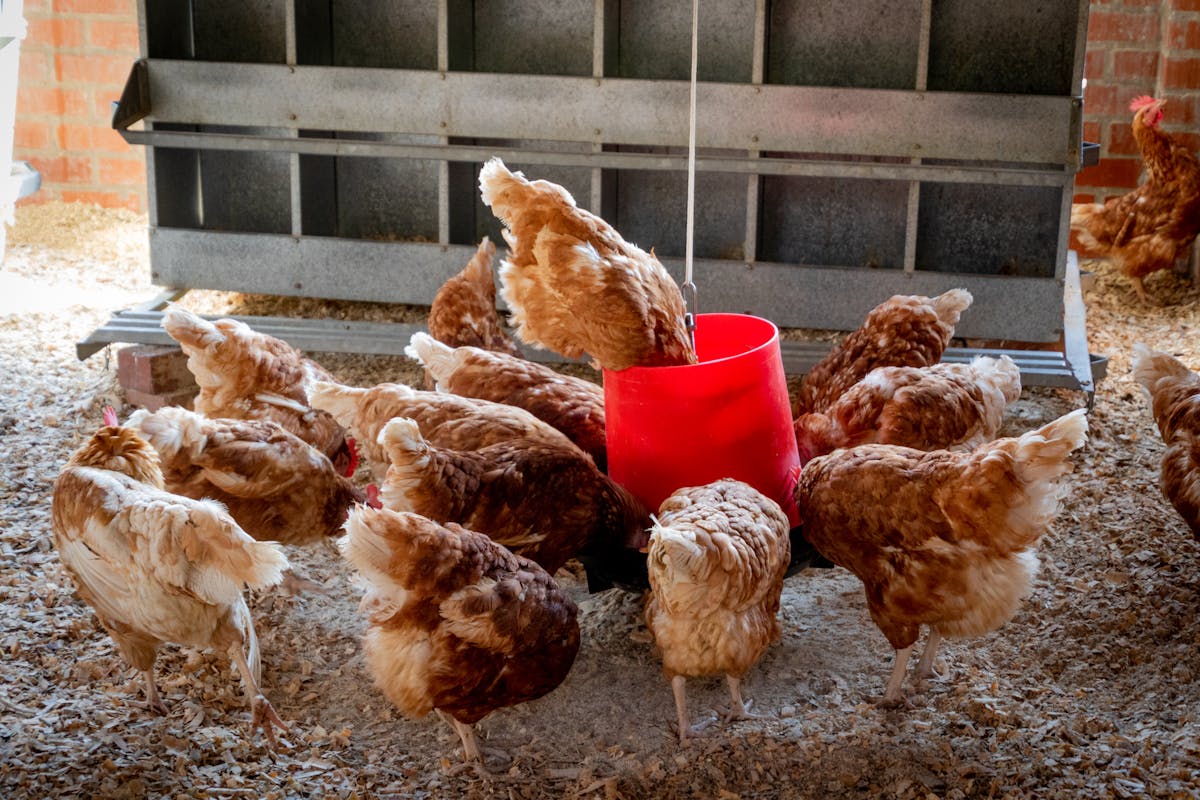
Chickens feeding from a red poultry feeder inside a farm coop
Match the feed to the bird’s age, the flock and the season
At a glance

Chicken feed types compared

The feeds you will find on the shelves at a US farm or feed store, side by side. Protein figures are typical ranges - always read the feed tag, as brands differ.

Comparison of eight poultry feed types by suitable age, protein percentage, main benefits, feeding frequency and notes
Feed type Suitable age Protein % Main benefits Frequency Notes
Chick starterDay 1 - 6 to 8 weeks18-20%Complete starter ration as a fine crumble; builds bones, organs and first feathersAvailable at all timesSold medicated (usually with amprolium, against coccidiosis) or unmedicated. Never feed to laying hens
Grower / starter-grower6 - 18 weeks15-18%Steady growth without pushing pullets into lay before their frame is readyAvailable at all timesLow in calcium on purpose. Many brands sell one starter-grower from hatch to laying age
Layer pellets18 weeks onward16-18%The complete daily ration, with added calcium for strong shells and steady layingAvailable all day, every dayThe most important feed you buy. About ¼ lb per hen per day; usually sold in 40-50 lb bags
Layer crumbles or mash18 weeks onward16-18%Same nutrition in a finer texture; easier for older hens and small breedsAvailable all dayWastes more than pellets. Mash can be wetted into a warm winter mash
All-flock / flock raiserAny age; mixed flocks18-20%Higher protein, low calcium; suits flocks with roosters, ducks, young birds or molting hensAvailable all dayPut oyster shell out separately so laying hens still get their calcium
Scratch grains16 weeks onward8-10%Energy-rich mix of cracked corn and other grains; encourages scratching and foragingA small handful per bird, late afternoonA treat, not a feed. Above about 10% of the diet and laying drops
Cracked corn16 weeks onward7-9%Cheap energy that helps hens stay warm on cold nights; deepens yolk colorSmall evening handful in winterToo much makes hens fat, and fat hens stop laying
Breeder feedBreeding birds17-19%Extra vitamins, minerals and amino acids for fertility and strong hatchesAll day, from about 4 weeks before you collect hatching eggsOnly needed if you hatch. Otherwise stay on layer feed

Scroll the table sideways on a phone to see every column.

If you buy one thing, buy a good layer feed. Everything else in that table is a stage feed, a special-purpose feed or a treat. A hen on fresh layer feed with clean water, oyster shell and grit is properly fed - the rest is enrichment. Enrichment is worth doing, but never at the expense of the ration.

A group of fluffy young chicks huddled together on a warm bed of bedding
What a bird needs changes completely as she grows
Cradle to retirement

What chickens eat at every age

Feeding the right ration at the right stage is the single easiest thing to get right - and one of the most damaging to get wrong. Change between feeds gradually, over about a week, by blending the old and the new.

Chicks

0 - 6 to 8 weeks

Everything a chick becomes is built in these first weeks. Feed chick starter and nothing else - it is a complete ration, and extras only dilute it at exactly the wrong time.

18-20% proteintarget
  • Chick starter only, available around the clock
  • Shallow waterer with marbles or pebbles so they can’t drown
  • No grit needed on starter alone; add chick grit if you offer anything else
  • Never layer feed - its calcium can damage young kidneys

Growers

6 - 18 weeks

The goal now is slow, even growth. Push a pullet too hard and she lays early, small and briefly; feed her properly and she lays well for years.

15-18% proteintarget
  • Grower or starter-grower from about six weeks, free access all day
  • Add insoluble grit once they eat anything besides feed
  • Greens and supervised foraging are welcome; treats stay tiny
  • Low calcium is deliberate - don’t start layer feed early

Point of lay

16 - 20 weeks

The changeover. Switch when you find the first egg or at about 18 weeks, whichever comes first, and make the change gradually over a week.

16-17% proteintarget
  • Blend the feeds: a week of more layer, less grower
  • Put out oyster shell the week you switch
  • Watch the comb - it reddens and swells days before the first egg
  • Expect odd first eggs: small, soft or shell-less is normal for a couple of weeks

Adult layers

18 weeks onward

A hen laying 300 eggs a year turns about 4 lb of shell out of her diet. Layer feed plus free-choice oyster shell is what lets her do that without drawing on her own skeleton.

16-18% proteintarget
  • Layer feed out all day - about ¼ lb per hen
  • Oyster shell and grit in separate dishes, always available
  • Treats under 10% of everything she eats
  • Clean water a few steps away wherever she spends the day

Broody hens

Any age

A broody hen may leave the nest only once a day, so she loses condition fast. The job isn’t to change her feed but to make sure she eats some of it.

16-18% proteintarget
  • Lift her off once a day and set her by the feeder and waterer
  • Keep her on layer feed unless she is raising chicks
  • Once chicks hatch, the family goes onto chick starter or all-flock
  • Watch her weight - a thin broody needs breaking off the nest

Older hens

4 years and over

Older hens lay far fewer eggs but still need good nutrition, and they often lose out at a single crowded feeder.

16% proteintarget
  • Crumbles or wetted feed are easier on a worn beak
  • A second feeder so slower birds are never pushed off
  • All-flock plus oyster shell suits a mostly retired flock
  • Check condition weekly - weight loss is the first warning sign

The one rule not to break: don’t give layer feed to chicks or growing pullets. The calcium that builds an eggshell can do lasting damage to a young bird’s kidneys. Starter and grower feeds are low in calcium for exactly this reason - and if your flock is a mix of ages, an all-flock feed with oyster shell on the side keeps everyone safe.

A bright, spacious chicken house with birds feeding from hanging feeders
A five-minute routine, repeated daily, is worth more than any supplement
The daily rhythm

A complete feeding schedule

Hens are creatures of habit and thrive on a predictable routine. This is the whole day - and most of it takes five minutes.

First thing

Morning

Open the pop door, check every bird is bright and moving, then fill the feeder for the day. Refresh both waterers before anything else - and in a freeze, check they’re not solid.

Midday onward

Afternoon

Nothing required. If the hens are in a run, this is the time for a hanging cabbage or a scatter of greens - something to do rather than extra calories.

Before dusk

Evening

A small handful of scratch per bird about an hour before roosting; digesting it overnight helps keep them warm. Bring in or lock up the feed if rats, raccoons or bears are about, and shut the coop.

All day

Fresh water

Never optional and never rationed. Two clean waterers in the shade, checked morning and evening - more often in a cold snap or a heat wave.

Sparingly

Treats

Under a tenth of what they eat. Late afternoon is best, once the day’s feed is already inside them, so treats top up the ration instead of replacing it.

Adjust by season

Seasonal

A little more scratch once nights drop below freezing, less in summer heat, and extra protein through the fall molt. Everything else about the routine stays reassuringly the same.

What to provideHow much / how often
Layer feed (about 16% protein)About ¼ lb (4-5 oz) per hen per day, always available
Fresh clean waterAbout 1-2 cups per hen per day, much more in heat
Oyster shell (calcium)Free-choice in a separate pot
Insoluble granite gritFree-choice, essential if not free-ranging
Scratch grains (energy)A small handful per bird, late afternoon
Fresh greensA generous handful daily - the one unlimited treat
All other treatsUnder 10% of the total diet
Golden rulelayer feed first, treats last, water always
A close-up of a large pile of sunflower seeds
Black-oil sunflower seeds: oil, protein and vitamin E, and a classic molting-season boost
The good stuff

The best foods for chickens

Ten things worth keeping in the feed shed, and an honest guide to how much of each actually belongs in the diet.

Layer feed

The non-negotiable foundation - a complete, balanced ration with the right protein, calcium, vitamins and trace minerals in every bite. Everything else on this list is an extra.

Crumbles & mash

The same nutrition in a softer form. Easier for older hens and bantams, and mash can be wetted with warm water into a breakfast they love on a frosty morning.

Scratch grains

Cracked corn, wheat, oats and other grains. A late-afternoon handful fuels overnight warmth, gives hens something to scratch for, and the corn deepens yolk color.

Black soldier fly larvae

Dried larvae are rich in protein and, unlike mealworms, contain useful calcium too. A great molting-season treat - still a treat, not a meal.

Oats

Warming, high in fiber and gentle on the gut. Rolled oats make a good cold-morning treat; keep whole oats to a modest share of any mix.

Sunflower seeds

Black-oil sunflower seeds are rich in protein, oil and vitamin E - excellent for feather condition during and after the molt. A tablespoon per bird is plenty.

Mealworms

The fastest way to tame a hen and real protein during the molt. Dried mealworms are very rich, so treat them like candy.

Fresh greens

Kale, chard, cabbage, lettuce, untreated weeds and short fresh grass. Greens add vitamins, deepen yolks and, hung at head height, keep a confined flock busy for hours.

Garden & kitchen produce

Vegetable trimmings, cores and garden gluts are popular with hens. Rules on feeding food scraps vary by state - see the note under the table below.

Herbs

Mint, oregano, thyme, parsley and lavender are safe, well liked and often scattered in nest boxes for their scent.

Fresh organic carrots, tomatoes and green onions in a colander
Plenty of garden and kitchen produce is welcome - with a few important exceptions
Yes, they can

Safe fruits, vegetables and herbs

All of these are safe and well liked. The preparation column matters more than people expect - a whole grape or a raw carrot causes trouble that a halved grape or a grated one does not.

Table of fruits, vegetables and herbs that are safe for chickens, with how to serve each and any preparation notes
Food Type How to serve Notes
ApplesFruitChopped or halved, core removedFlesh and skin are excellent. Remove pips - they contain trace cyanide compounds
PearsFruitChopped, very ripe fruit halvedSoft and easy to eat. Remove pips as with apples
StrawberriesFruitWhole, hulls left onA favorite. Hens will strip a strawberry bed, so net anything you want for yourself
BlueberriesFruitWhole, straight from the cartonHigh in antioxidants and the perfect size for training a nervous hen
GrapesFruitHalved lengthwaysAlways halve - a whole grape is a genuine choking risk for a hen
WatermelonFruitSliced, rind and allIdeal on a hot summer afternoon: hydrating, cooling, and they will eat right down to the rind
Pumpkin & squashVegetableHalved raw, seeds includedA fall classic - leftover jack-o’-lanterns are fine if unpainted and not moldy
Sweet cornVegetableCooked or raw, on or off the cobVery well liked and warming. Energy-dense, so keep it to a modest handful
BroccoliVegetableRaw florets, or hang the whole headExcellent hung on a string - nutritious and it keeps a bored flock occupied
CarrotsVegetableGrated raw, or cooked and choppedWhole raw carrots are too hard; grate them or cook until soft
CabbageVegetableWhole head hung at head heightThe best enrichment food there is. One cabbage can occupy a flock all afternoon
KaleVegetableWhole leaves, rawRich in vitamins and calcium, and it keeps producing into fall and through mild Southern winters
LettuceVegetableWhole leaves; avoid pale icebergFine in quantity, but choose dark leafy varieties - iceberg is mostly water
ZucchiniVegetableHalved lengthways, rawPerfect for the August zucchini glut. Seeds and flesh are both eaten happily
PeasVegetableFresh or defrosted, rawGenuinely good protein and easy to scatter for foraging. Never feed dried raw beans
Mint & oreganoHerbFresh sprigs, scattered or hungSafe, aromatic and traditionally strewn in nest boxes. Hens self-select what they want

Rules on feeding food scraps to poultry vary by state. Fruit and vegetable trimmings from your own kitchen are the usual safe choice; check with your state department of agriculture before feeding anything else, and before selling eggs.

Important

Foods chickens must never eat

Most of these are found in an ordinary kitchen, and hens will eat every one of them happily if given the chance. Learn the list once and it stays learnt.

Foods to keep well away from the run

A hen weighs four to six pounds. A dose that would barely register in a person can be serious in a bird, and chickens have no instinct for avoiding what is bad for them.

!Avocado

The skin and stone contain persin, which is toxic to birds and can cause heart failure. The flesh carries less, but there is no safe way to be sure - keep the whole fruit away from the run.

!Chocolate

Theobromine and caffeine both affect a chicken's heart and nervous system, and a bird's body weight means a very small amount goes a very long way. Dark chocolate is the worst.

!Onion

Contains thiosulfate, which damages red blood cells and can cause hemolytic anemia. Small amounts cooked into scraps are the usual culprit, so check what you are tipping out.

!Garlic in quantity

A crushed clove in the waterer is a long-standing keeper's tonic and is fine. Large amounts share onion's thiosulfate problem and can taint the eggs.

!Raw potato

Raw potato is barely digestible and, like all nightshades, contains solanine. Cooked plain potato is perfectly safe; raw peelings are not worth the risk.

!Green potatoes

Green skin, sprouts and eyes are loaded with solanine, which is genuinely poisonous. Throw them out - don’t compost them anywhere hens can reach.

!Moldy food

Mycotoxins from mold cause liver damage, neurological signs and sudden death, and hens will eat moldy food readily. Never feed it and never let feed go damp in the store.

!Alcohol

Even traces overwhelm a bird's liver. Keep fermenting fruit, beer-soaked bread and rotting windfall apples out of the run.

!Caffeine

Tea bags, coffee grounds and cola all contain methylxanthines that disturb heart rhythm. Coffee grounds on the compost heap are a common accidental route.

!Salty foods

Chickens have no efficient way to excrete excess salt. Chips, pretzels, cured meat, gravy and salted leftovers cause thirst, wet droppings and, in quantity, kidney damage.

!Sugary foods

Cakes, cookies and candy displace real nutrition, upset the gut flora and pile on fat. A fat hen lays badly and is prone to fatty liver disease.

!Rhubarb leaves

High in oxalic acid, which is toxic and causes kidney damage. The stalks are far safer but acidic, so the simplest rule is to keep rhubarb out altogether.

If you suspect poisoning, remove the source, make sure clean water is freely available, keep the bird warm and quiet, and call a vet who treats poultry. Act on sudden lethargy, a drooping head, labored breathing, tremors, or a bird standing apart with fluffed feathers. Several birds sick or dying at once is a different matter: call your state veterinarian or USDA APHIS.

Filling the egg box

Feeding for maximum egg production

Breed sets the ceiling - see Best Egg Laying Breeds - but feeding decides how close you get to it. These seven things do almost all of the work.

Protein

About 16% for a laying hen, and 18-20% during the fall molt when every scrap of protein goes into new feathers. Drop below about 15% and egg size falls before egg numbers do.

Calcium

An eggshell is almost pure calcium carbonate. Layer feed supplies the baseline; if a hen still falls short she borrows from her own bones, which is how thin shells and leg problems begin.

Oyster shell

Always free-choice in its own dish, never mixed into the feed - each hen takes what she needs, and a hen coming into lay needs far more than one in molt.

Insoluble grit

Chickens have no teeth. Granite grit sits in the gizzard and grinds the food; without it a hen in a run can’t get full value from grains, greens or anything else.

Fresh water

An egg is roughly three-quarters water. A hen without water for a few hours can stop laying for days, and in summer heat she may drink twice as much.

Vitamins & greens

A good layer feed is fully fortified, but grass, greens and sunshine visibly deepen yolk color and support health through the winter.

Seasonal feeding

More energy in a Northern winter, more protein in the molt, more water and shade in a Southern summer. Match the ration to what the bird is doing and production stays remarkably steady.

Thin or soft shells are a calcium message, not a mystery. Check that oyster shell is out free-choice and actually being eaten, that the flock is on layer feed rather than grower or all-flock alone, and that treats haven’t crept above a tenth of the diet. If all three are right and shells are still poor, suspect heat stress, age or past infectious bronchitis.

A speckled hen drinking from a farm water trough
The most important thing in the run, and the one most often neglected
Non-negotiable

Water requirements

If you do only one thing perfectly, make it the water. A hen without it for a few hours can stop laying for days, and on a 95°F afternoon it becomes an emergency within hours.

Daily intake

Roughly 1-2 cups per standard hen per day, and easily double that in hot weather or when laying hard. A gallon waterer serves about four hens for a day or two in mild weather - less in summer.

Winter management

In freezing weather, a heated waterer or a metal fount on a heated base is the reliable answer. Otherwise swap in a thawed spare morning and evening. Check at least twice a day whenever temperatures stay below freezing.

Summer management

Move waterers into full shade, add a second at the far end of the run, and top up in the evening as well as the morning. Hens drink cool water far more readily than warm.

Preventing frozen waterers

Never add salt or antifreeze. Use a heated base rated for outdoor use on a properly grounded outdoor outlet, keep cords away from bedding and beaks, and avoid heat lamps near straw.

Keeping water clean

Rinse and refill daily; scrub weekly. Raise waterers to about the height of a hen’s back so bedding isn’t kicked in, and keep them out of direct sun to slow algae.

Where to put them

At least two waterers so a bossy hen can’t guard the supply, both under cover so wild birds aren’t drawn in to share them, and never directly under a roost.

Two pots, two jobs

Grit and oyster shell

These are constantly confused, and they are not interchangeable. One grinds food, the other builds shells - a hen needs both, in separate pots, all the time.

Insoluble granite grit

The hen's teeth

  • Hard crushed granite that does not dissolve
  • Sits in the gizzard and grinds every mouthful
  • Essential for any hen in a run eating more than plain feed
  • Sold by size: chick and adult grades
  • Watch: free-ranging birds find some, but not reliably

Without it a hen can’t get full value from grass, greens, grain or scraps - she is effectively eating with the blender switched off.

Oyster shell & soluble grit

The calcium supply

  • Crushed oyster shell or limestone, which dissolves
  • Builds eggshells - a shell is almost pure calcium carbonate
  • Free-choice only, never mixed into the feed
  • Hens self-select with real precision as their needs change
  • Watch: it does no grinding, so it can’t replace granite grit

A hen laying 300 eggs a year puts several pounds of shell into them. If her diet falls short, she takes the calcium from her own skeleton.

Why grit is essential

A chicken has no teeth. Everything she eats is ground in the gizzard, a muscular organ that needs hard, angular stones to work against. No grit means poor grinding - and less nutrition from the same feed.

Insoluble grit

Hard, sharp granite that stays in the gizzard for weeks doing the grinding. Every hen kept in a run needs it. Free-ranging birds pick up some from the soil, but not reliably.

Oyster shell

Crushed oyster shell and limestone dissolve rather than grind. They’re a calcium supply, not a digestive aid - which is exactly why they can’t replace granite grit.

Calcium needs

Layer feed carries a few percent calcium - several times what a grower feed has - to cover a typical laying hen. Free-choice oyster shell covers the differences between individual hens.

Offer them separately

Two small dishes side by side, never mixed into the feed. Hens self-select precisely - a bird coming into lay takes far more shell than one in the middle of a molt.

Chicks and growers

Chicks on starter alone need no grit. The moment they eat anything else - greens, grass, bugs - they need chick-size grit, and never layer-strength calcium.

Ripe orange pumpkins in a fall harvest setting
Fall pumpkins arrive just as molting hens need the extra protein
Through the year

Seasonal feeding guide

The layer feed never changes. What changes around it is energy in cold weather, protein in the molt and water in the heat - and when each of those matters depends on your zone. Not sure of yours? Find your growing zone.

Spring

Rebuild & ramp up

Laying climbs as days lengthen - from late winter in Florida and Texas to April or May in the northern tier - and calcium demand climbs with it. New grass is at its most nutritious, so free-range hens visibly improve.

  • Keep oyster shell topped up - demand jumps
  • Ease back on scratch as nights warm up
  • Lush new grass can loosen droppings for a week; it settles
  • A good time for a fecal worm check if birds look off

Summer

Water above all

Hens eat less in heat and drink far more. Across the South and Southwest, summer is the hard season: once it climbs past the high 80s°F, shade and cool, clean water become the whole job.

  • At least two shaded waterers, refilled twice a day
  • Feed early morning and evening, when it’s cooler
  • Frozen watermelon, cucumber and berries genuinely help
  • Store feed somewhere cool - heat and humidity spoil it fast

Fall

Protein for the molt

Shortening days trigger the yearly molt, and most hens stop laying for several weeks while they regrow feathers. This is the one time of year to raise protein on purpose.

  • Switch to an 18-20% all-flock feed, with oyster shell on the side
  • Cut back on scratch - it’s energy, not protein
  • Handle as little as possible; new pin feathers are tender
  • Pumpkins and squash are perfectly timed and much enjoyed

Winter

Energy & open water

Short days mean fewer eggs whatever you do. In zones 3-6 the priorities are keeping water liquid and giving hens the energy to stay warm overnight; in the Deep South, winter is often mild and easy.

  • A handful of scratch per bird an hour before roosting
  • Heated waterer bases beat breaking ice twice a day
  • Warm wet mash on the coldest mornings
  • Expect appetite to rise by roughly a fifth in hard cold
A flock of brown hens foraging on lush green grass
Foraging supplements the ration beautifully - but it never replaces it
Out on the grass

Feeding free-range chickens

Free-ranging hens are healthier, better feathered and lay deeper-colored yolks. What they are not is self-sufficient - keep the layer feed out whatever the pasture looks like.

Natural foraging

A hen with good range finds perhaps a fifth of what she eats - more in high summer, almost nothing under snow. A valuable supplement, never a substitute.

Grass

Short, growing grass is genuinely nutritious and gives free-range yolks their deep color. Long, tough grass is a different story: it can ball up in the crop and cause an impaction.

Bugs

Beetles, grasshoppers, crickets, larvae and even ticks are excellent protein - one reason free-range hens often come through the molt in better feather than confined birds.

Earthworms

Hens hunt them eagerly after rain. Earthworms can also carry poultry worm eggs, so if a free-range hen loses condition, ask your vet about a fecal test.

Keep the feeder out

Leave layer feed available even on the best pasture. Hens self-regulate well, and the feed guarantees the calcium and vitamins foraging alone won’t supply.

Watch the sky and the clock

Free-ranging hens are easy targets for hawks by day and foxes, coyotes and raccoons toward dusk. Supervise ranging, give cover to dash under, and get everyone in before dark.

The fun part

Healthy chicken treats

Treats are how a flock becomes tame, and a bored flock is a pecking flock - so they matter. The trick is to keep them to a tenth of the diet and give them late in the day.

Mealworms

Dried or live, the most effective taming tool there is and real protein when feathers are regrowing. Very rich, so think of them as candy.

A teaspoon per bird, a few times a week

Sweet corn

Well liked and easy to scatter for foraging. Cooked or raw, on the cob or off - hens aren’t fussy about the format. A frozen cob is a great summer boredom-buster.

A small handful per bird, late afternoon

Pumpkin

Halve one and stand back. Flesh and seeds are both eaten, the seeds are protein-rich, and a whole pumpkin keeps a flock busy for most of a day.

Half a pumpkin per few birds, weekly in fall

Sunflower seeds

Black-oil hearts are rich in oil, protein and vitamin E - a classic molting-season boost for dull, thin feathering.

A tablespoon per bird during the molt

Fruit

Apple, pear, berries, melon and grapes (halved). Best on a hot afternoon, when the water content matters as much as the sugar.

A few pieces per bird, two or three times a week

Greens

The one treat you can be generous with. A cabbage hung at head height is nutrition and entertainment at the same time, and it prevents feather-pecking.

Daily - the safest treat of all

The ten percent rule, and the one exception. Everything on this page except fresh greens should stay under a tenth of what your hens eat. Greens are the exception - leafy vegetables are so low in calories and so good for occupation that you can be as generous as you like. A cabbage hung at head height is the single best-value thing you can put in a run.

Learn the easy way

Common feeding mistakes

Nearly every feeding problem beginners hit is one of these eight, and every one of them is easy to avoid once you know it exists.

!Too many treats

The commonest mistake of all. Scratch, mealworms and scraps are delicious and hens will fill up on them, leaving the balanced layer feed untouched. Keep everything except greens under a tenth of the diet.

!The wrong feed for the age

Layer feed given to chicks or growers damages young kidneys with calcium they cannot use; grower or all-flock feed alone, with no oyster shell, gives laying hens thin shells. Match the feed to the bird.

!Overfeeding

Hens fed unlimited scratch or left with heaps of scraps get fat, and a fat hen lays poorly and risks fatty liver disease. Layer feed can be free-fed; energy treats cannot.

!Underfeeding

A single feeder in a mixed flock means the bottom of the pecking order eats last and least. Two feeders, well spaced, solves more problems than almost anything else.

!Dirty or frozen waterers

Green, slimy, bedding-filled or frozen water means less drinking, and a hen that drinks less lays less. Rinse daily, scrub weekly, raise waterers off the litter, and use a heated base in freezing weather.

!No grit available

Without insoluble grit a confined hen simply cannot grind her food, so she gets less out of every mouthful. Keep granite grit and oyster shell in separate dishes, always.

!Poor feed storage

Feed left in the paper bag goes damp, draws rats, mice and raccoons, and loses vitamins within weeks. Use a lidded metal can, and buy only what you will use in a month or so.

!Feeding moldy food

Hens will eat moldy bread or forgotten scraps readily, and the mycotoxins cause liver damage and sudden deaths. If you would not eat it, they should not either.

Good questions

Feeding chickens: frequently asked questions

The questions American backyard keepers ask most about what chickens can and can’t eat.

What is the best feed for laying hens?

A complete layer feed of about 16% protein, as pellets or crumbles, available all day, with oyster shell and insoluble grit in separate dishes alongside. That combination covers everything a laying hen needs. Pellets waste less than crumbles or mash, which is why many keepers prefer them, but the nutrition is the same.

How much feed does a chicken eat per day?

A standard laying hen eats roughly ¼ lb (4-5 oz) of layer feed a day - a little over half a cup. Expect more in cold weather and noticeably less in summer heat; bantams eat proportionally less. Rather than measuring, keep the feeder full and watch that it empties at a steady rate.

How long does a 50 lb bag of chicken feed last?

At about ¼ lb per hen per day, four hens use roughly 1 lb a day, so a 50 lb bag lasts about six to seven weeks, less if wild birds or rodents are helping themselves. Buy only what you will use within a month or two of opening, and check the milling date on the feed tag.

Can chickens eat kitchen scraps?

Fruit and vegetable trimmings from your own kitchen are a popular treat, but there is no single US rule: some states restrict feeding food waste to animals, especially anything containing meat, and selling eggs can bring extra requirements. Check with your state department of agriculture, keep scraps under about 10% of the diet, and skip anything moldy, salty or greasy.

Can chickens eat meat?

Chickens are natural omnivores and will catch bugs, worms, frogs and even mice. Whether you may feed them meat scraps depends on your state’s rules on food waste, and meat attracts rats and raccoons. The simpler route is to let them forage for protein and use mealworms, black soldier fly larvae or an all-flock feed when they need more.

What is all-flock feed, and can I use it instead of layer feed?

All-flock (or flock raiser) is a higher-protein, low-calcium feed made for mixed flocks with roosters, young birds or ducks. It works well for laying hens as long as oyster shell is always available on the side, because the feed alone doesn’t carry enough calcium for strong shells. It is also a good choice during the molt.

Do I need medicated chick starter?

It depends. Medicated starter usually contains amprolium, a coccidiostat (not an antibiotic) that helps protect chicks against coccidiosis, a common killer in the first weeks. If your chicks were vaccinated against coccidiosis at the hatchery, use unmedicated starter, because amprolium can interfere with the vaccine. When in doubt, ask whoever supplied the chicks.

Do chickens need grit?

Yes, unless they eat nothing but commercial feed and never touch the ground. Insoluble granite grit sits in the gizzard and grinds food; without it a hen can’t digest grass, greens, grain or scraps properly. Keep it free-choice in its own dish, separate from oyster shell, which does a completely different job.

Why are my eggshells thin or soft?

Almost always calcium. Check that oyster shell is available free-choice and actually being eaten, and that the birds are on layer feed rather than grower or all-flock alone. Other causes include summer heat stress, old hens, pullets just coming into lay, and past infectious bronchitis, which can permanently damage shell quality.

What should I feed chickens in winter?

The layer feed stays the same; you add a little energy and keep the water open. A handful of scratch or cracked corn per bird an hour before roosting gives them something to digest overnight, which helps keep them warm. Warm wet mash is welcome on frigid mornings. In zones 3-6, a heated waterer base is the single most useful winter purchase.

What should I feed chickens in hot weather?

Keep the layer feed out but expect them to eat less. Feed early and late, when it’s cooler, give two shaded waterers with cool, clean water, and add poultry electrolytes during a heat wave. Frozen fruit and vegetables help, while scratch and corn add heat and are best skipped on the hottest days.

What should I feed during the molt?

More protein. Feathers are mostly protein, so switch to an 18-20% all-flock or similar feed with oyster shell on the side, or add black-oil sunflower seeds and a few mealworms or black soldier fly larvae. Cut back on scratch, handle the birds as little as possible, and expect laying to stop for several weeks.

Can chickens eat bread?

In small amounts as an occasional treat, yes, but it’s nearly empty nutritionally and fills a hen up in place of her balanced feed. Never feed moldy bread, which is genuinely dangerous, and don’t make it a daily habit. Rolled oats make a far better winter treat.

Can chickens eat rice?

Yes. Plain cooked rice is safe and hens enjoy it, and the old story that raw rice swells up and harms birds is a myth, though cooked is easier to digest. Keep it plain - fried, salted or seasoned rice isn’t suitable.

Can chickens eat potatoes and tomatoes?

Cooked plain potato and ripe tomatoes are fine. Raw potato is poorly digested, and green potato skin, sprouts and eyes contain solanine, which is toxic. Tomato leaves, stems and green fruit contain related compounds, so keep hens away from the plants themselves.

Can chickens eat watermelon and other fruit?

Yes. Watermelon is a summer favorite and helps keep hens hydrated, rind and all. Berries, apples (without seeds), pears, bananas and halved grapes are all safe in moderation. Fruit is sugary, so treat it as a treat, and never feed fruit that has started to ferment or mold.

How should I store chicken feed?

In a lidded metal can, off the floor, somewhere cool and dry. Don’t leave it in the paper bag - mice and rats chew through, raccoons and bears follow the smell, damp gets in and mold follows. Keep feed covered and away from wild birds, which can carry avian influenza.

Can chickens eat eggshells?

Yes, and it’s a good way to recycle calcium. Crush the shells finely, ideally after drying or baking them, so hens don’t learn that eggs are food and start eating their own. Cooked scrambled egg is an excellent boost for a sick or recovering bird.

Is fermenting or sprouting feed worth it?

Some keepers swear by both, and sprouted grains are a welcome green treat in midwinter when the yard is frozen. Neither is necessary, because a good layer feed is already complete, and fermented feed needs care to avoid mold. Treat them as enrichment rather than nutrition.

A contented free-range hen pecking on green pasture in sunshine
Good layer feed, clean water, shell and grit - the rest is detail
In a nutshell

Summary & key recommendations

If you remember only a handful of things from this guide, make them these.

Layer feed is the foundation

A complete layer feed available all day does 90% of the job. Everything else on this page is a refinement of that one choice.

Shell and grit, always

Two separate dishes, free-choice, never mixed into the feed. Oyster shell for eggshells, granite grit for digestion - they aren’t interchangeable.

Water is the real priority

An egg is three-quarters water. Two clean waterers, shaded in summer and kept from freezing in winter, matter more than any feed you can buy.

Treats under ten percent

Scratch and mealworms are wonderful and hens adore them, which is exactly the problem. Greens are the one treat you can be generous with.

Match the feed to the age

Starter, then grower, then layer - and never layer-level calcium for a young bird. Mixed ages? Use all-flock with oyster shell on the side.

Store it properly

A lidded metal can, off the floor, used within a month or two. Damp feed loses vitamins, draws rodents and grows the mold that causes sudden losses.

Keep reading

More from the Chickens guides

Feeding is one piece of the puzzle. These guides cover the rest, and more are added every month.

Ready to get started?

Feed them well and they will do the rest

Good layer feed, clean water, oyster shell and grit - that really is the whole secret. Once the feeding is sorted, choose hens that suit your climate in Best Egg Laying Breeds, size up the coop, plan a roomy run, and put the bedding and manure to work on your compost pile. The whole Chickens hub is waiting when you are.

Layer feed first, treats last, water always - get those three right and your flock will thrive.

Three brown hens pecking at feed in a rustic farmyard
Layer feed · water · shell · grit · greens
The small print

Disclosures & disclaimers

Affiliate disclosure

Some links on this page are affiliate links. If you buy through them, PlantMapper may earn a small commission at no extra cost to you. It never affects which products we suggest.

General guidance

This is general guidance for backyard keepers in the United States, not veterinary or legal advice. Protein figures and feeding rates are typical ranges and vary by brand, breed, age, climate and season - always read the feed tag. If a bird is unwell, contact a vet who treats poultry.

Food scraps, local rules & bird flu

Rules on feeding food waste to animals, keeping poultry and selling eggs are set by states, counties and cities, and they differ widely. Check with your state department of agriculture and your local ordinance before feeding scraps or selling eggs. Keep feed and water away from wild birds, and report sudden sickness or deaths in your flock to your state veterinarian or USDA APHIS.