Coastal Garden Guide

Coastal Garden Ideas: Planting a Seaside Yard for Salt Spray, Wind and Sandy Soil

Whether your yard looks out on a Cape Cod marsh, a Carolina barrier island, the Gulf or the Oregon headlands, the ocean writes the rules: salt on the wind, sand that drains in seconds, and storms that test every plant. The good news is that a whole palette of tough, beautiful plants, many of them native to American shorelines, is built for exactly this. Plant with the conditions, add some shelter, and an exposed lot turns into an easy-care landscape of swaying grasses, silver leaves and bright seaside flowers.

Salt, wind and sand are not problems to beat so much as a setting to plant for. Give your yard a little shelter, pick plants that evolved by the sea, and the coast handles much of the rest.

Lush pampas grass and coastal planting with seaside houses behind
Pampas grass by the sea - handsome, but invasive along the California coast, so choose a native grass there · photograph via Pexels
The basics

What is a coastal garden?

A coastal garden is any yard close enough to the ocean (or a big salty bay) that sea air shapes it: salt spray carried on the wind, strong bright light, sandy or shelly soil that drains fast, and the risk of storm surge. Instead of fighting that, a coastal landscape works with it, using tough, sun-loving plants such as beach grasses, seaside goldenrod, bayberry and lavender in a loose, natural style that echoes nearby dunes and bluffs. It looks relaxed and silvery, it moves in the breeze, and once established it is one of the least demanding yards to look after.

What makes coastal yards different

Set by the ocean

Salt, wind and sand set the terms, giving a seaside yard a wild, open character you cannot really copy inland.

Big light, gentler temperatures

Coastal light is clear and intense, and the water evens out temperatures, so many shoreline yards see later fall frosts and milder winters than towns just a few miles inland.

Always moving

Grasses sway, seed heads nod and silver leaves flicker, so a coastal planting is never still.

Built-in toughness

Plants that thrive here are survivors, which makes a well-chosen coastal yard forgiving and low-effort.

Seaside gardening myths, set straight

“Nothing grows at the beach”

Plenty does. From American beachgrass to beach plum and seaside goldenrod, whole plant communities evolved for these conditions. The trick is choosing them instead of struggling with the wrong ones.

“It is too windy to bother”

A bit of shelter changes everything. A hedge, a stand of shrubs or a slatted fence slows the wind, and behind it a much wider range of plants will do well.

“Sandy soil is worthless”

Not at all. Sand drains fast and warms early in spring, which coastal plants love, and you can build it up with compost where you want richer beds.

How it compares with other garden styles

Coastal Garden

Salt- and wind-tolerant planting in a relaxed, natural style: grasses, silver foliage and bright seaside flowers for an exposed lot.

You are here

Gravel Garden

Drought-tolerant planting through gravel: the same tough, fast-draining approach, without the salt.

Mediterranean Garden

Sun-baked herbs and silver foliage. Many of the same drought lovers thrive in both, especially on the California coast.

Cottage Garden

Flower-filled beds. A sheltered seaside cottage garden is a softer, more romantic take on the shore.

Wildlife Garden

Planned for nature. Coastal flowers and seed heads draw native bees, monarchs on their fall migration, and songbirds.

Know your plot

Reading your coastal site

Every seaside yard is a set of conditions to read and plant for. Get to know these five and you are most of the way to the right plants and the right plan.

Salt spray

Onshore wind carries salt that burns soft leaves, and it can coat plants hundreds of feet inland after a storm. Front-line plants need waxy, leathery, fleshy or hairy leaves, or shelter behind plants that have them.

Wind exposure

Constant wind dries plants out, snaps soft growth and rocks roots loose. On the Atlantic and Gulf coasts, hurricanes and nor'easters add gusts no garden can stop, so low, flexible, deep-rooted plants that bend rather than break come through best.

Sandy soil

Fast-draining and quick to warm, but short on nutrients and water. Perfect for drought lovers; work in compost where you want lusher beds. Gulf and Florida sands are often alkaline from shell fragments, while many Northeast and Pacific Northwest coastal soils lean acidic, so test before you buy plants.

Drought

Sun, wind and sand dry the ground quickly, and a sandy lot holds little water. Choose drought-tolerant plants, mulch well, and water deeply but rarely while they establish. Many coastal towns have summer watering restrictions too.

Shelter and storm surge

Shelter is the single biggest difference-maker: a windbreak creates a calm pocket where far more can grow. In low-lying yards, also plan for flooding. Salt water from a storm surge can kill lawns and shrubs that are fine with spray, so put the toughest, most salt-tolerant plants in the lowest spots.

The coastal upside

It is not all hardship. The ocean moderates temperatures, so frost often comes later in fall and leaves earlier in spring than it does inland. Many coastal gardeners can grow plants rated half a zone or so warmer than their neighbors a few miles away.

A real-world picture. Picture the dunes of Cape Cod and the Outer Banks, a Gulf Coast yard behind a barrier island, or a bluff-top garden on the Oregon coast. Each has salt wind, sandy ground and bright light, yet behind a little shelter each grows a lovely mix of native grasses, shrubs and flowers. The recipe is the same on every coast: shelter, sharp drainage and tough plants suited to your zone.

Coast by coast

Coastal gardening across the US

The ocean shapes every shoreline yard, but a Maine bluff and a Gulf Coast beach lot are very different places to garden. Start with your USDA zone, then plant for your coast.

New England & the Mid-Atlantic

Zones 5-8. Cold, salty nor'easters are the big test, and acidic sandy soil is common. Natives do the heavy lifting: northern bayberry, beach plum, switchgrass, little bluestem, seaside goldenrod and American beachgrass on the dunes. Deer browse heavily on Long Island, Cape Cod and the Jersey Shore, so favor bayberry, grasses and lavender. Rugosa rose is everywhere here but spreads into dunes; plant natives instead.

Southeast Atlantic

Zones 8-9 from the Carolinas to Georgia. Heat, humidity and hurricanes matter more than cold. Wax myrtle, yaupon holly, saw palmetto, sea oats, muhly grass, blanket flower and beach sunflower all take salt spray. Mediterranean herbs often rot in the humid summers, so grow them in raised, gravelly beds.

Florida & the Gulf Coast

Zones 8-11. Alkaline, shelly sand, salty storm surge and long, steamy summers. Choose plants rated highly salt tolerant for the front row, such as sea grape (South Florida), coontie, saw palmetto, railroad vine and seashore dropseed. Brazilian pepper and Australian pine are serious invaders in Florida; remove them rather than plant them.

California

Zones 9-10 near the ocean. Mild, foggy summers, dry winds and no summer rain. Native coastal sage scrub plants such as California buckwheat, seaside daisy, ceanothus and coyote brush thrive with little water. Ice plant and pampas grass are invasive here and degrade dunes, so leave them out.

Pacific Northwest & Alaska

Zones 7-9 on the Oregon and Washington coast. Mild, wet winters, strong winter storms and cool summers. Shore pine, salal, Pacific wax myrtle, kinnikinnick and red-flowering currant cope well; escallonia and hebe are popular non-native hedges. Drainage matters more than drought here, so avoid planting in soggy hollows.

Hurricane-season tip. On the Atlantic and Gulf coasts, plant trees and shrubs in fall or early spring so roots are established before storm season, choose wind-firm natives such as live oak, sabal palm and yaupon over brittle fast-growers, and rinse salt off plants with fresh water after a storm if you can. Expect some leaf burn: many salt-tolerant shrubs drop scorched leaves and regrow.

The upside

Why coastal yards are rewarding

Once you stop seeing the conditions as obstacles, the advantages add up quickly. This style gives back a lot for very little work.

Low maintenance

Plants suited to the coast need little fussing: no coddling, not much watering, just a yearly cleanup and the occasional cutback.

Drought tolerance

Coastal plants are built to get by on little water. Once established, most ride out dry spells without the hose.

Wildlife value

Nectar-rich flowers, seed heads and native grasses make coastal beds a haven for native bees, butterflies, migrating monarchs and seed-eating birds such as goldfinches and sparrows.

Year-round structure

Evergreen shrubs, silver foliage and grasses left standing keep the yard handsome through fall and winter, and give birds cover and food.

Relaxed, natural look

Loose drifts of grasses and self-seeding flowers have an easy, windswept beauty that never looks fussy or overdone.

Gentler seasons

The ocean’s influence means fewer hard frosts and a longer season, so you may be able to grow plants a little outside your inland zone.

Free plant guide

Best plants for a coastal garden

These ten groups are a reliable starting point for salt wind and sandy soil, with notes on where in the US each one does best. Check each against your USDA zone, lean on natives where you can, then filter the wider range in the Plant Finder.

Ornamental grasses

Festuca, Panicum, Schizachyrium

The heart of the coastal look. Blue fescue makes neat silver tufts, while natives such as switchgrass and little bluestem (zones 3-9) sway in the wind, feed birds and shrug off salt. On the dunes themselves, plant American beachgrass in the Northeast and sea oats in the Southeast. Skip Mexican feather grass in California, where it is invasive.

MovementFull sunWind-proof

Sea thrift

Armeria maritima

Tight evergreen cushions of grassy leaves under pink pompom flowers. A subspecies is native to the Pacific coast from California northward, and it is as salt-proof as plants come. Zones 4-8; it dislikes humid Southern summers and wet soil.

Salt-proofFull sunEvergreen cushion

Lavender

Lavandula angustifolia

Silver-gray, fragrant and loved by bees, and deer and rabbits leave it alone. It thrives in lean, sandy, sunny ground. Zones 5-8 for English lavender; in the humid Southeast grow it in raised, gravelly beds or choose Spanish lavender instead.

Bees & scentFull sunEvergreen

Santolina

Santolina chamaecyparissus

Fine, aromatic silver mounds that bounce back the bright coastal light and clip into low edging. Deer resistant and very drought tolerant. Zones 6-9; best on dry, warm coasts, as it can rot in humid summers.

Silver foliageFull sunEvergreen

Sea holly (Eryngium)

Eryngium maritimum

Steely blue thistle-like flowers over spiny silver leaves, at home in sand and sun. This European species grows in roughly zones 5-9; for a native look-alike, try rattlesnake master (Eryngium yuccifolium), a prairie plant that also handles poor, sandy soil.

ArchitecturalFull sunDeer resistant

Hebe and West Coast shrubs

Hebe (Veronica)

Rounded evergreen shrubs that laugh at salt wind, with summer flower spikes for butterflies and hummingbirds. Hebes are reliable mainly in zones 8-10 on the Pacific coast; East Coast gardeners get a similar tidy, salt-proof look from inkberry holly (Ilex glabra, zones 5-9), a native.

Evergreen structureFull sunSalt-tolerant

Cistus (rock rose)

Cistus

An evergreen covered in papery, crepe-like flowers in early summer, happiest on hot, dry, poor ground. Zones 8-10 and a natural for the California and Pacific Northwest coasts, where summers are dry.

Long floweringFull sunEvergreen

Euphorbia

Euphorbia characias

Bold domes of blue-green leaves topped with lime-green spring flowers. Drought-proof, salt tolerant and avoided by deer. Zones 7-10, best on the West Coast; the milky sap irritates skin.

StructureFull sunEvergreen

Salt-tolerant shrubs and windbreaks

Griselinia, Escallonia, Morella

The workhorses that shelter everything behind them. Griselinia and escallonia make glossy hedges on the Pacific coast (zones 8-10). In the East, use natives: northern bayberry (zones 3-7), wax myrtle (zones 7-11), yaupon holly and beach plum all take salt spray. Avoid planting rugosa rose in the Northeast, where it has spread into dunes.

Hedging & shelterSunEvergreen

Bold, wind-tolerant plants

Phormium, Yucca, Kniphofia

Strappy, flexible plants that bend in a gale and spring back. Phormium (zones 8-11) suits mild West Coast yards; native yuccas such as Adam’s needle (zones 4-10) give the same spiky drama on Atlantic and Gulf shores, with red hot pokers for hot color.

Wind-proof dramaFull sunArchitectural
A terraced seaside garden of drought-tolerant planting on a clifftop
Tough, salt- and wind-tolerant plants take what the coast throws at them
Design formula

Coastal landscape design principles

A coastal yard looks effortless, but a few principles hold it together, and most of them come down to working with the wind and the wide-open light.

Shelter planting

Start here. A windbreak that lets some air through, such as a staggered row of bayberry, wax myrtle or escallonia, or a slatted fence, slows the wind and makes everything behind it possible.

Drifts of grasses

Plant grasses in big, flowing sweeps rather than single dots. Massed together they read as dune and meadow, and ripple as one in the wind.

Gravel, shell & stone

A gravel, crushed shell or pebble mulch suits the setting. It echoes the beach, drains fast, keeps weeds down and lets plants self-seed. In hurricane country, keep loose stone away from windows and use heavier pieces, which do not fly.

Naturalistic planting

Let plants mingle and self-seed as they would on a dune. A loose, slightly wild feel suits the shore far better than stiff, regimented beds.

Repetition

Repeat a few reliable plants through the whole yard. Recurring grasses or sea hollies set a calm rhythm that ties a windswept lot together.

Texture

With color kept soft, texture carries the design: spiky sea holly against feathery grass, glossy inkberry next to felted silver leaves.

Movement

Treat the wind as a design feature. Choose plants that sway, rustle and catch the light, and let the breeze animate the whole yard.

Shelter first, then plant. Nearly every successful coastal yard starts with a windbreak. Filter the wind rather than blocking it with something solid, which causes damaging turbulence, and the calmer pocket behind opens up a far wider plant palette. On dunes, check local rules first: many coastal towns and states protect dune vegetation and limit what you can plant, cut or build there.

Color & mood

Coastal color palettes

Coastal color is soft and sun-bleached: silvers, blues, sandy neutrals and the odd bright seaside flower. Here are four calm, easy palettes to plant by.

Dune

Grasses & sand

Beachgrass greens and golds drifting through warm sand, with one note of sea-holly blue: the gentle, grassy palette of the dunes.

Sea & Sky

Cool & luminous

Deep ocean teal through soft sky blue to the white of breaking surf. Cool and fresh; echo it with blue-flowered and silver-leaved plants.

Driftwood

Weathered & restful

Weathered grays, silver foliage and bleached, sea-worn neutrals. The quietest, most sophisticated coastal scheme, and the most forgiving to plant.

Wild Coastal

Bold & native

Seaside goldenrod yellow, beach rose-mallow pink and blanket flower orange over beachgrass green: the cheerful, flower-scattered palette of a native dune in late summer.

Learn the easy way

Common coastal garden mistakes

Most coastal-garden letdowns come from working against the conditions instead of with them. Avoid these and success comes much more easily.

!Fighting the wind

Tall, soft, top-heavy plants in an exposed spot end up in tatters. Work with the wind, using low, tough, flexible planting, rather than battling it.

!Choosing tender plants

Lush, thin-leaved plants burn in salt wind. Pick species with waxy, hairy, silver or leathery leaves built to cope, especially in the front row.

!Ignoring shelter

Skipping a windbreak is the most common mistake of all. A little filtered shelter transforms what you can grow, so make it your first job, not your last.

!Overwatering sandy soil

It is tempting to keep watering fast-draining sand, but coastal plants resent it and rot. Improve the soil, mulch, and water deeply but rarely once they are established.

!Solid fences & walls

A solid barrier does not stop wind. It creates turbulence and downdrafts behind it. A hedge or slatted screen that lets some air through works far better.

!Planting invasives

Some classic seaside plants escape into dunes and marshes: rugosa rose in the Northeast, pampas grass and ice plant in California, Brazilian pepper in Florida. Check your state’s invasive plant list and choose natives where you can.

Copy this

Example coastal garden schemes

Four ready-made planting ideas for the most common coastal situations. Lift one straight in, or adapt it to your own exposure, zone and soil.

Exposed oceanfront bed

Front row · full salt & wind

  • Shelter: a low bayberry or inkberry hedge (East), escallonia (West)
  • Drifts: switchgrass, little bluestem & blue fescue
  • Flowers: seaside goldenrod, blanket flower & sea thrift
  • Structure: an Adam’s needle yucca for drama
  • Mulch: crushed shell or beach gravel

Proof that even the most exposed oceanfront lot can look great: tough, low, windswept planting that takes the worst the ocean can throw at it.

Seaside cottage garden

Sheltered · softer & flowery

  • Shelter: a wax myrtle, yaupon or escallonia windbreak
  • Backbone: lavender, inkberry & rock rose (in warm zones)
  • Froth: coreopsis, beach evening primrose & California poppies (West)
  • Climbers: a climbing rose or native coral honeysuckle on a sunny wall
  • Self-seeders left to ramble

Behind a windbreak, the coast turns romantic - a relaxed, flower-filled cottage garden with a salty, sun-bleached charm all its own.

Gravel coastal garden

Sandy & sunny · very low upkeep

  • Surface: a deep gravel or crushed-shell mulch
  • Architecture: euphorbia, yucca & sea holly
  • Haze: little bluestem, pink muhly grass & santolina
  • Color: red hot pokers, butterfly weed & thrift dotted through
  • Self-seeding left to colonise the gravel

The easiest coastal yard of all: plants growing through gravel as they would through beach sand, drought-proof and largely self-sustaining.

Small coastal courtyard or deck

Enclosed & sheltered · small space

  • Pots: grouped grasses, rosemary & agapanthus (zones 8+)
  • Walls: warm and sheltered - try a few plants a zone warmer than usual
  • Surface: pebbles, shells & weathered cedar
  • Accent: a piece of driftwood or a pebble bowl
  • Silver foliage to catch the light

An enclosed courtyard or deck is naturally sheltered, so even a tiny coastal space can hold a lush, slightly exotic collection with a relaxed beach-house feel.

Vibrant flowers framing a serene ocean view
Borrow the view: frame the ocean rather than fight the exposure
Find your plants

Explore coastal plants in the Plant Finder

Browse and filter the wider PlantMapper range by your own zone, exposure, soil and space. These shortcuts are a good place to start a tough, salt- and wind-proof planting.

Free planning tools

Helpful garden calculators

Plan the practical side of a coastal bed, from plant numbers to soil and mulch, with our free calculators.

Useful for a coastal yard

Our picks

As an Amazon Associate, PlantMapper may earn from qualifying purchases. Prices and availability are set by Amazon.

The goal

A coastal garden, settled in

Give salt- and wind-tolerant plants a season or two to toughen up, and they knit into a relaxed, silvery, breeze-brushed yard that takes the sea air in its stride.

An established coastal garden with tall grasses and a sea view
An established coastal garden: wind-brushed grasses and salt-tolerant planting, settled in
The PlantMapper Collection

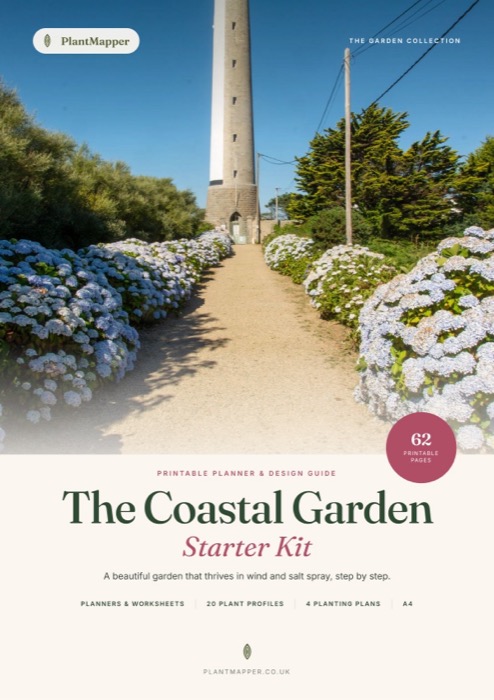
The Coastal Garden Starter Kit

Everything on this page is free to use: the conditions, the plant groups, the design principles and the schemes. The Coastal Garden Starter Kit is an optional next step, a printable workbook that pulls it together so you can plan the whole yard away from the screen. It was written for the original edition of PlantMapper, so swap in plants for your zone and coast using this page and our free garden calculators and Plant Finder.

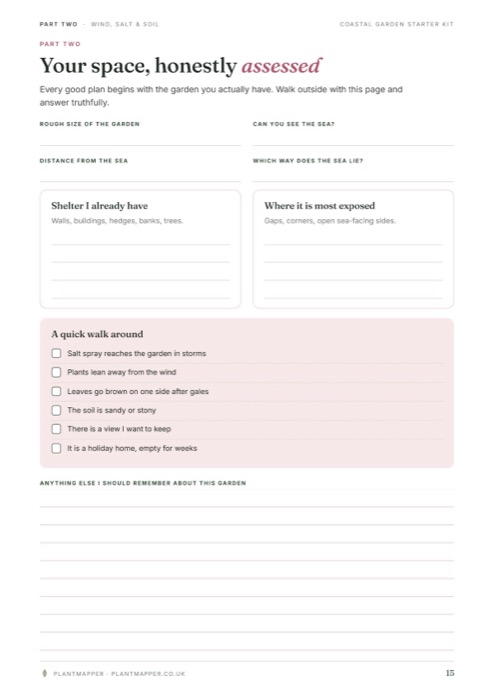
Planning worksheets

Size up your exposure, salt, soil and shelter honestly: the groundwork that turns a windy lot into a thriving coastal yard.

Design grids

Scaled and dot grids for sketching shelter, drifts and beds to size, with a key for grasses, structure and groundcover.

Planting plans

Ready-made and blank plans for exposed beds, seaside cottage gardens and gravel schemes, with dependable salt-tolerant combinations.

Coastal plant directory

Profiles of the toughest, loveliest coastal plants, from grasses and thrift to sea holly and shrubs, matched to exposure and soil.

Maintenance schedules

Season-by-season checklists: when to cut back grasses, top up gravel, trim the windbreak and simply enjoy the view.

Garden journal

Pages to record what thrived, what the wind taught you and what you will try next, year after year.

Printable digital workbook

Download the Coastal Garden Starter Kit

An instant digital download in US Letter and A4. Print it at home as often as you like and plan a yard that thrives on wind and salt. Inside: the 60-20-20 coastal formula, a wind and salt tolerance plant matrix, exposure-zone mapping worksheets, shelter and screening plans, a coastal plant directory and seasonal checklists. It sits alongside our Cottage, Mediterranean, Tropical, Shady and Wildlife garden kits.

Download the Starter Kit on Etsy (UK edition)

A printable workbook for your own yard. Plant for the wind, shelter the rest, and a coastal garden rewards you all year.

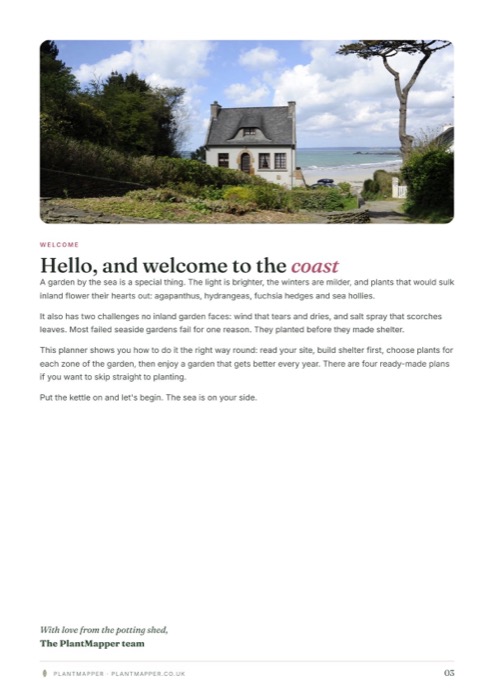
62 Pages Inside page from the Coastal Garden Starter Kit Inside page from the Coastal Garden Starter Kit Cover of the Coastal Garden Starter Kit printable planner 62-page printable planner · US Letter & A4
Common questions

Coastal gardens: your questions answered

What is a coastal garden?

A coastal garden is a yard shaped by the ocean nearby: salt spray on the wind, sandy fast-draining soil, strong light and, on many coasts, storm surge. It is planted with salt- and wind-tolerant plants, such as native beach grasses, seaside goldenrod, bayberry, sea thrift and lavender, in a relaxed, natural style that suits the setting.

Can you really grow a garden by the ocean?

Yes, and a beautiful one. Work with the conditions: add shelter, build up sandy soil with compost, and choose plants that evolved on coasts, many of them native to American shorelines. The ocean also moderates temperatures, so many coastal yards get fewer hard frosts than inland towns nearby.

What plants survive salt spray and wind?

For the front row choose plants rated highly salt tolerant: American beachgrass, sea oats, switchgrass, little bluestem, seaside goldenrod, northern bayberry, wax myrtle, yaupon holly, beach plum, saw palmetto, yucca and sea thrift. Behind a windbreak you can add lavender, santolina, blanket flower, coreopsis and other sun lovers suited to your zone.

What are the best native plants for a beach house yard?

It depends on the coast. In the Northeast try bayberry, beach plum, switchgrass and seaside goldenrod; in the Southeast wax myrtle, yaupon, sea oats and muhly grass; in Florida sea grape, coontie and saw palmetto; in California seaside daisy, buckwheat and ceanothus; in the Pacific Northwest shore pine, salal and kinnikinnick.

Is rugosa rose invasive?

Rugosa rose (Rosa rugosa), often called beach rose, is widely naturalized on Northeast beaches and is considered invasive in several states because it crowds out native dune plants. Check your state's invasive plant list, and plant native beach plum, bayberry or Virginia rose instead.

Are coastal plants deer resistant?

Many are. Deer usually avoid aromatic and tough-leaved plants such as lavender, santolina, bayberry, sea holly, euphorbia, yucca and ornamental grasses. No plant is completely deer proof, and hungry deer on barrier islands and Cape Cod will try almost anything in a hard winter, so protect young shrubs at first.

The small print

Disclosures & disclaimers

Affiliate disclosure

Some links on this page are affiliate links. If you buy through them, PlantMapper may earn a small commission at no extra cost to you. It never changes which products we suggest.

Gardening disclaimer

All advice is general guidance for yards across the US. Results vary with your zone, exposure, soil and local rules, so always confirm a plant’s hardiness and invasive status where you live.

Plant safety note

Some plants, including euphorbia and yucca, have irritant sap or sharp leaves, and some are toxic if eaten. Wear gloves, and check each plant before growing it where children or pets play.