
Lavender
Lavandula angustifolia
The signature gravel plant: fragrant, silvery and alive with bees. Zones 5-8 (to 9 in dry heat); hates humid, wet summers, so give it extra grit in the Southeast. Deer leave it alone.
Picture a sunny bed where lavender, grasses and long-blooming perennials rise out of a clean layer of stone, the bees are busy, and you have not dragged a hose out all summer. That is a gravel garden. It suits a sunbaked front yard in Denver as well as a sandy lot in New England, it cuts water bills in the dry West, and it gets more natural-looking every year as plants seed themselves into the gravel.
The one rule to remember: no landscape fabric under the plants. Plant straight into well-drained soil and spread the gravel on top so roots can go deep and seedlings can take hold.

Think of it as a flower bed with stone where the bark mulch would normally go. Tough, sun-loving plants root into the native soil, and a layer of gravel covers the ground between them. That stone does a lot of quiet work: it blocks light from weed seeds, slows evaporation, keeps plant crowns from sitting wet and gives seedlings a warm, gritty spot to sprout. In the arid West it is the backbone of xeriscaping; in wetter regions it is simply one of the easiest, best-looking ways to plant a hot, dry corner of the yard.
After the first season, a well-chosen gravel planting needs little or no irrigation, a real plus wherever summer watering restrictions are common.
Nothing to mow, no fertilizer and only light weeding. The stone mulch stops most weed seedlings before they get going.
Warm, open gravel is a perfect seedbed. Plants wander and reseed into natural-looking drifts year after year.
The reflected heat by a driveway or a south-facing wall that fries ordinary plants is exactly where gravel gardens thrive.
Evergreen and silver foliage, summer bloom and seedheads standing through winter keep the bed interesting in every season.
Nectar-rich flowers and warm, open ground draw native bees, butterflies and, with the right plants, hummingbirds.
Drought-tolerant plants in a stone mulch: water-wise, easy-care and relaxed, for a sunny yard.
You are hereHerbs, silver foliage and terra cotta: the closest relative, sharing many of the same plants.
Wind- and salt-tolerant plants on sandy ground, with plenty of crossover with gravel planting.
Easy-care planting throughout the yard; a gravel bed is one of the lowest-effort pieces.
Planned for nature; sunny gravel planting feeds pollinators and gives ground-nesting bees a home.
Some ideas to get you started: grasses, succulents and drought-tolerant perennials set in fast-draining stone.


Landscape supply yards sell stone by the cubic yard or ton, and home improvement stores sell it in bags of about 0.5 cubic foot. Two things matter most: size (3/8 to 3/4 inch is right for planting) and shape. Then choose a color that suits your house and the native rock of your region.
Small, smooth, rounded stones in tan, gray and rust. Pleasant to walk on and cheap, but it rolls underfoot and drifts on slopes and onto lawns.
Angular crushed granite, limestone or basalt that locks together and stays put. The best all-around choice for planting beds and for paths.
Fine, gritty granite (often called DG) that packs into a firm, natural surface. A Western favorite for paths and patios, but too dense to plant through once compacted.
Flat flakes in blue-gray, plum or green with a cool, modern feel. Great with grasses and architectural plants in a contemporary design.
Warm cream and tan chips that glow in the sun. Note that limestone nudges soil toward alkaline, which most dry-garden plants are happy with.
Larger smooth stones for texture, dry creek beds and drainage swales. Use them as accents among finer gravel, not as the main mulch.
Echo your local stone. Gravel that matches the rock of your area and your house always looks at home: red lava rock and tan DG in the Southwest, gray granite in New England, buff limestone in Texas and the Midwest. Bring home samples and look at them wet and dry, because color shifts a lot after rain.
The relaxed look comes from a few simple, forgiving rules. Get them right at the start and the planting all but takes care of itself.
Drainage is everything. On heavy clay, mix in coarse grit and some compost or build low mounds; most dry-garden plants die from wet winter roots, not cold.
Set plants into the soil, then spread 2 to 3 inches of gravel around them. Never plant into stone laid over fabric.
Plant in loose, uneven groups that flow into one another and let self-sowers blur the edges, like a prairie or a dry Western hillside.
Add a few evergreens or bold forms, such as yucca, a dwarf pine, euphorbia or a clipped shrub, to hold the picture all year.
Repeat a handful of reliable plants rather than buying one of everything. Restraint keeps the bed calm instead of cluttered.
Treat the stone as mulch, not a carpet. Run it right up to and around the plants with no hard line between rock and soil.
The landscape fabric debate: under paths, fabric helps. Under plants, it hurts: it blocks reseeding and rooting, and weeds simply grow in the grit that settles on top. Clear the weeds properly instead. More on fabric.
These ten are classic gravel-garden plants: sun-loving, drought-tough and happy in sharp drainage. Check each one against your growing zone, mix in North American natives such as little bluestem, prairie dropseed, penstemon, blanket flower and purple coneflower, and filter more options in the Plant Finder.
Lavandula angustifolia
The signature gravel plant: fragrant, silvery and alive with bees. Zones 5-8 (to 9 in dry heat); hates humid, wet summers, so give it extra grit in the Southeast. Deer leave it alone.
Euphorbia characias
Bold domes of blue-green foliage with chartreuse flowers in spring. Zones 7-10, a natural for the Pacific Northwest and California. Its milky sap irritates skin, so wear gloves.
Nassella (Stipa) tenuissima
Soft, hair-fine grass that ripples in every breeze. It self-sows heavily and is considered invasive in California and parts of the West; there, use native prairie dropseed or blue grama instead.
Allium hollandicum
Purple globes on tall stems in late spring, then sculptural seedheads for months. Zones 4-8. Bees love them, and deer and rabbits usually pass them by.
Hylotelephium spectabile
Succulent leaves and flat pink flower heads in late summer and fall that butterflies flock to. Zones 3-9, about as drought-proof as perennials get, with seedheads that stand all winter.
Verbascum
Tall flower spikes over felted silver rosettes, popping up wherever they seed. Grow garden hybrids rather than common mullein, which is a widespread roadside weed, and deadhead to limit spread.
Cistus
An evergreen shrub covered in papery blooms in early summer. Zones 8-10; a fixture of California and Pacific Northwest dry gardens. In colder zones swap in native fernbush or Apache plume.
Salvia yangii (Perovskia)
A haze of lavender-blue spires over silver stems from midsummer into fall. Zones 4-9, tough in Plains wind and Western heat, deer resistant and a magnet for bees.
Eryngium
Steel-blue, thistle-like flowers and spiny silver bracts, loved by bees. Zones 4-8 for most kinds; its native cousin rattlesnake master (Eryngium yuccifolium) brings the same look to prairie-style beds.
Santolina chamaecyparissus
Neat, aromatic mounds of fine silver foliage with button-yellow flowers in summer. Zones 6-9. Shear it after bloom to keep it tidy; deer tend to leave it alone.
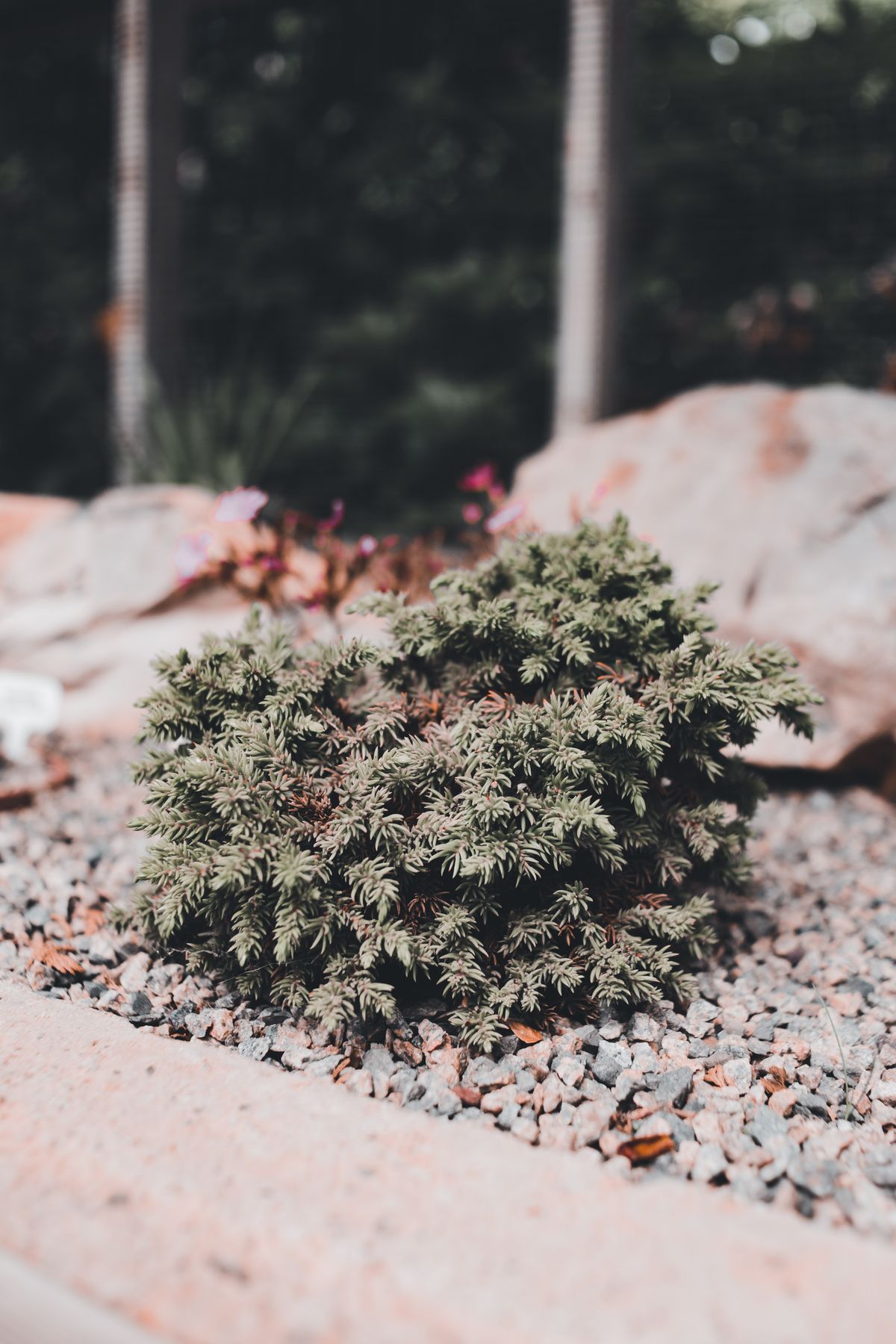
Gravel gardens and Mediterranean gardens share a lot of DNA. Both are built for sun, heat and fast drainage, and both lean on silver leaves, aromatic herbs and a sun-bleached palette. California and much of the Pacific Coast actually have a Mediterranean climate, with wet winters and dry summers, so the two styles blend naturally there.
Both want full sun, lean soil and quick drainage. If your yard is hot and dry, you can borrow freely from either style.
Lavender, rockrose, euphorbia, sage and santolina are staples of both, so a good choice works in either setting.
Outside the Mediterranean-climate West, gravel is what lets these plants cope with rainy winters or humid summers, by keeping crowns dry and drainage sharp.
Borrow from both. Plan the planting like a Mediterranean garden and finish the ground with gravel. The Mediterranean Garden hub has the full plant palette and design ideas.
A planted gravel bed is anything but sterile. Done well, it is one of the best habitats you can offer sun-loving wildlife, with almost no effort on your part.
Lavender, alliums, sedum, salvia and native penstemon and anise hyssop keep native bees and honeybees busy all summer.
Most of North America’s native bee species nest in the ground, and warm, open patches of gravel and sandy soil are exactly what they look for.
Leave coneflower, grass and sea holly seedheads standing; American goldfinches, juncos and sparrows will pick them over all winter.
Sun-warmed stone is a favorite basking spot for butterflies, beetles and, depending on your region, fence lizards and skinks.
Drought-adapted plants rarely have serious pest problems, so you can skip pesticides and let predators and pollinators do their thing.
Add agastache, penstemon or salvia and you will likely see hummingbirds working the flowers from late spring into fall.
Leave some bare ground. Do not plant or pave every square foot. A few open, sunny patches of gravel are prime nesting real estate for ground-nesting native bees, which are gentle and rarely sting.
Gravel makes a great path as well as a mulch, and paths are the one place landscape fabric belongs. A little groundwork gives you firm, weed-free walkways that last for years.
For a path that does not rut or sink, lay gravel over a compacted crushed-stone base, not bare dirt. Decomposed granite or angular crushed stone stays put best.
Woven landscape fabric under a path is genuinely useful. Keep it out of planted beds, where it causes more problems than it solves.
Aim for about 1.5 to 2 inches of gravel on paths and 2 to 3 inches in beds. Too thin and weeds break through; too thick and it is like walking on a beach.
Steel, aluminum, brick, stone or treated timber edging stops gravel wandering into lawns and flower beds. It is the secret to a tidy gravel garden.
Set flagstones or pavers flush with the gravel to make stable routes across bigger areas and keep feet off the plants.
Let plants spill over path edges and let gravel run loosely up to them. That blurred edge is a big part of the charm.
One stone, two jobs. Using the same gravel on paths and beds ties the whole yard together. Just remember: compacted base and fabric under paths, loose well-drained soil and no fabric under plants.
Most gravel-garden letdowns come down to a few avoidable mistakes. Skip these and you are most of the way there.
The classic error. Landscape fabric stops reseeding and rooting, starves the soil, and weeds grow in the debris on top anyway. Planted beds need bare, well-drained soil under the stone.
Dry-garden plants want lean, gritty soil. Pile on manure or fertilizer and they grow soft, flop over and rot. Add grit for drainage, not richness.
A light sprinkle of stone lets weed seeds sprout straight through. Beds need a full 2 to 3 inches to mulch properly and look finished.
Thirsty, shade-loving or bog plants sulk and die in hot gravel. Pick sun-loving, drought-tolerant plants rated for your zone.
Established gravel plantings rarely need water, and too much, especially on an automatic sprinkler schedule, rots roots. Water new plants their first year, then back off.
Pea gravel rolls and scatters, and big river rock is hard to plant through. Angular crushed stone around 3/8 to 3/4 inch knits together and works for beds and paths alike.
Four ready-made planting ideas for common situations. Use one as-is or adapt it to your space, soil and zone.
A welcoming, almost mow-free front yard that looks cared for all year and rarely needs a sprinkler. Check HOA rules before replacing lawn out front.
The hottest, driest bank in the yard becomes the most flowery, and the plant roots help hold the slope in place.
A calm, sculptural, nearly zero-water space, ideal for a small patio in Arizona, Nevada, Utah or Southern California.
Proof that an easy-care gravel bed can be full of life: native bees in summer and goldfinches on the seedheads in winter.

Browse and filter the wider PlantMapper range by sun, soil and space. These shortcuts are a good starting point for a drought-tolerant planting.
Handle the practical side, how much stone, how many plants and what it will cost, with our free calculators.
As an Amazon Associate, PlantMapper may earn from qualifying purchases. Prices and availability are set by Amazon.
Give drought-tolerant plants a season or two to settle into the stone and they knit together into a relaxed, self-sufficient garden that barely needs a drink.
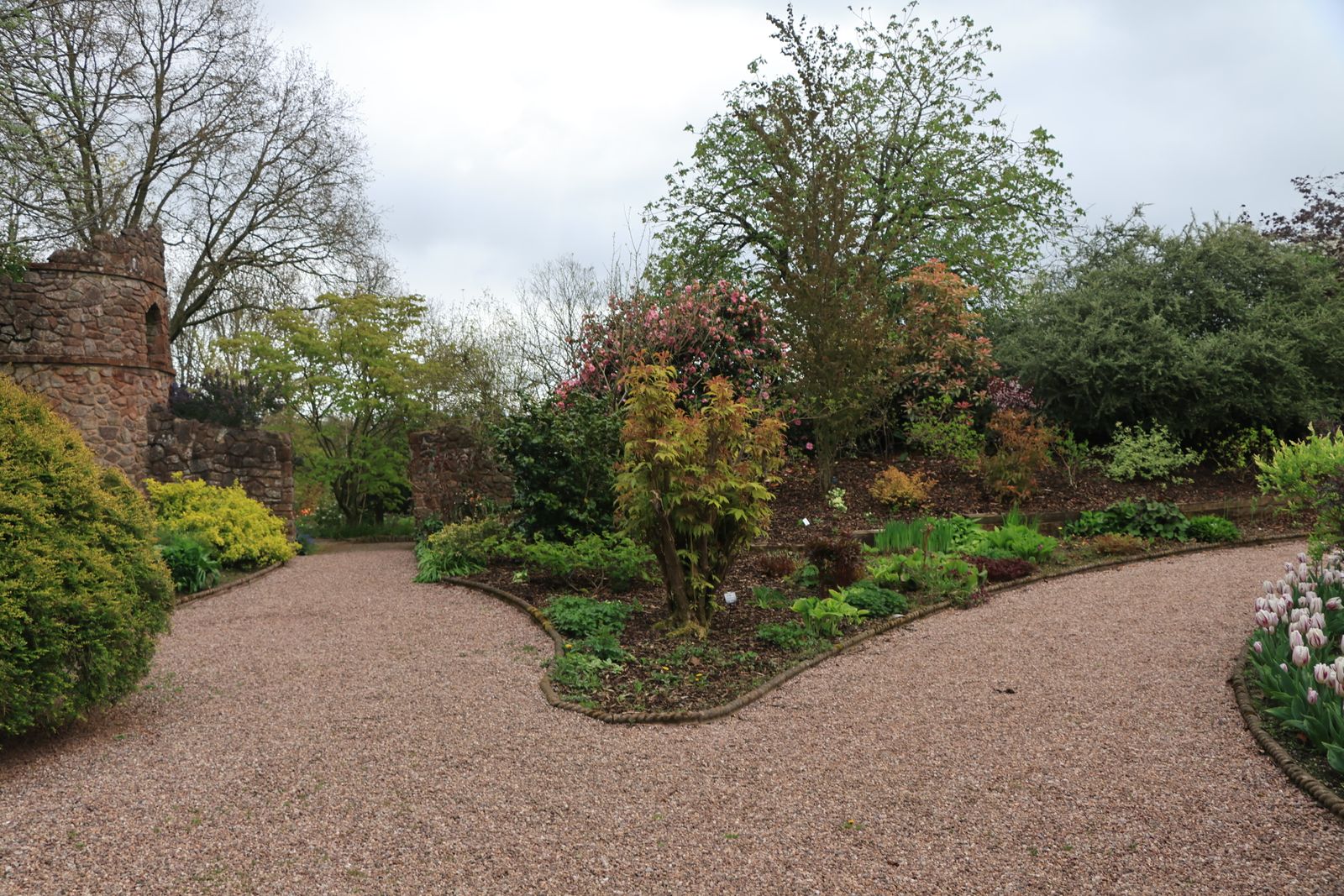
A gravel garden is a sunny, fast-draining bed where drought-tolerant plants grow up through a layer of stone instead of bark mulch or lawn. The gravel smothers weed seedlings, keeps moisture in the soil, keeps plant crowns dry and lets many plants self-sow, so you get a relaxed, water-wise garden that needs very little care.
Not under the plants. Landscape fabric stops self-sowing, keeps organic matter from reaching the soil, and weeds eventually root in the dust and debris that collect on top of it anyway. Use fabric only under gravel paths and unplanted areas. In planted beds, spread 2 to 3 inches of gravel over thoroughly weeded soil instead.
Yes, they are among the easiest gardens there are. Once established, drought-tolerant gravel plantings need little or no watering, no fertilizer, no mowing and only light weeding. A late-winter cutback and an occasional top-up of stone is most of the work.
They overlap but are not identical. Xeriscaping is a water-saving approach to the whole yard, popular across the West and Southwest, that groups plants by water need and cuts back on thirsty lawn. A gravel garden is one of its most common building blocks: drought-tolerant plants in a stone mulch. In wetter regions you can still make a gravel garden as long as the soil drains well.
Yes, but drainage matters even more. In the Southeast, the Gulf Coast and the Pacific Northwest, heavy rain and humidity rot many Mediterranean herbs. Raise beds or mound the soil with coarse grit, choose plants that tolerate humidity, such as coneflower, blanket flower, little bluestem, yucca and sedum, and give everything good air circulation.
It can be. Mexican feather grass (Nassella or Stipa tenuissima) self-sows heavily and is considered invasive in California and has escaped in other parts of the West. Check your state’s invasive plant list before planting it, and consider native alternatives such as prairie dropseed, blue grama or little bluestem.
Everything on this page is free to use: the stone types, the design rules, the plant groups and the schemes. The Gravel Garden Starter Kit is an optional next step, a printable workbook that pulls it all together so you can plan a whole gravel garden away from the screen. It works alongside our free garden calculators and Plant Finder.
Worksheets to size up your sun, soil and drainage, the groundwork that makes drought planting succeed.
Ready-made and blank gravel-garden plans for sunny beds, dry slopes and courtyards, with proven combinations.
Work out gravel depth, quantity and base material for beds and paths so you order the right amount the first time.
Profiles of dependable drought-tolerant plants, from lavender and grasses to alliums and silver foliage, matched to sun and soil.
Simple season-by-season checklists: when to cut back, top up gravel, sow seed and leave well alone.
Pages to note what thrived, what reseeded and what to try next, so you can track your gravel garden year to year.
An instant digital download in US Letter and A4 that you can print at home as often as you like. Inside: a drainage test, a gravel sizing and quantity worksheet, the 50·30·20 layout framework, planting and boulder plans, a sun-loving plant directory and seasonal checklists. It sits alongside our Cottage, Mediterranean, Tropical, Shady and Wildlife garden kits.
Download the Starter Kit on Etsy (UK edition)A printable workbook for your own yard. Keep the soil lean and the drainage sharp, and the planting takes care of itself.


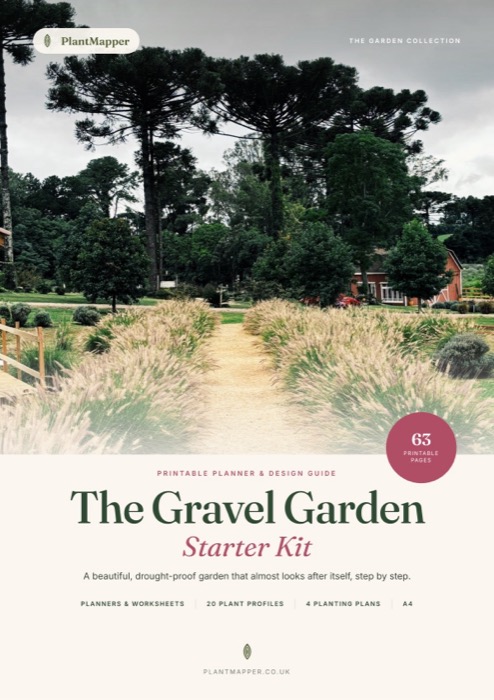 63-page printable planner · US Letter & A4
Some links on this page are affiliate links. If you buy through them, PlantMapper may earn a small commission at no extra cost to you. It never affects which products we suggest.
This is general guidance for home gardeners across the US. Results vary with climate, soil and site, so confirm each plant suits your zone and conditions, check your state’s invasive plant list, and follow any HOA or city rules on front-yard landscaping.
Some drought-tolerant plants, euphorbia among them, have irritating sap or are toxic if eaten. Wear gloves when handling them, and check each plant before growing it where children or pets play. The ASPCA keeps a list of plants toxic to pets.