
Phormium
Phormium tenax
A fountain of sword-like leaves in green, bronze or wine. Hardy in roughly zones 8-11, so a year-round in-ground plant on the West Coast and in the South; elsewhere a bold summer container plant.
Modern design suits the way many Americans actually use their yards: a deck or patio for grilling and eating, a fire pit for evenings, and planting that looks sharp without weekends of upkeep. The recipe is simple - strong lines, a short list of materials, and a few bold plants repeated with confidence. Choose those plants for your zone and rainfall, and a modern yard works just as well in Phoenix as in Philadelphia.
Restraint is the whole trick: a few well-built, well-placed elements look more modern than a yard full of features. Spend on the bones, then plant boldly and simply.

A modern yard is designed the way a good kitchen is: every element has a job and nothing is there by accident. Straight lines and simple shapes set the layout, a deck or paver patio provides the living space, and planting is chosen for form - spiky, grassy, clipped or sculptural - rather than for a mix of every flower color. In the US the style ranges from mid-century desert gardens with agave and gravel to clean-lined Northeastern backyards with native grasses and a composite deck. What links them is restraint, good materials and a yard that is genuinely used.
Open space and straight lines make a yard feel restful and ordered - a place to unwind, not a list of chores.
Built around the deck, patio and grill, it extends the house outdoors - and in the South and West, for most of the year.
A few sculptural plants and strong shapes create real presence - striking, gallery-like and unmistakably contemporary.
Less lawn, simple repeated planting and drip irrigation mean far less mowing, edging and watering than a traditional yard.
Built on structure, evergreens and grasses left standing for winter, it still looks designed under snow or in a dry season.
Clean geometry and clear zones make the most of a townhouse yard, a narrow urban lot or a rooftop - modern design loves a compact space.
Clean lines, bold plants and space to live outdoors - a calm, low-upkeep yard designed like a room.
You are hereEasy-care planting and less lawn - a natural partner to modern design.
Minimal, structural and contemplative - shares the love of restraint and clean form.
Drought-tolerant planting through gravel - a water-wise surface that suits modern yards in the West.
Bold, architectural foliage - a lusher take on the same love of strong, sculptural leaves.
A few images to set the mood before you sketch - bold planters, crisp edges, sculptural greens and a restrained color palette.


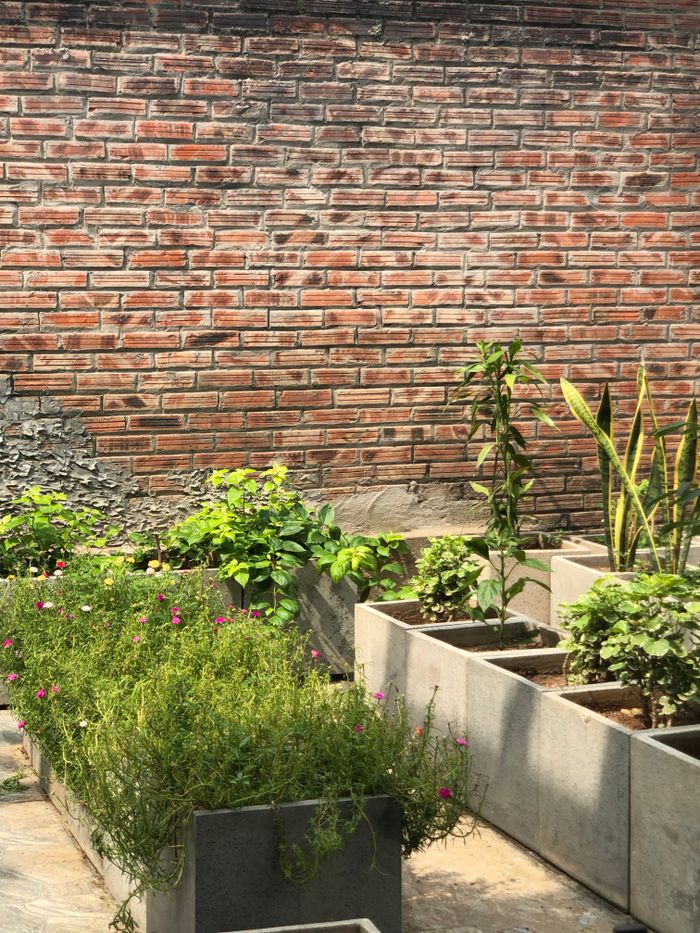
You don’t need a landscape architect to get this right. These six ideas turn almost any yard - a suburban backyard, a city lot or a condo patio - into something that reads as modern.
Less, but better. A short list of plants and materials, used with confidence, is the foundation of the whole look.
Strong straight lines, crisp edges and clear shapes give the garden order. Let the geometry, not fuss, carry the design.
Form leads. Build with grasses, evergreens, succulents and hardscape; let flowers be a seasonal bonus, not the point.
Repeat a few plants, shapes and materials through the space. Rhythm is what makes a modern garden feel intentional and serene.
Divide the yard into clear zones - grill and dining, lounging, play, planting - each with a purpose. Defined rooms feel calm and generous.
Modern design lives or dies on its finish. Fewer, better materials, installed carefully, are what make a yard look truly contemporary.
The golden rule: restraint. When a modern yard goes wrong it is almost always from adding too much - too many materials, too many plant varieties, one more feature from the home improvement store. Edit hard.
Geometry comes first. Before you buy a plant, sketch the lines, shapes and proportions on graph paper (a quarter-inch square to the foot works well) - that underlying structure is what makes the finished yard feel calm and resolved.
Bold, deliberate lines - a long path, a steel lawn edge, a run of pavers - lead the eye and give the yard direction and order.
Base the layout on a simple grid - often the size of your pavers or the house’s window spacing - to keep everything in proportion.
Symmetry feels formal and serene; offset, asymmetric balance feels relaxed and current. Both work - choose one and commit.
Use walls, screens and openings to frame a single focal point - a sculpture, a tree, a water feature - and draw the eye through the space.
Steps, raised beds, a lowered fire-pit area or a deck a step up from the patio add depth and separate zones on a flat lot.
Echo a shape - a square, a circle, a clipped cube - through pavers, planters and planting. Repeated geometry is deeply calming to the eye.
Modern planting is about form: bold shapes, strong silhouettes and repetition. These ten are classic architectural plants, but several are only hardy in warmer zones, so check each against your USDA zone and filter the wider range in the Plant Finder. North American alternatives follow below.
Phormium tenax
A fountain of sword-like leaves in green, bronze or wine. Hardy in roughly zones 8-11, so a year-round in-ground plant on the West Coast and in the South; elsewhere a bold summer container plant.
Calamagrostis ‘Karl Foerster’
Poker-straight plumes from early summer through winter, hardy in zones 4-9. It sets little viable seed, so it stays where you plant it - ideal for rows and repeated blocks.
Taxus baccata
The classic evergreen for crisp cubes and hedges (most US nurseries sell the hybrid Taxus × media, zones 4-7). Deer browse yew heavily and every part is toxic to people and pets - see the alternatives below.
Fatsia japonica
Huge, glossy, hand-shaped leaves for shade, hardy in zones 7/8-10. Superb in Southern and Pacific Coast courtyards; in colder zones grow it in a pot and overwinter it indoors.
Trachycarpus fortunei
The windmill palm is one of the hardiest palms, reliable in zones 8-10 and worth trying in a sheltered zone 7 spot. A single fan-leaved trunk makes a striking modern statement.
Agapanthus
Strappy mounds and blue or white globe flowers, perennial in zones 8-11 (a few hybrids to zone 7). A staple of California modern gardens; farther north, grow it in pots and store it frost-free.
Allium hollandicum
Purple spheres on tall stems, then seed heads that stand for weeks. Hardy in zones 4-8, and deer and rabbits leave them alone. Plant the bulbs in fall.
Verbena bonariensis
Airy purple wands loved by butterflies, perennial in zones 7-11. It self-seeds heavily and has naturalized in parts of the Southeast and California - deadhead it there, or use native blue vervain instead.
Euphorbia characias
Blue-green domes with lime flowerheads, drought-tolerant in zones 7-10 and good in the West. The milky sap irritates skin. Don’t confuse it with myrtle spurge, a listed noxious weed in several Western states.
Stipa gigantea
A see-through fountain of golden, oat-like flowers that catch low evening light, for roughly zones 7-10. Unlike its cousin Mexican feather grass, it is not known as an invasive problem.
Many of the best modern plants are native to North America - and a few popular “modern” plants are invasive here. Check your state’s invasive plant list before you buy.
Use these instead of Miscanthus, which self-seeds into woodlands and roadsides across much of the East.
Avoid Mexican feather grass (Nassella tenuissima) in California - it is invasive there and spreads readily elsewhere in the West.
Boxwood is still widely planted, but boxwood blight and the box tree moth have reached many states - native hollies are a safer bet.
Not sure? Your state’s invasive species program or Cooperative Extension office publishes a current list.

Hardscape does most of the work in a modern yard - it sets the lines, defines the rooms and carries the style - so it is where the budget belongs. Before any digging, call 811 (the free national call-before-you-dig line) to have buried utility lines marked, and check whether your city or HOA requires a permit for decks, walls or patios.
Large-format concrete or porcelain pavers in a simple layout set the foundation. Big units and slim joints look calm and contemporary; busy patterns and mixed colors do not.
Stucco walls, horizontal slat fences and metal screens add privacy and give surfaces to light and frame views. Check local fence-height rules first.
Generous, well-proportioned steps and changes of level add depth and drama, and naturally separate one zone of the yard from the next.
Built-in raised beds and bold planters - steel, concrete or cedar - bring planting up to eye level, reinforce the geometry and double as seating.
A narrow runnel, a sheet of falling water or a still reflecting basin adds sound and light. In dry regions, a small recirculating feature uses far less water than a pond.
Steel or aluminum edging between pavers, planting and lawn is the secret to a tidy modern look - one clean line does an enormous amount of work.
Spend on the bones. Hardscape is permanent and sets the whole tone, so it is where quality matters most. Build a smaller patio properly rather than a big one cheaply - you can add more later.
Plan the yard around how you really live: where the grill goes, where you eat, where the kids play and where you sit at night. Get those right and the yard becomes an extra room you use every week, not just something to look at from the kitchen.
A deck or patio sized for a real table and chairs (allow about 12 by 12 ft for six people), close to the kitchen door. In hot climates, place it where it gets afternoon shade.
Built-in benches or outdoor sofas around a fire pit make the yard a place to linger after dark. Check local burn rules and HOA restrictions - many Western towns ban wood fires in dry months.
From a grill on a paver pad to a full outdoor kitchen, a cooking zone keeps the party outside. Gas lines and wiring need a licensed pro and usually a permit.
A pergola, shade sail or louvered roof makes a patio usable through a Texas or Arizona summer - and frames the living space architecturally.
Give each activity its own defined area, linked by paths and level changes, so the yard feels ordered and every part has a clear purpose.
Matching indoor tile to outdoor porcelain pavers, with sliding or folding doors between, makes house and patio read as one continuous space.
Materials give a modern yard its surface, texture and quality. Pick a short list that suits your climate - freeze-thaw in the North, scorching sun in the Southwest, wildfire risk in parts of the West - and use it consistently.
Large porcelain or concrete pavers give the clean, flat surface modern yards are built on. In freeze-thaw climates, install them on a properly compacted gravel base.
Smooth poured concrete and stucco walls give a calm, monolithic backdrop - understated, architectural and the perfect foil for green planting.
Weathering steel, with its warm rust patina, is the signature modern material for planters, screens and edging. It can stain pale concrete as it weathers, so plan drainage.
Composite decking is the low-care favorite; cedar, ipe and thermally modified wood are the natural options. Dark boards get very hot in full sun.
Wire-caged stone gabions make bold, textured walls and seats - rugged, affordable and a striking contrast to smooth stucco.
Powder-coated steel, aluminum and cable or glass railings add crisp detail. In wildfire areas, noncombustible metal and stone are the safer choice near the house.
Limit the palette. Two or three materials, repeated through the yard, look far more sophisticated than five or six. If you live in a wildfire-prone part of the West, many fire agencies also recommend keeping the first 5 feet around the house free of anything that burns - pavers and gravel suit modern design perfectly.
Lighting turns a modern yard into an evening room and a view from inside after dark. Most US landscape lighting runs on low-voltage (12-volt) systems you can plan yourself, with a licensed electrician for the transformer outlet.
Combine a few types - uplights, low path lights, a soft wash on a wall - rather than one bright floodlight. Layers create depth and atmosphere.
Grazing light up a multi-stem tree, a palm or a stucco wall throws dramatic shadows and turns key plants and surfaces into sculpture after dark.
Low-level lights and recessed step lights make paths and changes of level safe and inviting - guiding you through without glare.
A discreet light within a rill or pool makes water glow and shimmer at night - one of the most magical effects in any garden.
Choose a warm white tone (around 2700K). Cool, blue-white light feels clinical; a warm glow is flattering, restful and far more inviting.
Light only what matters, aim fixtures down or shielded, and leave pools of darkness. It looks more elegant and is kinder to wildlife, neighbors and dark-sky rules in some towns.
Light a few things well. The temptation is to light everything; the art is to pick a handful of features - a tree, a wall, the water - and let the rest fall into restful shadow.
Modern color is disciplined - mostly neutral, mostly green, with a single accent. Match it to your house siding and roof, and to the light: pale tones glare in desert sun, dark tones read well there.
Charcoal through gray to off-white, lifted only by green planting. The most gallery-like scheme - calm, confident and timeless.
Warm concrete grays and pale stucco with fresh and sage greens. Softer than full monochrome, and restful in strong sun.
Rusty Corten warmth grounded by charcoal and concrete, softened by green - and right at home with desert plants in the Southwest.
High-contrast black and white with green as the only color - bold and graphic. Striking with a modern farmhouse or a small urban lot.
Most modern yards that disappoint do so for the same few reasons. Avoid these and the calm, considered look comes much more easily.
Paving everything leaves a yard hot, sterile and full of runoff. Generous planting gives a modern yard life - and many towns now limit impervious surface.
Mixing five or six surfaces and finishes looks busy and cheap. Limit yourself to two or three, used consistently, for a calm, expensive feel.
One of everything from the nursery fights the look, and so do invasives like Miscanthus or Mexican feather grass. Choose a few architectural plants suited to your zone and repeat them.
Pots, pavers and plants too small for the space look fussy. Modern design loves bold proportions - a few 24-inch planters beat a dozen small ones.
Modern style shows every flaw. Wonky edges, messy joints and cheap fixings undo the whole effect - crisp, careful detailing is everything.
Minimal need not mean lifeless. A yard of gray boxes and gravel with no plants feels harsh - green, shade and native pollinators are what make it a haven.
Four starting points for common American yards - copy one, or borrow the pieces that suit your space, climate and budget.
Proof that a small, shady city lot can be the most stylish space of all - clean, green and calm, with almost no upkeep.
A backyard built for living in - zoned for cooking, eating and relaxing, so it works as hard as any room in the house.
A sharp, welcoming front yard that needs little care. Some HOAs require a minimum lawn or an approved plant list, so get the plan approved before you dig.
A modern xeriscape that suits watering restrictions and looks sharp year-round - all native or desert-adapted plants.
Clean and contemporary, but built for real family life - durable surfaces, room for a ball game and tough planting that takes it all in stride.

Filter plants by your zone, sun and soil before you fall for something that won’t survive your winter. These shortcuts are a good place to start.
Work out decking, plant numbers, gravel and budget in square feet and cubic yards with our free calculators.
As an Amazon Associate, PlantMapper may earn from qualifying purchases. Prices and availability are set by Amazon.
Keep the lines strong and the materials few, and as the plants fill in the yard reads as calm, sculptural and deliberately uncluttered.

This guide is free in full. If you like to plan on paper, the Modern Garden Starter Kit is an optional printable workbook with layout grids, material palettes and planting plans. It is the original edition, so swap in plants for your zone and region using this page and our free garden calculators and Plant Finder.
Worksheets to divide your yard into rooms - grilling, dining, lounging, planting - and set the geometry that holds it together.
Scaled grids for drawing clean lines and proportions to size, with a key for paving, planters and architectural planting.
Ready-made and blank plans for small lots, outdoor-living backyards and minimalist front yards, with bold, repeated combinations.
Help choosing a tight palette of pavers, screening and accent materials - and the colors that tie it together.
Profiles of bold architectural plants - grasses, palms, phormium and clipped evergreens. Check each against your USDA zone.
Pages to plan, budget and record the project stage by stage - from first sketch to finished outdoor room.
An instant digital download that prints on US Letter (or A4) paper at home, as often as you like. Inside you will find the 3-Material Rule, the sightline method, layout grids, ready-made material palettes, a structural plant directory and seasonal care checklists. It sits alongside our Cottage, Mediterranean, Tropical, Shady and Wildlife garden kits.
Download the Starter Kit on Etsy (UK edition)A printable workbook for your own yard. In modern design, doing less - beautifully - is the whole art.
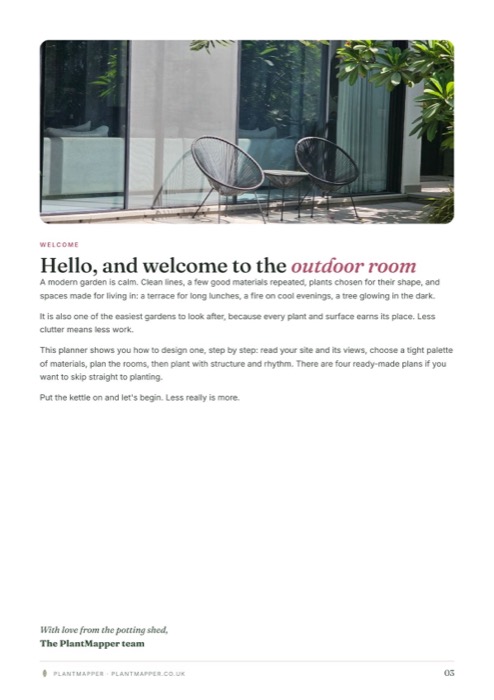
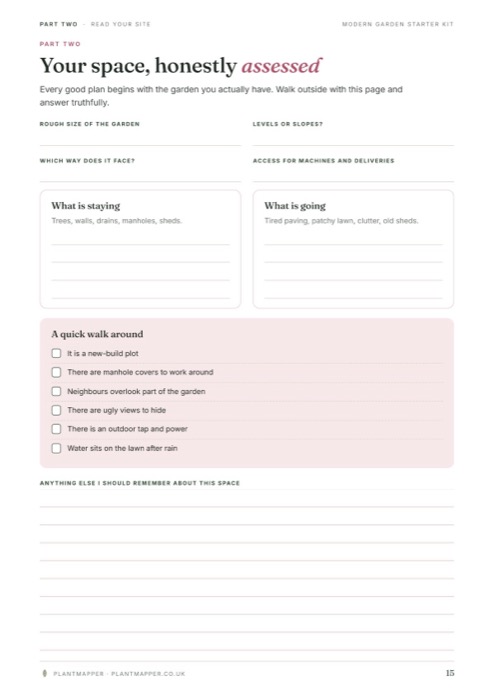
 63-page printable planner · A4 & US Letter
A modern garden, or modern yard, is a contemporary design built on clean lines, simple geometry and restraint. It pairs well-built hardscape - pavers, a deck, stucco or slatted screens - with a short list of bold, architectural plants and real space for outdoor living, such as a dining patio and a fire pit.
Plants with strong form, repeated: upright grasses such as feather reed grass, little bluestem and switchgrass; clipped evergreens such as inkberry holly or yew; alliums; and in warm zones agave, red yucca, phormium, agapanthus and palms. Check every plant against your USDA zone - phormium and agapanthus are perennial only in about zones 8 and warmer.
Usually, yes. Less lawn, simple repeated planting, steel edging and drip irrigation cut mowing, edging and watering dramatically. The trade-off is upfront cost: good hardscape is the expensive part, and cheap materials or sloppy installation show quickly in a minimal design.
Mexican feather grass (Nassella tenuissima, sold as Stipa tenuissima) is considered invasive in California and spreads readily by seed in other parts of the West. Miscanthus sinensis is invasive across much of the East. Native alternatives with a similar look include prairie dropseed, little bluestem, pink muhly and deer grass. Check your state’s invasive plant list before buying ornamental grasses.
Boxwood blight and the box tree moth have spread to many states, so many designers now use inkberry holly (Ilex glabra) in the East and Midwest, dwarf yaupon holly in the Southeast and Texas, and compact yew where deer are not a problem. All three clip well into low hedges and cubes.
Often, yes - many US towns require building permits for decks, especially raised ones, and some for retaining walls, pergolas, gas lines and electrical work. HOAs may also need to approve materials, fences and front-yard changes. Always call 811 before digging so buried utility lines can be marked for free.
Some links on this page are affiliate links. If you buy through them, PlantMapper may earn a small commission at no extra cost to you. It never affects which products we suggest.
All advice is general guidance for yards across the US. Results vary with your zone, rainfall, soil and setting - always confirm a plant’s hardiness and invasive status for your state.
Hardscape, lighting and water features must meet local building and electrical codes - use a licensed contractor for structural, electrical, gas and drainage work, check permit and HOA requirements, and call 811 before you dig.